
"It would be lucky if we get 6 per cent (growth rate) this year," he said while describing the 7.1 per cent gross domestic product growth rate projection of the Research and Information System for Developing Countries as 'very optimistic'. RIS director-general Nagesh Kumar in his presentation projected an economic growth rate of 7.1 per cent for the current fiscal, even as he pitched for a fiscal stimulus of $50 billion to neutralise the impact of the global slowdown.

The Budget should undertake further reductions in import tariffs and seriously consider an announcement of India's intention to join one or both of the two Asian mega-regional free trade agreements, suggests Shankar Acharya, former chief economic adviser to the Government of India.
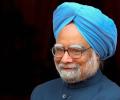
Former Prime Minister Manmohan Singh's 1991 budget unshackled India's economy, significantly enhancing the economic prospects for hundreds of millions of Indians, first deputy managing director of the International Monetary Fund (IMF) Gita Gopinath said on Friday.

What some of our leaders were up to on the first day of November...

The first five months of 2023 have witnessed at least six major events/trends that augur badly for global economic and socio-political prospects, points out Shankar Acharya, former chief economic adviser to the Government of India.

Prime Minister Narendra Modi on Friday said both public and private sectors need to leverage synergies and think out of the box to seize opportunities arising as a result of the emerging global environment. While interacting with noted economists and experts at NITI Aayog ahead of the Union Budget, the prime minister also applauded the success of the India Digital story and the rapid adoption of fintech across the country, an official statement said. During the meeting, economists offered suggestions on ways in which India can sustain its development momentum, it added.

The country's demographic dividend is dissipating, with seriously adverse consequences for young India, asserts Shankar Acharya, former Chief Economic Adviser to the Government of India.

The employment situation remains dire. Whatever can be done to promote greater low-skill employment should be pursued aggressively, advises former chief economic adviser Shankar Acharya.

We have a government with an extremely weak economic team advising a PM who hardly pays attention to their thoughts, says Jayanta Roy.

Macroeconomic management is usually a lot more comfortable with lower fiscal deficits. The sooner we get there, the better for the economy, says former Chief Economic Adviser to the Government of India Shankar Acharya.
Expect a more modest out-turn of around 5 per cent (if not less) because of the longer-term scarring effects of the Covid shock, the sharply slowing growth in the pre-Covid years and some scepticism about the growth-efficacy of some of recent official policy initiatives, explains Shankar Acharya, former chief economic advisor to the government.

From Covid to climate change, Shankar Acharya's look at some of the trends and events that might shape 2022.
What India needs is not costly, brand new cities but a revamping of urban institutional structures and policies.

The substantially increased economic dualism may exert lasting negative influences which could include a reduced potential for economic growth; the persistence of a very weak employment and poverty situation; rising social and political discord; and heightened vulnerability to geopolitical challenges, cautions Shankar Acharya, former chief economic adviser to the Government of India.
Even if Narendra Modi comes to power, the revival of sustainable growth is far from certain.
The tide began to turn in early September with the new Reserve Bank of India governor's confident and well-considered initial policy statement on September 4.
Macroeconomic policy aimed at short-term political gains does not augur well for a poorly performing economy.

My candidate for the best general of the last century hailed from a little, poor colonised Asian nation whose impact on world affairs rarely amounted to much, notes Shankar Acharya.
The US economy will once again demonstrate its resilience and flexibility and grow around three per cent despite extremely fractious domestic politics over fiscal and other policies.

India's likely medium-term potential growth will almost certainly be markedly lower than that experienced in pre-pandemic years, warns Shankar Acharya, former chief economic advisor to the Government of India.
The two paths India could follow: one moderately positive, one relentlessly negative.
Risk aversion is currently a dominant depressant to economic recovery, points out Shankar Acharya, former chief economic advisor to the Government of India.
Four years ago India was riding high.
After the presentation of the Union Budget in mid-March, the rupee has been again jittery and anaemic, dropping to an all-time low of 54.9 on May 18, raising serious concerns in both the media and Parliament.
The year 2011 has been an eventful one, full of surprises. Shankar Acharya, former chief economic adviser to the Government of India, jots down 10 unexpected economic and political developments in India and across the world this year, some of which changed the course of history.

We will find it difficult to exceed an average of 5 per cent growth in the medium term, warns Shankar Acharya, the former chief economic adviser.

The latest balance of payments data released by the Reserve Bank of India (RBI) last week indicate that the CAD in fiscal 2010-11 could be anywhere between 3.5 and 4.0 per cent of gross domestic product (GDP).

If the Greek crisis spirals into a larger European sovereign debt crisis and possible fragmentation of the eurozone, India's trade and capital flows could be hit, says Shankar Acharya.

The budget-making exercise offers golden opportunities despite challenges, observes Shankar Acharya, former chief economic adviser to the Government of India.

India, says Shankar Acharya, can stay at or near the top in the ICC Test and ODI rankings for a year or two, but it's downhill thereafter.

Indeed, although total industrial employment grew by over 6 per cent annually, organised industrial sector employment fell by 1 per cent per year, bringing the share of organised industrial sector employment down from 18 per cent (of total industrial employment) in 1998 to only 10 per cent in 2004.

Only a mix of sterilised currency intervention and capital account management can halt the rupee's rise, says Shankar Acharya.

The most important thing for India is to resurrect public health services in the country, says Shankar Acharya.

Looking back 20 years from now, the month just gone by will loom even larger in history books.

The expenditure cuts are one-off, too much has been given away in tax cuts and there are few green shoots of reform.

The Direct Taxes Code suffers from serious weaknesses.
Getting ministers from various parties in the new coalition to pull in the same direction is the real challenge.

A new committee chaired by former Chief Economic Advisor Shankar Acharya will examine the feasibility of having a 'new financial year' to coincide with the calendar year.
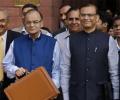
February 6 or 8 likely options; development will be the main theme
Eminent economists, during a panel discussion on Friday warned that India's GDP is likely to grow at a lower 5.6-6.25 per cent this year but said inflation would stabilise at 6-7 per cent in the country.
 © 2026 Rediff.com - Advertise with us - Disclaimer - Privacy Policy - Sitemap - Feedback - About us - Terms of use - Grievances