
The next firing is planned for Tuesday between 2 pm and 3 pm. it said.

National Aeronautics and Space Administration will soon provide advanced training to Indian astronauts, with the goal of mounting a joint effort to the International Space Station, a top American diplomat said Friday.

'Today onwards, the onboard thrusters will be fired and Chandryaan-3 will be taken away from Earth for an eventful landing on Moon's surface on August 23'

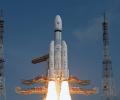
On Friday, July 14, India launched its ambitious third lunar mission Chandrayaan 3, eyeing a rare feat in moon exploration.

On Sunday, July 30, 2023, the Indian Space Research Organisation successfully launched its proven Polar Satellite Launch Vehicle rocket carrying seven Singapore satellites from the Satish Dhawan Space Centre in Sriharikota and placed them into intended orbits.
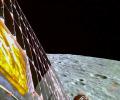
According to the Indian Situational Space Awareness Report for 2023, the nominal lift-off of the Launch Vehicle Mark-3, carrying the Chandrayaan-3 spacecraft, had to be delayed by four seconds based on the Collision on Launch Avoidance analysis.

Only three countries (United States, Russia and China) have successfully landed spacecraft on the airless lunar surface.

Once Aditya L1 reaches its destination, it will help measure various events happening on the Sun for the next five years.
The test vehicle development flight (TV-D1) will be conducted at the Satish Dhawan Space Centre in Sriharikota in Andhra Pradesh to test the crew module that is scheduled to house Indian astronauts during the human spaceflight late next year.

Chandrayaan-3 is now in an orbit, which when closest to Earth is at 173 km and farthest from Earth is at 41,762 km, the space agency said.

The Indian Space Research Organisation (ISRO) on Thursday announced that its lunar mission Chandrayaan-3 will be launched on July 14 from the space port at Sriharikota in Andhra Pradesh.

Preparations are in the final stages by the Chennai-headquartered space-tech startup Agnikul Cosmos for the maiden launch of India's first-ever private launchpad and the second rocket launch by a private sector player.
The mission is targeted for launch in the fourth quarter of 2024.
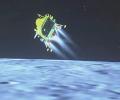
After Chandrayaan-3 touched down on the Moon, the Congress on Wednesday said it is a collective success of every Indian and ISRO's achievement reflects a saga of continuity and is truly fantastic.

ISRO aims to send humans into space on a Low Earth Orbit of 400 km for a three-day mission and bring them safely back to earth.
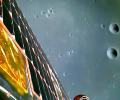
Taking to X (formerly Twitter), ISRO said, "Chandrayaan-3 Mission. Chandrayaan-3 Rover to MOX, ISTRAC, Moon walk begins!"

The primary satellite TeLEOS-2 is a synthetic aperture radar satellite developed under partnership between Defence Science and Technology Agency (DSTA) representing the Government of Singapore and ST Engineering.

According to ISRO officials, the spacecraft will be placed in a halo orbit around Lagrange point 1 (L1) of the Sun-Earth system, about 1.5 million km from the Earth. The L1 point is about one per cent of the total distance between the Earth and the Sun.

Around 23 minutes after lift-off, the primary satellite got separated and it was followed by six other co-passenger satellites, which were deployed into the intended orbits sequentially, ISRO said.

The Indian Space Research Organisation (ISRO) will perform the final manoeuvre on Saturday to inject Aditya-L1 spacecraft -- the first space-based Indian observatory to study the Sun -- into its final destination orbit, some 1.5 million kilometres from the Earth.

ISRO's maiden solar mission, Aditya L1, has captured its first high energy X-ray glimpse of solar flares. During its first observation period from approximately October 29, the High Energy L1 Orbiting X-ray Spectrometer (HEL1OS) on board Aditya-L1 spacecraft has recorded the impulsive phase of solar flares, the space agency said in a statement on Tuesday.
Despite the chill in bilateral ties, Pakistan's media on Thursday gave front-page coverage to India's historic moon landing while a former minister even called it a 'great moment' for Indian Space Research Organisation.

The US Air Force on Wednesday handed over NISAR, an earth observation satellite jointly developed by NASA and ISRO, to the Indian space agency.

AzaadiSAT had around 75 small payloads developed by schoolgirls of 75 rural schools.

ISRO chairman S Somanath said the success gave the space agency "greater confidence," as the GSLV will be next deployed in the NISAR mission, a collaborative effort with the US' NASA.
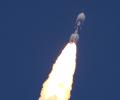
India's first solar mission, if successful, will showcase ISRO's ability to explore the cosmos, explains Kumar Abishek.

Four years after it broke many hearts, Indian Space Research Organisation's Chandrayaan is all set to soar towards the moon in its third expedition on Friday in an attempt to put the country in an elite club of nations that accomplished lunar missions with a soft landing.

Scientists are working on conducting various tests for the ambitious Gaganyaan mission and the agency is coordinating with the Navy and others in this connection, he said.

Indian Space Research Organisation (ISRO) will conduct three more test vehicle missions under the ambitious Gaganyaan programme after the maiden TV-D1 test flight, which is scheduled on October 21, the space agency's chairman S Somanath has said.

'When a Project Director is appointed, the whole organization -- including the Chairman ISRO -- works for his success. It is a lesson that has been of abiding value all through the other projects I have worked on,' recalls the late President, one of the earliest pioneers at ISRO.
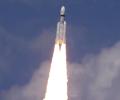
For the Gaganyaan programme, LVM3 rocket is re-configured to meet the human rating requirements and has been christened as 'Human Rated LVM3', ISRO said and it would be capable of launching the Orbital Module to an Low Earth Orbit of 400kms.

'ISRO's style is a terrific example of being able to survive, acknowledge failures, and then most importantly of all, learn from them to ensure that subsequent missions are successful.'
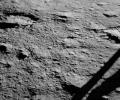
The lessons learned from the failure of Chandrayaan-2 contributed to the success of India's third lunar mission, former space scientist with the Indian Space Research Organisation (ISRO) Nambi Narayanan said, after the successful touchdown of the 'Vikram' lander on the lunar South Pole.

Friday's mission is the fourth operational flight of LVM3 which aims to launch the Chandrayaan-3 spacecraft into a Geo Transfer Orbit.

After the historic success of its Chandrayaan-3 lunar mission, Indian Space Research Organisation (ISRO) is going full throttle with its plans to send Indian astronauts for the first time to the Moon by 2040, ISRO Chairman S Somanath said.

As many as 23 companies have evinced interest in acquiring the Indian space agency's Small Satellite Launch Vehicle technology, said a top official who termed it a "tremendous response". Chairman of Indian National Space Promotion and Authorisation Centre (IN-SPACe) Pawan K Goenka said on Thursday that they are keen to see how the private sector uses the Small Satellite Launch Vehicle (SSLV) technology. "There has been a tremendous response, 23 companies have (so far) shown interest in applying for this technology.
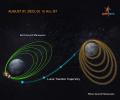
The Propulsion Module (PM) of Chandrayaan-3 has been moved from an orbit around the Moon to an orbit around Earth, the Indian Space Research Organisation (ISRO) has said, terming the operation a unique experiment.

The ISRO on Sunday scripted yet another history after its LVM3 rocket successfully placed 36 satellites of United Kingdom-based OneWeb group company into intended orbits.

The Lagrange point 1 (L1) of the Sun-Earth system is about 1.5 million km from the Earth. It is about one per cent of the total distance between the Earth and the Sun.

Aditya-L1 is the first Indian space-based observatory that will study the Sun from a halo orbit around the first Sun-Earth Lagrangian point (L1), which is located roughly 1.5 million km from the Earth.
 © 2026 Rediff.com - Investor Information - Advertise with us - Disclaimer - Privacy Policy - Sitemap - Feedback - About us - Terms of use - Grievances