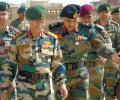
The main focus will be on the situation in eastern Ladakh where Indian and Chinese troops are locked in an eyeball-to-eyeball face-off in sensitive areas like Pangong Tso, Galwan Valley, Demchok and Daulat Beg Oldie

The Shanghai Cooperation Organisation (SCO) will hold its first in-person summit in Samarkand in Uzbekistan on Thursday after two years, shaking off Covid fears and providing a rare opportunity for all its eight heads of state to meet on the sidelines of the event to have face-to-face talks on pressing global and regional issues of common concern.

After the occupation of heights by the Indian Army, the Chinese army has deployed around 3,000 additional troops of its combined arms brigade including its infantry and armoured troops near the Rezang la and Rechen La heights.
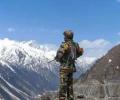
Multiple rounds of talks have failed to yield any significant result in defusing border tensions. The last round of Corps Commander-level talks between both countries were held on November 6, 2020 in Chushul in Eastern Ladakh.
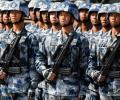
The international community must be clear that such a behaviour is unacceptable, a top US senator said.

The humanitarian gesture by the army came when it is dealing with an aggressive behaviour by the Chinese troops in eastern Ladakh.

The marathon fourth round of Lt Gen-level talks also focussed on steps for pulling back large number of troops and weapons from rear bases along the Line of Actual Control in eastern Ladakh.
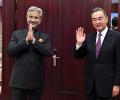
A five-point agreement was reached between Jaishankar and Wang at a meeting in Moscow on September 10 on the sidelines of a Shanghai Cooperation Organisation conclave.

Sources said the Indian side has prepared very well for responding to the Chinese reaction in view of the action by own troops including a Special Operations unit and Sikh Light Infantry troops there.

Defence Minister Rajnath Singh held two-back-to-back meetings with top military brass on Tuesday deliberating on the situation in eastern Ladakh after an Indian Army officer and two soldiers were killed in a violent clash with Chinese troops in Galwan Valley.

In a major boost to its fire power, the Indian Army has deployed a sizeable number of upgraded L70 anti-aircraft guns in the high mountains along the Line of Actual Control in Arunachal Pradesh in addition to its existing M-777 howitzers and Swedish Bofors guns, officials said on Wednesday.
Responding to Conservative Party MP Flick Drummond on the implications for British interests of a dispute between a 'Commonwealth member and the world's largest democracy on the one side, and a state that challenges our notion of democracy on the other,' he described the escalation in eastern Ladakh as "a very serious and worrying situation", which the UK is "monitoring closely".

The Indian and Chinese troops have been locked in a tense border standoff in eastern Ladakh since May 5, 2020, when a violent clash between the two sides erupted in the Pangong lake area.
Monday's clash was the biggest confrontation between the two militaries after their 1967 clashes in Nathu La when India lost around 80 soldiers while over 300 Chinese Army personnel were killed in the confrontation.

The agenda of the talks will be to firm up a roadmap for disengagement of troops from all the friction points in eastern Ladakh, the sources said.

There is a possibility of more talks at the military and diplomatic levels. India has always been in favour of peace. So, we hope a solution will be found out through talks, Singh said

The MEA spokesperson further said the actions and behaviour of the Chinese side since earlier this year along the LAC have been in "clear violation" of the bilateral agreements and protocols concluded between the two countries to ensure peace and tranquility on the border.

The visit comes a week after 20 Indian Army personnel were killed in a brutal assault by the Chinese military in Galwan Valley which escalated the border tension.
Chinese Foreign Ministry spokesman Zhao Lijian expressed this hope hours after India and China accused each other of firing in the air near the Pangong lake at the Line of Actual Control(LAC) in eastern Ladakh on Monday.
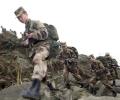
The Indian Army has been slow to react. Indian troops have deployed in the vicinity of PLA incursions, but there are no attempts to outflank Chinese positions.
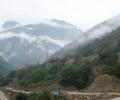
"A strict vigil is being maintained in almost all the sectors with China from Ladakh to Arunachal Pradesh as the Chinese suffered a setback in the southern Pangong Tso area and may try to make fresh attempts to ingress into newer dormant areas," government sources told ANI.
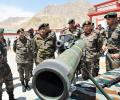
'China would want to take a tougher stance against India forming those strategic partnerships and prevent Quad from becoming a military alliance.'
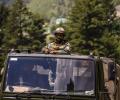
The Indian Army has ordered a probe into an alleged case of a data breach in the northern command after a soldier was found to be passing data to Pakistani operatives.

The India Army troops rose to the occasion to the challenges along the northern border as likely contingencies and possible options were war-gamed beforehand, Army Chief Gen M M Naravane said on Wednesday, referring to the eastern Ladakh standoff with China.
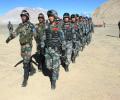
Indian and Chinese troops remained engaged in an eyeball-to-eyeball situation in several disputed areas.
Indian military sources said no firearms were used in the clashes and that most of the injuries were sustained following stone-pelting and use of rods by the Chinese side.
Jaishankar said China, in violation of the 1993 and 1996 agreements not to mass troops on the Line of Actual Control, chose to do so, and added that its attempt was obviously to unilaterally change the LAC.

'We should not allow ourselves to be surprised in any manner in future on the border.'

The last conversation between the two leaders was on April 4 on the issue of hydroxychloroquine.

As part of the mega plan, around 20 bridges, a number of tunnels, airbases and several key roads are being developed in strategically key areas in Arunachal Pradesh to bolster the overall military preparedness, officials said on Monday.

Lt Gen Y K Joshi, the General Officer Commanding-in-Chief of the Army's Northern Command, in an exclusive interview to CNN-News18, has said no land has been ceded to China. "No, a very emphatic no actually," he said while speaking to CNN-News18's Defence Editor Shreya Dhoundial.
In his initial remarks, Army Chief General M M Naravane briefed the commanders about the overall situation following which detailed discussions on the matter took place, the sources said.
Amid heightened military activities by the Chinese military opposite eastern Ladakh on its side on the Line of Actual Control, top Indian Army leadership would be briefed about the force's operational preparedness at a high-level meeting to be held here next week.

The Central Military Commission, which is the overall high command of the Chinese military, is headed by Chinese President Xi Jinping.
China routinely objects to Indian leaders' visits to Arunachal Pradesh to buttress its stand.
As the border standoff entered the sixth month, an early resolution to the row appeared dim with close to 100,000 Indian and Chinese troops remaining deployed in the high-altitude region and showing readiness for a long-haul. There is no official word on the talks yet but sources said the agenda was to finalise a roadmap for disengagement of troops from all the friction points.

China has been taking "incremental and tactical actions" to press its claims at the Line of Actual Control (LAC) with India and has unsuccessfully sought to prevent New Delhi from deepening its relationship with the US during and subsequent to the standoff, the Pentagon has said in a major report on China's military modernisation.
'The Chinese staying put in Pangong Tso, and creating a buffer zone on Indian territory in other areas,' a senior serving general tells Ajai Shukla.
As tension escalated at the Line of Actual Control (LAC), the sources said around 50-60 soldiers of Chinese People's Liberation Army (PLA) approached the Indian post in the southern bank of Pangon lake area at around 6 pm but the Indian Army personnel posted there strongly confronted them, forcing their retreat.

The Ministry of External Affairs said the two ministers discussed the outstanding issues related to disengagement from all friction points along the Line of Actual Control in eastern Ladakh.
 © 2026 Rediff.com - Investor Information - Advertise with us - Disclaimer - Privacy Policy - Sitemap - Feedback - About us - Terms of use - Grievances