
Retail investors have been the hardest hit in the recent market downturn, with stocks where they hold over 20% falling 45% from their 52-week highs.
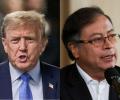
US President Donald Trump has imposed tariffs and a travel ban on Colombia after the South American nation refused to accept two American military planes deporting undocumented Colombians. The move comes after President Trump announced mass deportations of illegal immigrants and warned countries of consequences if they refuse to accept them. Colombian President Gustavo Petro, in a post on X, said that the US cannot treat Colombian migrants as criminals and denied the entry of American planes carrying Colombian migrants into Colombian territory. Trump responded by imposing a 25% tariff on all goods coming into the US, a travel ban and immediate visa revocations on Colombian government officials, and visa sanctions on all party members, family members and supporters of the Colombian government. The US also announced enhanced customs and border protection inspections of all Colombian nationals and cargo on national security grounds. In retaliation, Colombia announced a 25% import tariff on American products.

Lending her support to Donald Trump's leadership prowess, the Italian PM said that the Left Wing is nervous about leaders from conservative parties winning and collaborating globally.
The extension aims to facilitate negotiations for a solution that safeguards national security and allows the app to continue operating in the United States. Trump proposed a joint venture granting the US a 50 per cent ownership stake in TikTok.
From the 30-share blue-chip pack, Adani Ports dropped over 4 per cent. UltraTech Cement, Sun Pharma, IndusInd Bank, NTPC and Tata Steel were also the among the laggards. Nestle, ICICI Bank, Infosys, Tata Consultancy Services and HCL Tech were among the gainers.

US President Donald Trump said on Thursday that a news conference on reciprocal tariffs will be made later on Thursday.
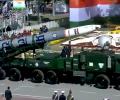
India showcased its indigenous short-range tactical missile Pralay for the first time at the Republic Day parade on Sunday. The missile, developed by the Defence Research and Development Organisation (DRDO), is capable of carrying a nuclear warhead and has a range of 150 to 500 kms. The parade featured an array of other indigenously built missiles, surveillance systems, and weapon systems, reflecting India's growing military prowess. The DRDO displayed its latest innovations for national security, including the quick reaction surface-to-air missile, airborne early warning and control system, and drone detect, deter and destroy system.
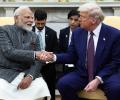
The real intention of the 'Tariff Man' (as Trump calls himself) may not even be to put the 'Tariff King' (as he describes India) on the mat with a knockout punch but to arm-twist the Indian leadership to agree to some multi-billion dollar mega arms deal, argues Ambassador M K Bhadrakumar.
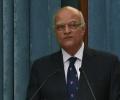
Former National Security Advisor (NSA) Shivshankar Menon has stated that the political dynamics between India and Pakistan have resulted in a "controlled level of hostility" that benefits the ruling elites in both nations. Speaking at the Kerala Literature Festival, Menon described Pakistan as a "brand new state" still grappling with its national identity. He argued that India's foreign policy towards Pakistan is influenced by its domestic politics, resulting in an uneasy equilibrium characterized by a "controlled level of hostility." Menon also questioned the concept of a multipolar world, stating that the current global order is merely "confused." He emphasized that the United States remains the world's true military hegemon, while other nations, including China, are regional powers. Menon further argued that there is no binding international order, leading to a state of "between orders." He highlighted the absence of definitive international agreements on crucial issues in recent decades.
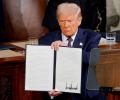
'Decline of the UN did not start with the Trump administration. It has been happening over the last two decades or more.'

Prime Minister Narendra Modi concluded his visit to the United States after holding high-level bilateral talks with President Donald Trump on a wide range of subjects, including trade and technology, defence and security, energy and people-to-people ties. The two leaders decided to take a significant step in deepening their strategic ties, particularly in the areas of defence, energy, and critical technology. Modi also met with key American officials, including National Security Advisor Michael Waltz and Director of National Intelligence Tulsi Gabbard, and prominent business leaders like SpaceX CEO Elon Musk and Indian-American entrepreneur Vivek Ramaswamy.
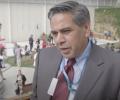
Assam Chief Minister Himanta Biswa Sarma has said that Pakistani national Ali Tauqeer Sheikh, allegedly linked to Congress MP Gaurav Gogoi's British wife, has visited India 18 times. Sarma, while speaking in the state assembly, claimed that the initial information in the case is "very fatal" for the Congress and will have a "huge impact" on the politics of Assam. He also stated that the investigation findings will put some people in an indefensible position.
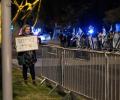
In a major shocker, Israel on Friday said, citing forensic reports that the Bibas brothers, whose corpses were returned by Hamas, were killed with 'bare hands' by Hamas days after they were held captive in the Gaza Strip.

President Donald Trump is expected to sign a series of executive orders fulfilling campaign promises, including declaring an emergency at the southern border, addressing a national energy crisis, and defining sex-related policies. The orders aim to address immigration, national security, and energy independence, with a focus on reversing policies implemented by the previous administration.

After the 1962 War with China, there was a demand to forge greater defence cooperation between India and the West. One such voice was that of Sudhir Ghosh, a distinguished MP, to tie up strategic cooperation with the USA immediately after the Chinese attack on India, recalls Rup Narayan Das.
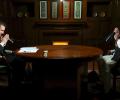
'Unsurprisingly, Trump shared Modi's podcast with Fridman on his Truth account.' 'The intentions of Trump, a transactional president, are never easy to tell.' 'We will know in the next fortnight if and when he unfolds reciprocal tariffs on Indian goods, whether Modi's flattering words made any significant difference to Trump's compass,' notes Ambassador M K Bhadrakumar.

Last year, Saudi announced the opening of an alcohol shop in the Diplomatic Quarter of Riyadh to combat the black market and illegal imports. The store is only for non-Muslim diplomats, who must present diplomatic identification before they buy.

At the PMO, policies are framed by factoring in analytical perspectives, implications, sustainability, and other dimensions.
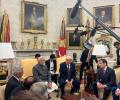
Who accompanied Prime Minister Narendra D Modi to his Thursday meeting with US President Donald J Trump in the Oval Office, and who did POTUS bring along?

'Today's situation is unacceptable. It has the potential to affect the IAF's operational capability.'
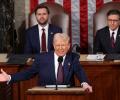
'Trump's desire to withdraw the US from some arenas on the global stage will result in ceding space to China.'
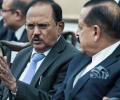
National Security Advisor Ajit Doval is likely to travel to Beijing within the next few weeks to lead the Indian delegation at a new edition of the Special Representatives dialogue on the larger boundary question that will be held after a gap of nearly five years, authoritative sources said.
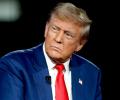
A leading expert predicts that the incoming Trump administration will likely continue its pro-India policies, including the Indo-Pacific strategy and Quad, but highlights potential challenges such as trade disagreements, immigration issues, and a possible quid pro quo for technology sharing. The expert also notes that the Trump 2.0 administration may prioritize great power politics over strategic altruism, potentially impacting human rights and religious freedom concerns.
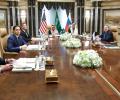
The US move to align with Russia is prompted by fear of a Sino-Russian joint threat. Russia, fully aware of its military vulnerability vis a vis China may cautiously welcome the American move, assesses Colonel Anil A Athale (retd).
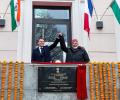
Prime Minister Narendra Modi and French President Emmanuel Macron have called for enhancing trade and investment ties between their countries and committed to further deepening their engagement in the Indo-Pacific. They discussed a full spectrum of bilateral relations, including key global and regional issues, and stressed the urgent need for reform in the United Nations Security Council. The leaders also underscored their commitment to ensuring the global AI sector can drive positive social, economic, and environmental outcomes.

'He may respect others, but he is unlikely to admire them'
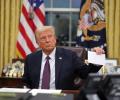
President Donald Trump has said that birthright citizenship was primarily intended for the children of slaves and not for the whole world to "come in and pile" into the US. Trump issued an executive order against birthright citizenship on his first day in office, which was struck down by a federal court in Seattle the next day. Trump has said that he would appeal against it and is confident that the Supreme Court will rule in his favor. A group of Republican Senators introduced a bill in the US Senate to restrict birthright citizenship to the children of illegal immigrants and non-immigrants on temporary visas. They argue that birthright citizenship is a major pull factor for illegal immigration and a weakness for national security.
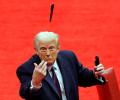
Notably Trump had withdrawn from the Paris Agreement immediately after his first inauguration in January 2017. Joe Biden reversed that decision later.
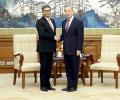
Foreign Secretary Vikram Misri on Monday called on Chinese Foreign Minister Wang Yi and discussed issues of bilateral interest.
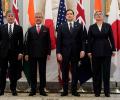
India has always been open to legitimate return of undocumented Indians to their country, External Affairs Minister S Jaishankar said on Wednesday, noting that New Delhi is still in the process of verifying those from the United States who can be deported to India and the number of such individuals cannot be determined yet.
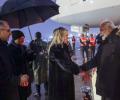
Prime Minister Narendra Modi is set to hold bilateral meetings with US President Donald Trump and other prominent American personalities during his two-day visit to the United States.
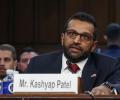
Dan Scavino, Assistant to the President and White House Deputy Chief of Staff on Thursday said that United States President Donald Trump has officially signed the commission to confirm Kash Patel as the ninth Director of the Federal Bureau of Investigation (FBI).
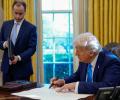
The stage may be set for a recalibrated US-Iran relationship, suggests Ambassador M K Bhadrakumar.
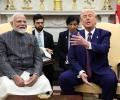
US President Donald Trump and Indian Prime Minister Narendra Modi met in Washington D.C. to discuss a range of issues including trade, defense, and energy. The two leaders announced plans to finalize "wonderful trade deals" for both countries, and Trump emphasized the need for India to purchase US oil and gas. Modi congratulated Trump on his second term and highlighted the importance of working together to further strengthen the India-US relationship. The meeting also addressed the ongoing conflict in Ukraine, with Modi reiterating India's commitment to peace.
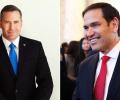
By picking Rubio and Waltz as his top diplomat and NSA guarantees a continuation of bi-partisan support and further strengthening of India-US relationship under the second Trump administration.
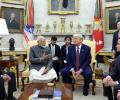
United States President Donald Trump for the fourth time in recent days claimed that the Biden administration allocated $21 million funding to India for 'voter turnout', evoking a sharp response from the Congress which urged Prime Minister Narendra Modi to 'talk to his friend' and strongly refute the allegation.
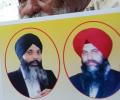
India on Wednesday strongly trashed as 'smear campaign' a Canadian media report that claimed that the Indian prime minister was aware of the alleged plot to kill Sikh separatist Hardeep Singh Nijjar.
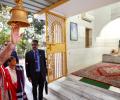
Rahul Gandhi made the statement on January 15, 2025, during the inauguration of the Congress Party's new headquarters at Kotla Road in Delhi.

Canada's allegations against Union Home Minister Amit Shah are 'concerning', the United States said on Wednesday, noting that it would continue to consult Ottawa on the issue.
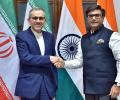
India's Foreign Secretary Vikram Misri will travel to Beijing for a two-day trip beginning Sunday, marking the second high-profile visit from India to China in less than one-and-a-half months. The visit comes amidst ongoing border tensions and follows a recent disengagement pact between the two countries in eastern Ladakh. The Foreign Secretary-Vice Minister mechanism meeting will focus on the next steps for India-China relations, including in the political, economic, and people-to-people domains. The decision to revive this bilateral mechanism was taken at a meeting between Prime Minister Narendra Modi and Chinese President Xi Jinping in Kazan in October.
 © 2026 Rediff.com - Advertise with us - Disclaimer - Privacy Policy - Sitemap - Feedback - About us - Terms of use - Grievances