
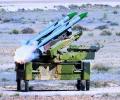
The unguided rocket system is meant to neutralise bigger geographical area with rapid salvo of rockets. With a range of 40 km, 'Pinaka' can fire salvo of 12 rockets in 44 seconds. One salvo each (12 rockets) from the battery of six launchers can neutralise at a time a target area of 3.9 sq km.
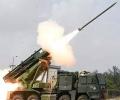
The Army is also looking at strengthening the existing Pinaka regiments and had recently placed orders for buying the area denial ammunition for these rocket regiments.
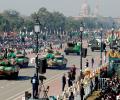
India's rich cultural diversity, military prowess, economic progress and the strides it has taken in sectors, such as science and technology, were on full display at the 76th Republic-Day celebrations on Kartavya Path on Sunday, in the presence of Indonesian President Prabowo Subianto.
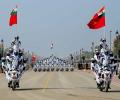
India will display its military prowess and cultural heritage at the 76th Republic Day celebrations on Kartavya Path in New Delhi. The parade will feature 16 tableaux from states and Union Territories, 15 from central ministries, and a tri-services tableau showcasing the spirit of "jointness" among the armed forces. The event will also include a flypast featuring 40 IAF aircraft and three Indian Coast Guard Dornier aircraft, as well as a display of cutting-edge defense platforms including BrahMos, Pinaka and Akash.
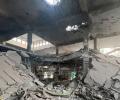
'There's something called deterrence by punishment.' 'That means you hit in a manner calculated to raise costs and consequences for Pakistan, so that the next time it attempts a Pahalgam-like attack, it has to think ten times.'
'When one air force (India's) hits the other's airbases with impunity and that air force (Pakistan's) is not able to respond, then the air force, which has put the other's airbases out of commission, has won.'
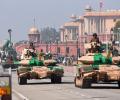
India will showcase its military prowess and rich cultural heritage on Kartavya Path in New Delhi on January 26 to mark the 76th Republic Day. Indonesian President Prabowo Subianto will be the chief guest at the event, which will also see the participation of a marching contingent and a band contingent from Indonesia. The theme of the parade is 'Swarnim Bharat: Virasat aur Vikas', focusing on the platinum jubilee of the enactment of the Constitution. The parade will feature a number of cutting-edge defense platforms, including BrahMos, Pinaka and Akash, as well as the Army's Battle Surveillance System 'Sanjay' and DRDO's surface-to-surface tactical missile 'Pralay'.
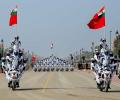
India as a sovereign democratic republic completed 75 years of its eventful journey on Sunday, with the stage set at the Kartavya Path in New Delhi for the ceremonial parade during which the country will showcase its military prowess and rich cultural heritage.
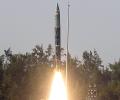
Ahead of Republic Day, the Indian Army announced on Thursday the addition of two new features to this year's parade: battlefield surveillance systems and a Defebce Research and Development Organisation tableau showcasing Pralay, short-range ballistic missiles.

'There is a sense of achievement but it has come at a great cost.'

The proposals will help in the modernisation of the armed forces.

India's indigenously developed Pinaka rockets were on Thursday successfully test-fired thrice from a multi-barrel rocket launcher at an armament base in Chandipur-on-sea, about 15 km from Balasore in Odisha.
The LTTE triggered long-range artillery shelling at the Forward Defence Lines of the military at Muhamalai in the northern Jaffna peninsula.
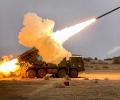
The rocket systems that were tested at Pokharan field firing ranges were manufactured by a private industry following transfer of technology by the Defence Research and Development Organisation.

India is celebrating its 73rd Army Day on Friday. All Army Command headquarters celebrate Army Day to commemorate the country's soldiers. The day marks when Lt Gen K M Carriappa took over as commander-in-chief of the Indian Army from General Francis Butcher, the last British commander-in-chief of India, in 1949.

'A battery of six guns had a devastating effect because it can destroy men and material.'
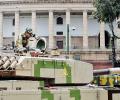
The Defence Reasearch and Development Organsiation has, in an attempt to give India's lawmakers 'a first-hand account of huge work undertaken by the agency', begun rolling in weapon systems manufactured by it outside the Parliament.

Like the Shourya and Prahar missiles, the Pralay is powered by conventional solid fuel, and its payload is designed to carry only a conventional warhead.

Banning the import of platforms that are already being built in India serves little purpose.

The development and trials will continue and the rocket is expected to enter service any time now.

India has signed a deal worth over Rs 2,600 crore with Russia to procure 66,000 anti-tank shells to meet the shortfall of critical ammunition faced by its armoured fleet, including the latest T-90 tanks.
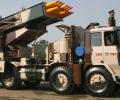
The ministry of defence has bought two regiments of the indigenous Pinaka multi-barrelled rocket launcher for Rs 3,230 crore.
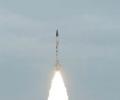
Seeking to enhance its precision strike capabilities, India is planning to replace its 150 km-range Prithvi ballistic missiles with the newly developed quick reaction Prahar missiles.

The army has long been deficient in artillery, the modern battlefield's most lethal killer, says Ajai Shukla.
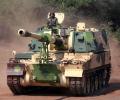
'Landmark developments herald the end of two decades of stagnation in the army's modernisation plans,' notes Brigadier Gurmeet Kanwal (retd).

A salvo from a Pinaka battery brings down on the enemy more than seven tonnes of high explosive in just 44 seconds.
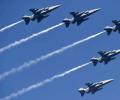
Each year the nation is glued to its television screen as the country shows off its might at the Republic Day parade. However, it takes much practice with sessions starting 5 am, and dedication of the participating paramilitary jawans, other participants and behind-the-scenes helpers -- labourers, cleaners and security staff, among others -- who brave the relentless Delhi chill to make the parade a flawless spectacle.

According to officials, the list of 101 items includes towed artillery guns, short range surface to air missiles, cruise missiles, offshore patrol vessels, electronic warfare systems, next generation missile vessels, floating dock, anti-submarine rocket launchers and short range maritime reconnaissance aircraft.

'The logical step is to challenge the very legitimacy of the Chinese claim over Tibet,' recommends Inspector General Gurdip Singh Uban (retd).

'The Indian Army can easily initiate retaliation.' 'But escalation would be both inevitable and unpredictable.'
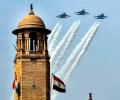
'No country can ever be free to make its choices and remain independent if it continues to wear borrowed plumes,' warn Lieutenant General Ashok Joshi (retd) and Colonel Anil A Athale (retd).
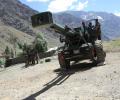
Accurate and sustained firepower against Pakistan during the Kargil War helped Indian soldiers to reduce the enemy to rubble.
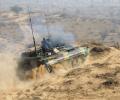
'Should the two armies clash in a conventional battlefield, the advantage will pass more and more to the Indians as the battle progresses,' says Brigadier S K Chatterji (retd).
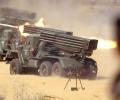
'Will it lead to a full-scale war? I doubt it.' 'But I do think there will be some kind of limited conflict.'
.jpg)
The Indian Army must be given a free hand to retaliate punitively at one or more places of its choosing on the LoC. The aim should be to cause maximum damage to the forward posts of the Pakistan army, particularly those through which recent attacks have been launched, thereby raising the cost for the army, says Gurmeet Kanwal.
 © 2026 Rediff.com - Investor Information - Advertise with us - Disclaimer - Privacy Policy - Sitemap - Feedback - About us - Terms of use - Grievances