
After facing embarrassment because of errors in the most wanted list that was handed over to Pakistan in May, the National Investigation Agency has prepared a new list of 28 wanted criminals that includes al-Qaeda-linked terrorist Illyas Kashmiri, and Lashkar founder Hafiz Muhammed Saeed.
Pakistan's Punjab province' home department has directed concerned agencies to provide extra security cover to the banned Jamaat-ud-Daawa chief Hafeez Muhammed Saeed, following intelligence reports that the Tehreek-e-Taliban Pakistan is planning to target him.

Jamaat-ud-Daawa chief Hafiz Muhammed Saeed, who is believed to have masterminded the brazen terror attacks on Mumbai in November 2008, has denied his role in the bloodbath.

Pervez Musharraf is contemplating a political front with jihadi groups to contest Pakistan's next election. Should the jihadi groups win a few seats, terrorist outfits will gain legitimacy in Pakistan, warns Brigadier S K Chatterji (retd).

The United States is not taking at face value Pakistan's actions against terrorists outfits.
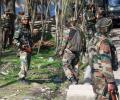
'An unconventional war cannot be fought by conventional means,' says Lieutenant General D B Shekatkar (retd).
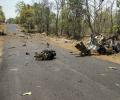
'As casualties go, Maoism has been exacting a heavy price, and with a sickening regularity.' 'Yet, it is the other threat that hog all the limelight, the headlines and the TV studio debates,' says Saisuresh Sivaswamy.

A simple explainer to the Indus Water Treaty.

'With this it is clear who stands with India in the international community and who doesn't and this enables India to take counter measures without being seen as overly pro-US,'says Rajeev Sharma.
If the parliamentary representation of radical Islamic parties goes up dramatically in 2018, what will this do to Pakistan's army?
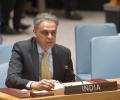
'It must be rendering Modi, Amit Shah and Adityanath speechless that the Indian diplomat who lifted the Azhar trophy at the UN in New York is also a Muslim. 'Yes, this is the wonder that was India,' says Ambassador M K Bhadrakumar.

'Peace talks with Pakistan are like accepting a dinner invitation from cannibals and hoping to return alive,' says Colonel Anil A Athale (retd).

'Local support is very important, without it the terror attack couldn't have taken place.' 'Explosives were secured, the IED was manufactured, the boy was brainwashed and converted into a suicide bomber... it takes a lot of planning and hard work.'
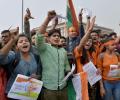
'The emphasis is on nationalism, which the party apparently feels will have greater resonance than one on religious identity which may have lost some of its appeal in recent years.'
'India showcased its ability to launch multiple Special Forces strikes simultaneously across a well defended front.' 'Through these strikes Pakistan was given a glimpse of the full range of India's military capabilities,' says Brigadier Gurmeet Kanwal (retd).
'Both India and Pakistan don't want to escalate tensions.' 'So no matter what is claimed before the public, the reality is slightly different.'

The Indian Army, the Border Security Force, Hindu temples and the people of India, all have been targetted by fidayeen from Pakistan.

'Against the backdrop of difficult administrative, political and economic problems, Imran's temperament and staying power will be the subject of intense expectation and public scrutiny,' says Rana Banerji, who headed the Pakistan Desk at the Research and Analysis Wing, India's external intelligence agency.
Nawaz Sharif may have permitted the trial of Jaish-e-Mohammed terrorists for the Pathankot attack. But this fell apart because of General Raheel Shareef's keenness to make Kulbhushan Jadhav the centerpiece of global attention. Ambassador G Parthasarthy, a former Indian high commissioner to Pakistan, reveals the Pakistan army chief's gambit against India.

'The two NSAs, who have been mandated to address mutual concerns on terrorism, will need to devise credible and irreversible measures to see that the likes of Hafiz Saeed and Masood Azhar do not ever get a free hand to run riot again,' says Ambassador G Parthasarathy, India's former high commissioner in Pakistan.
'The Pakistani military has encouraged and supported terrorist organisations, especially in Kashmir, as a means of waging proxy war against the Indian military and the country's superior economic resources.' 'The evidence is irrefutable with the recent killing of 46 paramilitary troops being just the latest example.'
'Over the last year, Bajwa has created the environment to support bold moves on India. The ball is in India's court,' a senior Pakistan military officer tells Ajai Shukla.

'Pakistan persists in the belief that such attacks will enable it to obtain the territory it covets. Their plans will not succeed.'

'Much can be done by India under the provisions of the treaty to make full use of its rights it has.' 'The impact of that will be felt downstream.'

'This is the first time that the Americans have agreed to refer to "cross-border terrorist attacks" in a joint statement.' 'No wonder Pakistan has called the joint statement "singularly unhelpful" and has blasted it, and its all-weather friend China has applauded Pakistan's frontline role in combating terrorism,' points out former foreign secretary Ambassador Kanwal Sibal.

'If the US-Pakistan relationship continues to suffer, Pakistan may feel it has less to lose and decide that it need not keep a leash on LeT in order to appease America.' 'A tougher US policy toward Pakistan could lead to an emboldened and strengthened LeT and JeM, resulting in more terrorist attacks in India.'

'Checkmating India by its nukes, Pakistan can pursue terrorism against India in the Kashmir Valley and also resume launching Mumbai 2008 style attacks.' 'The military oligarchy in Pakistan has a totally different view of what is desirable and possible in the subcontinent.'
'The response to terror is not always reciprocal terror, nor is launching a conventional response the best response.' 'The best response is to make the sponsor pay a price he cannot afford,' says former RA&W chief Vikram Sood.
 © 2026 Rediff.com - Investor Information - Advertise with us - Disclaimer - Privacy Policy - Sitemap - Feedback - About us - Terms of use - Grievances