
Fruits, vegetables and eggs continued to witness deflationary trend during January this year, with their prices declining 4.18 per cent, 13.32 per cent and 2.44 per cent, respectively.

The retail inflation rate breached the 6 per cent upper tolerance limit of the RBI for the first time in seven months in January, while the wholesale price index stayed in double-digits for the 10th month in a row, showed two sets of data released by the government on Monday. Retail inflation, the key input for the RBI while reviewing the repo rate every two months, soared during the month mainly because of a spike in certain food items. The previous high for retail inflation was 6.26 per cent in June 2021.

Our Rediff labs team analysed 2014 data from the Ministry of Statistics and Programme Implementation on the participation of women in decision making at administrative levels in India in three different sectors.
Retail inflation in pulses and products category rose to a staggering 42.20 per cent in October.

The overall consumer food inflation in August fell to 5.91 per cent as against 8.35 per cent in July

Take a look at the map to see just how green is your area?

CPI inflation is on the decline since July.
The decline in retail inflation has been mainly on account of falling prices of vegetables and pulses

C P Chandrasekhar, who has served on key statistical panels in the past both as a chairman and member, said he was present in the campus when the ruckus broke out on Sunday and found the incident "disturbing" and "unprecedented", and that it further undermined the faith in the system. Somesh Jha reports.

As India looks to mend its Covid-battered economy, one thing that will grab the attention of all concerned is the path that both wholesale and retail inflation will follow. Even the Reserve Bank of India in its latest policy statement said, "Going forward, the inflation trajectory is likely to be shaped by uncertainties impinging on the upside and the downside.

Retail inflation rises to 4.41% in Sep on dearer food items

A look at six indicators shows all of them have collapsed from positive growth in April to contraction in September.

The lockdown in India has been a timely, graded, proactive and pre-emptive public health measure to fight the COVID-19 pandemic and has been part and parcel of the government's overall strategy, Dr V K Paul, Member (Health), NITI Aayog, and Chairman, Empowered Group 1, said at a media briefing on the COVID-19 situation.

The NSSO had enumerated 79,306 households in rural areas and 45,374 in urban regions.

Food inflation was 7.79 per cent last month, higher than a revised 7.47 per cent in May

Delay in implementation of 224 central sector infrastructure projects resulted in cost overruns to the tune of Rs 2.11 lakh crore, government said.

The technical report of the NSSO has generated controversy following its observation that as much as 36 per cent units forming part of MCA-21 database, used in computing GDP, could not be either identifiable or traceable in the field.
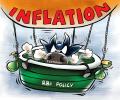
Currently, the retail inflation is well below the RBI's comfort level. The government has asked the central bank to keep inflation in the range of 4 per cent.

India's factory output climbed 22.4 per cent in March, benefiting from the base effect of the lockdown-marred month a year back as well as a turnaround in the manufacturing sector, while retail inflation slipped to a three-month low of 4.29 per cent in April. The high positive annual growth in the index of industrial production (IIP) in March 2021 came on back of a contraction of (-)0.9 per cent and (-)3.4 per cent in January and February 2021 respectively, according to the data released by the National Statistical Office (NSO) on Wednesday. This turnaround was led by recovery in the mining, manufacturing and electricity sectors.

Data on the new series given by a panel on real sector statistics shows that GDP grew by 10.23 per cent in 2007-08 and 10.78 per cent in 2010-11. There are some years for which the new figures show a deceleration in growth as well. The new series has 2011-12 as the base year while the earlier series had 2004-05 and 1993-94.

Many feel that the money from their MPLADS should go directly to a district hospital in their respective constituencies rather than a central fund like PM CARES. Archis Mohan reports.

There has been no discussion so far on cutting Plan expenditure, the Planning Commission said on Thursday even as it asked states to maintain fiscal discipline.
Declining vegetable prices brought down the retail inflation to a 15-month low of 4.59 per cent in December and within the comfort zone of the Reserve Bank, government data showed on Tuesday. It is for the first time during the current fiscal that the Consumer Price Index (CPI) based inflation print is below 6 per cent or in the RBI's target range of 2 to 6 per cent. The central bank factors in the CPI-based inflation while arriving at its monetary policy. The inflation in December 2020 came down from 6.93 per cent in November, mainly on account of 10.41 per cent decline in vegetable prices over the year-ago period.

As a well-wisher of the Indian Statistical System and part of the system for more than 37 years, Sunil K Sinha, former DG and CEO of NSSO, offers suggestions to improve data quality.
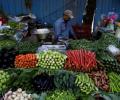
The retail inflation, which is factored in by the RBI to arrive at its monetary policy, has been on decline since last month. The previous low was 5.54 per cent in November 2019. The government has asked the RBI to restrict the inflation around 4 per cent, with a margin of 2 per cent on the either side.
Subramanian's paper comes at a time when concerns have been raised in various quarters about the official economic growth numbers. The Economic Advisory Council-PM said the Base Year of India's income calculations were shifted to 2011-12 on the basis of recommendations of several committees with experts in national income accounting.
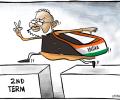
The government's decision to release the reports comes two days after over 200 scholars from across the globe issued a statement demanding release of all withheld reports produced by the NSO, including the household consumer expenditure survey that was junked.

The findings of the report showed consumer spending falling for the first time in over four decades in 2017-18. The government has, however, termed it a "draft" report, reports Somesh Jha.

For 2015-16, IMF pegged India's growth rate at 7.5 per cent.

Piyush Goyal, who held the post of finance minister when Arun Jaitley was undergoing treatment, told the Confederation of Indian Industry's annual session: "All stakeholders, including the RBI, should introspect on their respective roles (on low economic growth)."
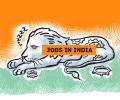
Most economists were of the view that the NSSO should release the data, as any move to withhold it will dent the image of country's statistical system.

The National Council of Applied Economic Research (NCAER) on Thursday lowered the GDP projection for the current fiscal to 4.7-4.9 per cent due to exchange rate depreciation.

Concerned with the continuous downward revision, the EPFO has since last month begun counting people quitting their previous jobs and joining a new one as an addition to the net payroll.

Slowdown in industrial production notwithstanding, a marginal increase in inflation raised the clamour for another round of rate cut by the Reserve Bank on April 4 to boost economic activity.

The Congress, Left parties, Trinamool Congress and some others were in the forefront of this attack on the government, which is set to garner around Rs 7,900 crore through the decision.

Union Health Minister Harsh Vardhan on Thursday said the government was aiming to bring down India's Covid-19 mortality rate to less than 1 per cent from the current 1.64 per cent, which is still the lowest in the world.

Experts said a dip in consumption expenditure indicated an increasing prevalence of poverty in the country.

The survey covered 47,535 households in rural areas and 36,065 households in urban areas.

Discrepancies in the statistical GDP data refer to the difference in national income under production method and expenditure method.

The internals of the food inflation are worrying, given a broad-based uptick across categories that tend to be sticky, such as proteins, and a narrower-than-expected reduction in inflation for vegetables.
 © 2026 Rediff.com - Advertise with us - Disclaimer - Privacy Policy - Sitemap - Feedback - About us - Terms of use - Grievances