
The Supreme Court granted bail to Arvind Dham in a money laundering case, emphasizing that prolonged incarceration without trial violates the right to a speedy trial under Article 21 of the Constitution.
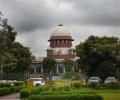
The Supreme Court has raised concerns about the forensic examination of leaked audio clips related to the 2023 ethnic violence in Manipur, questioning why the entire available audio was not sent for analysis.

The Supreme Court expressed concern over an incident in Delhi where students from Kerala were allegedly assaulted and ridiculed for their cultural attire and language.

The Supreme Court of India has advocated for sex education to be introduced to children at a younger age, rather than starting from Class IX. The court emphasized the importance of educating adolescents about hormonal changes and related precautions.

The Supreme Court delivered a split verdict on a plea by the Maharashtra government seeking a review of the court's earlier direction to form a special investigation team (SIT) with Hindu and Muslim officers to investigate the 2023 Akola communal riots. Justice Sanjay Kumar refused to review the direction, while Justice Satish Chandra Sharma agreed to hear the review plea in open court.

The Supreme Court on Tuesday cancelled bail granted to former DHFL promoter Dheeraj Wadhawan in the multi-crore bank loan scam case. A bench of Justices Sanjay Kumar and Satish Chandra Sharma passed the order after perusing the report filed by a medical board and directed Wadhawan to surrender within two weeks.
The Supreme Court criticized the Punjab police for assaulting a Colonel over a parking dispute, highlighting the Army's service at the border and ordering a CBI probe.

The Supreme Court of India has agreed to examine whether Muslims can be governed by secular Indian succession law for ancestral properties instead of Shariat without renouncing their faith. The court will consider three petitions on the matter, including one filed by Naushad K K, a resident of Kerala, who wants to be governed by the succession law without leaving Islam. The court has issued notices to the Centre and the Kerala government to file their responses.
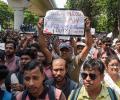
The Supreme Court has extended the services of terminated teachers in West Bengal who were found untainted by the CBI, providing relief to the state. The court did not, however, extend the services of grade 'C' and 'D' employees of state-run and aided schools. The court directed the state government to start the recruitment process by May 31 and conclude it by December 31.

The Supreme Court on Friday refused to entertain a fresh plea challenging constitutional validity of the Waqf (Amendment) Act, 2025.

The Supreme Court expressed its disapproval of an analogy used by the Centre in support of the inclusion of non-Muslims in Waqf boards, stating that such logic would disqualify a bench of Hindu judges from hearing matters related to Waqf. The CJI questioned the Centre's stance on the provisions of the Waqf (Amendment) Act, 2025, which allows non-Muslim members in the Central Waqf Council and state waqf boards. The Solicitor General defended the provisions, emphasizing that the non-Muslim inclusion is limited and does not impact the Muslim composition of these bodies. However, the CJI asserted that judges shed their religious affiliations while serving on the bench and maintained their secularity in their judicial capacity.

The top court, however, clarified that if the petitioner wanted to take any recourse to appropriate statutory remedy, he was at liberty to do so.

The Supreme Court of India has censured BJP MP Nishikant Dubey for his remarks against the judiciary, stating that his comments "tend to scandalize and lower the authority of the Supreme Court of India." The court dismissed a contempt petition against Dubey but issued a scathing order criticizing his remarks, which included accusations that the court was "taking the country towards anarchy" and that Chief Justice Sanjiv Khanna was "responsible for the civil wars taking place in the country." The court deemed Dubey's statements "highly irresponsible" and indicative of an attempt to "incite religious wars." The order highlighted the importance of maintaining public confidence in the judiciary and condemned attempts to undermine its authority.

The Supreme Court of India has rejected a plea by a woman claiming to be the legal heir of the Mughal emperor Bahadur Shah Zafar-II, seeking possession of the Red Fort in Delhi. The court termed the plea as "misconceived" and "meritless", dismissing the petition against the Delhi High Court order. The petitioner, Sultana Begum, argued that her family was deprived of the Red Fort by the British East India Company after the first war of Independence in 1857. The court, however, dismissed the petition, citing the delay in filing the appeal and the lack of justification for the claim.
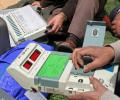
The Supreme Court of India dismissed a plea seeking a directive for 100% manual counting of Voter Verified Paper Audit Trail (VVPAT) slips in addition to electronic counting. The court cited its previous rulings on the safety and security of Electronic Voting Machines (EVMs) and stated that the issue was not open for reconsideration. The plea argued for a modified VVPAT system where voters could verify printed ballots before leaving the polling station, and for 100% manual counting of VVPAT slips. The court upheld the Delhi High Court's decision dismissing the plea, referring to previous Supreme Court judgments on the matter.
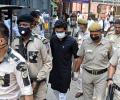
The Supreme Court of India questioned whether former JNU student Sharjeel Imam can be prosecuted in multiple states for sedition based on a single speech. The court is considering a plea to club multiple FIRs filed against Imam in Uttar Pradesh, Assam, Manipur, and Arunachal Pradesh for his alleged inflammatory remarks during protests against the Citizenship Amendment Act (CAA). The court is concerned about the potential for double jeopardy and has indicated that it may transfer the cases to Delhi.

In a significant order, the Supreme Court on Friday issued directions that the post-graduate medical entrance exam scheduled on June 15 be conducted in a single shift, saying holding it in two shifts 'creates arbitrariness'.

The CJI called Justice Gavai his "biggest support" while expressing confidence in the latter's leadership and commitment to constitutional values.
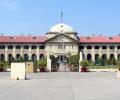
The woman is a student of MA and hence she "was competent enough to understand the morality and significance of her act", stated the order passed by Justice Sanjay Kumar Singh last month.

The Supreme Court of India has sharply criticized the Uttar Pradesh police for filing FIRs in civil cases, stating there is a "complete breakdown of rule of law" in the state. The court expressed its displeasure after discovering FIRs filed by the UP police in civil disputes, questioning the use of criminal law in such matters. The Chief Justice highlighted the absurdity of converting civil disputes into criminal cases, emphasizing that non-payment of money cannot be considered a criminal offense. The bench has summoned the investigating officer to justify the registration of an FIR in a specific case, and has stayed criminal proceedings against the accused while allowing the cheque bounce case to continue.

The law prohibits conversion of any place of worship and provides for the maintenance of the religious character of any place of worship as it existed on August 15, 1947.

Podcaster Allahbadia's remarks on parents and sex on comedian Samay Raina's YouTube show India's Got Latent triggered a controversy and several FIRs have been lodged against him and others in various parts of the country.

The West Bengal Board of Secondary Education (WBBSE) has appealed to the Supreme Court to modify its order annulling over 25,000 jobs in schools. The board argues that the termination of 11.3% of existing teachers would have a devastating impact on schools in the state and impact the education of over 78.6 lakh students. The WBBSE is seeking to allow untainted candidates to continue in service until the end of the academic year or until the process of fresh appointments is concluded, whichever is earlier.
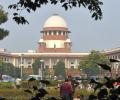
The Supreme Court on Monday said the pleas challenging the Waqf (Amendment) Act's constitutional validity will now be taken up by a bench headed by Chief Justice of India-designate Justice B R Gavai on May 15 as the incumbent CJI will be demitting office on May 13.

The Supreme Court of India has granted interim police protection to Discovery Communications India officials who have been receiving threats from followers of self-styled godman Asaram Bapu. The threats were triggered by the release of a documentary series titled "Cult of Fear: Asaram Bapu". The court has directed the Centre and several state governments to ensure the safety of the petitioners, including their offices.

Instant 'triple talaq', also known as 'talaq-e-biddat', is an instant divorce whereby a Muslim man can legally divorce his wife by pronouncing 'talaq' three times in one go.

The Supreme Court of India has transferred a Public Interest Litigation (PIL) concerning the safety and longevity of bridges in Bihar to the Patna High Court. The court expressed concern over the state government's handling of bridge collapses, noting that officials were suspended after incidents but reinstated after the public outcry subsided. The court also criticized the state's voluminous response to the PIL, which lacked explanations for the collapses. The Patna High Court will now monitor the state's efforts to ensure structural and safety audits of bridges in Bihar.
The Centre on Thursday assured the Supreme Court that it will neither denotify Waqf properties, including "Waqf by user", nor make any appointments to the central Waqf council and boards till May 5.
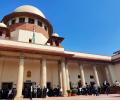
The Supreme Court on Monday agreed to consider listing for urgent hearing the petitions challenging the constitutional validity of the Waqf (Amendment) Act, 2025.

"Liberty is granted to newly-added respondents (states) to file a response within 15 days from the date of service, and rejoinder if any be filed after 15 days. The interim order to continue and will equally apply to the cases mentioned in the amended writ petition. We direct no further cases be registered without the permission of this court," the bench's order said.

Chief Justice of India Sanjiv Khanna on Tuesday recused from hearing a batch of pleas challenging the exclusion of the CJI from the panel meant for selecting the chief election commissioner and election commissioners. The CJI, who was sitting on the bench with Justice Sanjay Kumar, told the advocates appearing for the PIL petitioners that he couldn't hear the pleas now. The cases will now be listed before another bench after the winter break.
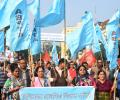
The Supreme Court of India has invalidated the appointment of 25,753 teachers and other staff in West Bengal's state-run and state-aided schools, deeming the selection process "vitiated and tainted." The court ordered the state government to conduct a fresh selection process within three months. The decision comes after a Calcutta High Court verdict in April 2024, which also annulled the appointments. The apex court, while upholding the high court's order, made some modifications, including exempting disabled employees from returning their salaries. The case stemmed from alleged irregularities in the 2016 recruitment process by the West Bengal School Service Commission (SSC), involving OMR sheet tampering and rank-jumping. The Supreme Court had previously termed it a "systemic fraud." Former West Bengal education minister Partha Chatterjee and Trinamool Congress MLAs Manik Bhattacharya and Jiban Krishna Saha are among the accused being investigated in the recruitment scam.
The Supreme Court of India began hearing a batch of petitions challenging the constitutional validity of the Waqf (Amendment) Act, 2025. The bench, led by Chief Justice Sanjiv Khanna, asked both sides to address whether the court should entertain the petitions or relegate them to the high court. The hearing is underway with senior advocate Kapil Sibal arguing for the petitioners. The act, which was passed by Parliament following heated debates, has been challenged by various parties including AIMIM leader Asaduddin Owaisi, All India Muslim Personal Law Board (AIMPLB), and Jamiat Ulama-i-Hind.
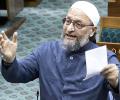
The Supreme Court on Thursday agreed to consider a plea of All India Majlis-e-Ittehadul Muslimeen (AIMIM) chief Asaduddin Owaisi seeking the implementation of the 1991 places of worship law, which asks to maintain the religious character of a place as it existed on August 15, 1947.

The Supreme Court has agreed to examine a PIL alleging that Arunachal Pradesh Chief Minister Pema Khandu awarded government contracts to his family members. The court has asked the state government to provide details of the beneficiaries and inform if due process was followed. The bench also sought responses from union ministries of home affairs, finance and the Comptroller and Auditor General of India on the issue within five weeks.
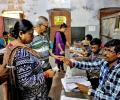
The Supreme Court of India has asked petitioners in two Public Interest Litigations (PILs) to make representations to the Election Commission of India (ECI) regarding their demand for uploading polling booth-wise voter turnout data on the ECI website. The PILs, filed by TMC MP Mahua Moitra and NGO Association for Democratic Reforms, seek a direction for the ECI to upload the data within 48 hours of the conclusion of polling in Lok Sabha and assembly elections. The ECI, represented by senior advocate Maninder Singh, expressed willingness to deliberate on the matter and suggested a meeting with the petitioners to address their concerns. The court has adjourned the hearing to the week of July 28.

West Bengal Chief Minister Mamata Banerjee has defended her support for teachers who were dismissed following a Supreme Court verdict, accusing the BJP and CPI(M) of "hatching a conspiracy" to influence the ruling. She dared the BJP to arrest her for supporting the affected candidates, while asserting that her government will abide by the verdict but explore all legal options. The development has triggered political reactions with the BJP demanding Banerjee's resignation, while the CPI(M) expressed concern over the impact on the education system. Banerjee also criticized the BJP's handling of the Vyapam scam in Madhya Pradesh, drawing parallels to the school jobs scam in West Bengal.

The Supreme Court of India has refused to halt the redevelopment project of Dharavi in Mumbai, allowing the Adani Group to proceed with their project. The court rejected a plea from Seclink Technologies Corporation, the original highest bidder for the project in 2018, which challenged the tender process and the award to Adani Properties Pvt Ltd in 2022. The court directed Adani Properties to make payments through a single bank account and ordered Seclink Technologies to file an affidavit detailing their increased offer for the project. The project work has already commenced, with constructions underway and 2,000 people employed on the site.

A three-judge Supreme Court bench will hear petitions challenging the constitutional validity of the Waqf (Amendment) Act, 2025, on April 16. The petitions, including those by politicians and the All India Muslim Personal Law Board (AIMPLB) and Jamiat Ulama-i-Hind, were filed in the top court challenging the validity of the newly-enacted law. The Centre has filed a caveat in the apex court, seeking a hearing before any order is passed.

The Act prohibits conversion of any place of worship and provides for the maintenance of the religious character of any place of worship as it existed on August 15, 1947.
 © 2026 Rediff.com - Investor Information - Advertise with us - Disclaimer - Privacy Policy - Sitemap - Feedback - About us - Terms of use - Grievances