Vedanta group chairman, Anil Agarwal, 69, is well known for his business journey from a scrap dealer from Bihar to a London-based globe-girdling metal and oil and gas conglomerate with revenues of $19 billion. Now his abilities to keep his group from over-leveraging itself will be put to the test. Over the years, Agarwal, now based in London, set up the conglomerate via acquiring iron ore producer Sesa Goa, Cairn's oil producing assets in India, and Electrosteel Steel.

Piramal will join the JSW, Vedanta and Tata groups, which are bidding aggressively for distressed assets, especially in the infrastructure and steel sectors.

He supervised and handled several major big ticket insolvency cases that includes Essar Steel, Bhushan Power & Steel, Bhushan Steel, Jaypee Infratech, ElectroSteel Steel, Binani Cement, Reliance Communications.
Vedanta investors were jittery on Tuesday as its share price fell and bond yields of its parent firm rose following concerns raised by a rating agency on its capability to repay debt maturing later this year. Shares of the mining and metals major were down by 7 per cent on Tuesday to Rs 268 a piece on the BSE. The company has lost market valuation of 30 per cent in the last one year and 13 per cent since January 1 this year. Yields on the bonds of Vedanta Resources, the parent firm of the BSE-listed Vedanta, shot up to 39.8 per cent - showing investors' rising concern over the group's debt situation
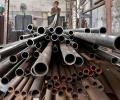
On June 30, mining and metals giant Vedanta, announced that it had decided to initiate a strategic review of its steel and steel-making raw material businesses. The review would begin immediately and evaluate a broad range of options, including but not limited to a potential strategic sale of some or all of the steel businesses, the company said in its stock exchange filing. The signs have been there - approaches had been made to steel players over the past year. Last December, Anil Agarwal, chairman Vedanta group, told Business Standard that the steel plant capacity was about 3 million tonnes (mt).

The haircut for major banks stands at 52 per cent, if the dues of Jaypee Infrastructure, Lanco Infrastructure and Era Infrastructure are kept out of the calculation.
The total admitted claim of financial creditors of these 88 companies stood at Rs 1.3 trillion, of which they recovered Rs 65,635 crore.

Banks have been patient and flexible in rescheduling loans.

The Reserve Bank had identified 12 accounts, each having more than Rs 5,000 crore of outstanding loans accounting for 25 per cent of total NPAs or bad loans of banks, for immediate referral for resolution under the bankruptcy law.

So far, among the IBC cases, SBI has been able to recover Rs 8,500 crore from Tata Steel's acquisition of Bhushan Steel. Another Rs 1,500 crore is in an escrow account on account of Electrosteel Steels.
'When a company goes into insolvency, by definition it means that existing shareholders have been wiped out.'

With average capacity utilisation now touching 76 per cent, Indian companies are going back to the drawing board to add capacity but the plans to build new factories and plants are still some months away.

After showing a consistent rise in the previous 4 quarters, gross NPAs of 40 listed bank declined to Rs 10.03 trillion at the end of June 2018, from Rs 10.25 trillion in the previous quarter.
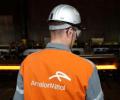
ArcelorMittal could be interested in Bhushan Steel or Essar Steel, two of the five steel companies referred by RBI for insolvency proceedings.

India Ratings expects long products demand growth to be sharp, supported by a demand push from the government-led infrastructure investments in affordable housing, railways, rural electrification and road networks.
This is being done keeping in mind the urgency of these transactions, and it would help the ongoing insolvency cases, including the 12 accounts referred by RBI to banks.
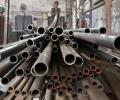
The recent amendments to the IBC practically barred promoters from re-acquiring their own assets, leaving only a small window to convert their non- performing assets into standard assets by paying the overdues.
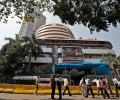
There were more than three losers against every gainer on BSE

JSW Steel is learnt to have submitted its resolution plan along with AION Capital

So what's up? Why are so many promoters heading for the door? It cannot be that all of them lost their appetite for a good fight at the same time.And if Naresh Goyal of Jet Airways and Subhash Chandra of Zee Entertainment do bow out, will it be seen as chickening out when the going got tough or the entrepreneurial instinct of surviving to fight another battle waned, wonders Shailesh Dobhal.
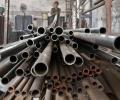
Uttam Galva Steels is a part of the Reserve Bank of India's second list of cases, which will be referred to the bankruptcy tribunal for insolvency proceedings after lenders failed to resolve the account by December 2017.

Poor disclosure among India-listed firms is a turnoff for foreign investors.

ICICI Bank has the largest proportion of SDR loans as a percentage of its total, followed by state-run United Bank of India and Canara Bank.

The 30-share Sensex ended down 261 points at 27,177 and the 50-share Nifty ended down 91 points at 8,214.

Ajit Mishra, vice president, Research, Religare Broking, answers your queries.
Ajit Mishra, vice president, Research, Religare Broking, answers your queries:
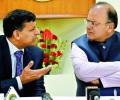
The crisis in Indian banking has now reached a point where the NPAs of many public-sector banks are higher than their net worth
 © 2026 Rediff.com - Investor Information - Advertise with us - Disclaimer - Privacy Policy - Sitemap - Feedback - About us - Terms of use - Grievances