
Major Indian drug companies such as Ranbaxy Laboratories, Lupin, Dr Reddy's Laboratories and Glenmark have gone off the beaten track in overseas markets.
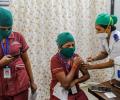
At 8 million a month, times two doses, it will take us 17 years to administer the vaccine to our 800 million adults. The rollout must speed up twenty times, asserts Naushad Forbes.
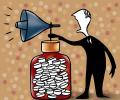
From rising prescriptions to the pharma sales force back on the field with full vigour and companies finally finding their feet with the digital marketing strategies - Indian drug makers have shown that medicine sales is certainly a sunshine sector.

Justice Suresh Kait, who was hearing Chidambaram's interim bail plea, directed the Tihar jail superintendent to provide clean and hygienic surrounding to the 74-year old Congress leader as also home-cooked food, mineral water, mosquito protection net and repellent


Corporate revenues will decline for a third consecutive quarter in March on a YoY basis - one of the worst shows by these companies in many years.
After surging above the 7,800 mark, the Sensex finally closed at 7,756.

There is no one way to describe the 12 months that have gone by since India reported its first Covid-positive case on January 30, 2020.
Indian drug companies, which have introduced copies of biotechnology drugs in the country, are bullish over the marketing prospects of 'biogenerics' after patents expire in developed markets. Experts say Indian companies may not repeat the success they achieved in selling generic medicines in biogenerics. The cost of clinical trials and the absence of substitutability will ensure that only those with deep pockets to launch such products globally will succeed, they feel.

Details on prices sought as 10 generic drugs become up to 83 times costlier in 6 months
She met with Defence Minister A K Antony, Finance Minister Pranab Mukherjee, her political secretary Ahmed Patel and others on Wednesday evening to take stock of the situation.

The benchmark indices fell as Sebi cracked down on 331 suspected shell companies listed on exchanges.

India emerging as a big global destination for contract manufacturing, unlike R&D outsourcing.

This increase is despite the decreased growth of drug sales in the US - the world's largest market - which has seen a tightening of regulations and aggressive competition.
The Sensex gained 91 points to close at an all-time high of 7,860.
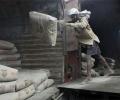
Shree Cement beats ACC in market value, Lupin ahead of Dr Reddy's Labs
Leading Indian drug majors, such as Ranbaxy Laboratories, Dr Reddy's Laboratories, Piramal Healthcare and Wockhardt, are in-licensing popular products from overseas drug makers to boost their domestic sales.

Sun Pharma was by far the biggest gainer in the Sensex pack, surging 8.13 per cent, followed by Dr Reddy's at 4.92 per cent.

After decades of hunt for fortune abroad, India's pharmaceutical companies now plan to strike gold in their own backyard. Large players from Ranbaxy to Dr Reddy's and Piramal Healthcare are all headed to rural India to boost their revenues.
For instance, Dr Reddy's Laboratories has six active pharmaceutical units in Andhra Pradesh. The waste streams from the API units mostly contain potassium sulphate, caustic lye, potassium chloride, potassium sulphate and sodium sulphate salts.
The Sensex gained 41 points to hit a new high of 7,797.

If most of the top 10 Indian drug companies were less than Rs 500-crore (Rs 5-billion) turnover ones a decade earlier and were focused only on domestic business, now they are companies with annual businesses ranging from Rs 2,000-Rs 6,000 crore (Rs 20-60 billion) and with operations spanning 60-100 countries and employing 3,000-5,000 people.

An analysis of the growth rate of 15 leading drug companies for the third quarter of 2008-09 show excellent performances in domestic turf have been often marred by the poor show of their acquired assets.
'There is no doubt he is with the Lord in heaven. He loved people and people poured their love on him. It was the people's love that got him elected as chief minister for a second term.'

The 60-year-old Y S Rajasekhara Reddy's untimely death in a helicopter crash has robbed Andhra Pradesh, and the Congress party, of a charismatic leader
'They should have flown either to Tirupati or Chennai by regular flight and then taken a helicopter from there. Aircraft are much safer than helicopters.'
Stringent regulatory norms and the financial impact of the global credit crisis on some research companies may hurt half a dozen molecules of Indian companies, such as Glenmark, Nicholas Piramal and Ranbaxy Laboratories, that are close to launch, experts and analysts said.
The 30-share BSE Sensitive Index is down 18 points at 9377. NSE Nifty is down 6 points at 2836.
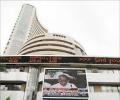
IT sector's trading multiples hit post-Lehman lows, providing good entry points.
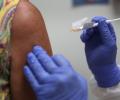
Indian Council of Medical Research Director General Balram Bhargava said the purpose of the COVID vaccine drive would be to break the chain of viral transmission.
Dr Reddy's Laboratories, Nicholas Piramal and other Indian drug makers are relying on niche and smaller value, acquisition strategy for growth owing to global slowdown and failure of big-ticket acquisitions in the past.
Ranbaxy, Dr Reddy's and other Indian drug makers may cut production as overseas buyers, hurt by the credit crunch, defer export orders. The move could also lower the country's drug exports by at least 10 per cent in the year ending March 2010, industry experts say."Many of our members have been intimated by their importers to stop shipments until further notice," said Venkat Jasti, chairman, Pharmaceutical Exports Promotion Council.

Gaurav Garg, Head of Research, CapitalVia answers readers' stock market queries.
Dr Reddy's Laboratories, Jubilant Organosys, Orchid Chemicals, Aurobindo Pharma and Shasun Chemicals and Drugs are among those who have borrowed either to expand locally or to acquire companies abroad, but are now struggling to repay the dues, analysts say. Some of the companies' debt now exceeds their market capitalisation, as local and global investors sold stocks on concerns over slowdown and falling revenues. A few drug makers may be forced to sell assets to repay debt.

'Had there been an involvement by the Naxalites, we would have had some communication by now. Since there has been no communication, I can say that they may not be involved or behind this incident,' Union Home Secretary G K Pillai tells rediff.com

Experts say the stock market correction in recent times increases the risk-reward in favour of large-cap stocks.
 © 2026 Rediff.com - Advertise with us - Disclaimer - Privacy Policy - Sitemap - Feedback - About us - Terms of use - Grievances