
Fitch Solutions on Thursday said the new climate targets announced at the COP26 summit by Prime minister Narendra Modi pose an upside risk to its outlook for renewable growth in the country. With the new targets, it expected to see attempts to alleviate the issues regarding supply chains, manufacturing and project development that have long plagued renewable proliferation.

At a virtual press conference to launch the report, Inger Anderson, Executive Director, United Nations Environment Programme, said, "Climate change is here and now. No one is safe. Despite warnings from so many years, the world did not listen. We need to act now. Reducing greenhouse gas emissions will not only limit climate change but also reduce air pollution."

"Come and join my party," Israel's Prime Minister Naftali Bennett said, as the two leaders laughed and shook hands when they met on the sidelines of COP26 climate summit in Glasgow on Tuesday.

A look back at many memorable moments in his life as Prince Charles.

Israeli Prime Minister Naftali Bennett, who contracted Covid-19, has postponed his maiden trip to India planned for next week, his office said on Tuesday.

The visit next week, which is yet to be formally announced by Downing Street, follows the successful completion of four out of 26 chapters in the ongoing India-UK free trade agreement negotiations.

India has so many relationships, such an ability to communicate and find touch points with different countries and regions.
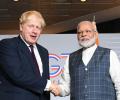
The visit, which is expected around April 22, is long overdue after Johnson was forced to cancel planned visits to India twice last year due to the COVID-19 pandemic.

The government may provide for targeted fiscal incentives and allocation of funds for promotion of green hydrogen in the country in Union Budget 2022-23, which is slated to be unveiled in Parliament on Tuesday. The government launched National Hydrogen Mission in 2021. Earlier this month, Power and New & Renewable Energy Minister R K Singh had indicated that a green hydrogen policy will be unveiled in February which would feature many incentives to boost green hydrogen in the country. "While 2021 saw the launch of National Hydrogen Mission, it is likely that the Budget may provide for targeted fiscal incentives for R&D in green hydrogen segment, creation of domestic supply chain for hydrogen and reduce customs duties on electrolysers to boost green hydrogen production," says Venkatesh Raman Prasad, Partner, J Sagar Associates (JSA).
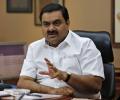
Billionaire Gautam Adani on Thursday said his logistics-to-energy conglomerate will invest $70 billion over the next decade to become the world's largest renewable energy company and produce world's cheapest hydrogen. Adani Green Energy Ltd (AGEL), the world's largest solar power developer, is targeting 45 gigawatts of renewable energy capacity by 2030 and will invest $20 billion to develop a 2 GW per year solar manufacturing capacity by 2022-23. Adani Transmission Ltd (ATL), India's largest private sector power transmission and retail distribution company, is looking to increase the share of renewable power procurement from the current 3 per cent to 30 per cent by FY 2023 and to 70 per cent by FY 2030.

His visit to India followed a few cancelled plans since he took office in July 2019 due to the coronavirus pandemic crisis, with the two leaders holding several virtual talks and eventually meeting in person on the sidelines of the COP26 climate summit in Glasgow last November.

Five cities -- Delhi, Bengaluru, Kolkata, Hyderabad and Surat -- ceded their power of procurement and agreed to a different procurement model to operate state-run buses.

Finance Minister Nirmala Sitharaman on Tuesday proposed enhancing the funding under the PLI scheme for domestic solar cells and module manufacturing to Rs 24,000 crore from the existing Rs 4,500 crore to make India an exporting nation. "For facilitating domestic manufacturing for the ambitious goal of 280GW of installed solar capacity by 2030, an additional allocation of Rs 19,500 crore for PLI scheme for manufacturing of high efficiency (solar) modules with priority of fully integrate manufacturing units for polysilicon to solar PV modules will be made," Sitharaman said in her Budget speech in the Lok Sabha. In April 2021, the Union Cabinet approved a Rs 4,500 crore production linked incentive (PLI) scheme to boost domestic manufacturing capacity of solar PV modules.

The World Bank has approved loans totalling $1.75 billion (about Rs 13,834.54 crore) to fund India's PM Ayushman Bharat scheme and private investment to boost the economic growth. Of the total loan, $1 billion will go towards the health sector, while the rest $750 million will be in the form of development policy loan (DPL) to fill the financing gaps through private sector investment in the economy. The World Bank Board of Executive Directors approved two complementary loans of $500 million each to support and enhance India's health sector.

Why does the world's fastest-growing major consumer of energy fail to attract investments in oil and gas? This is a question worth pondering after private sector conglomerate Reliance Industries Ltd (RIL) failed to close a $15-billion downstream asset deal with Saudi Arabia's national oil company, Aramco. It's understandable if multi-billion dollar investments in oil and gas projects or deals involving state companies that need to traverse a complex bureaucracy at state and federal levels and the corridors of ministries unravel. However, Mukesh Ambani-run RIL, India's most successful energy company, is not typically known to fumble on closing deals (Ambani closed deals worth around Rs 2 trillion early last year in telecom and retail with blue chip investors).

Indian-American engineer-entrepreneur Shrina Kurani challenges a 30-year Republican veteran in a US Congressional race in a district that is predominantly white.

Johnson's first visit to India as United Kingdom prime minister will begin on April 21 with a trip to Ahmedabad in Gujarat, which is Prime Minister Modi's home state.
The coronavirus pandemic has not impacted India's long-term growth trajectory although it has delayed it and in this decade, the country will lead the global growth rates, Tata group chairman N Chandrasekaran said on Tuesday. Speaking at tech giant Microsoft's annual flagship event, Future Ready, he said it should be a national priority to enable access to healthcare and education using digital infrastructure for all in the country, considering how the acceleration of digital adoption during the pandemic has created a divide as many people, who do not have the means and access, have been left behind. "There are many things going for India. I think as the economy fully opens up post the pandemic, I believe that our growth will continue to get stronger.
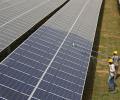
For India to reach its bold target of having net-zero emissions by 2070, the country's solar power capacity would have to rise to over 5,600 GW, coal use particularly in the power sector will have to drop by 99 per cent by 2060 and crude oil would need to peak by 2050 and fall substantially by 90 per cent in the two decades thereafter, CEEW India has said. Prime Minister Narendra Modi on Monday surprised delegates at the COP26 climate summit with a bold pledge to cutting emissions at the world's third-biggest emitter to net-zero by 2070. Council on Energy, Environment and Water, a Delhi-based not-for-profit policy research institution, said, "The economic cost of India's net-zero 2070 transition (would be) over USD 13,000 billion between 2030 and 2100."

The prime minister is participating in the G20 Summit in Rome from October 30- 31 at the invitation of Italian Prime Minister Mario Draghi.

Prime Minister Narendra Modi on Saturday interacted with world leaders, including US President Joe Biden, on the sidelines of the G20 Summit, exchanging pleasantries and showcasing a spirit of camaraderie.

'At least we had an asteroid. What's your excuse?'

'I was not scared because I knew I had not done anything wrong. And I was walking for a good cause.'

UK Prime Minister Boris Johnson was supposed to be the chief guest at Republic Day, but due to the surge in COVID-19 cases in the UK and the spread of a new strain, he cancelled his visit. Johnson is scheduled to visit India in April.

Emphasising that everything is created from Sun, Prime Minister Narendra Modi on Tuesday called for 'One Sun, One World, One Grid' to improve the viability of solar power and announced that India's space agency ISRO will soon provide the world a calculator that can measure solar energy potential of any region across the globe. Addressing world leaders at the event 'Accelerating Clean Technology Innovation and Deployment' on the sidelines of the climate summit in Glasgow, Modi said that fossil fuel powered many nations to become wealthy during the industrial revolution, but it made the earth and environment poor.

India's growth projection released by the latest World Economic Outlook remains unchanged from its previous WEO (World Economic Outlook) update of July this summer but is a three-percentage point in 2021 and 1.6 percentage point drop from its April projections. According to the latest WEO update, released ahead of the annual meeting of the IMF and the World Bank, the world is expected to grow at 5.9 per cent in 2021 and 4.9 per cent in 2022.
India's jugalbandhi with coal and clean energy is coming unstuck, neither achieving adequate renewable generation nor ensuring sufficient coal-fired power in the quest to become a $5-trillion economy. Six months have elapsed since Prime Minister Narendra Modi announced an ambitious climate agenda for India at COP26 at Glasgow. The net zero emissions target by 2070 is a distant one, but there are nearer-term plans to meet 50 per cent of energy demand with renewables by 2030 by increasing capacity to 450 Gw. A cursory look at the balance sheet of India's climate progress since November reveals ponderous progress towards meeting the renewables target even as the country is scrambling to expand coal-fired generation in the face of a power crisis.

Indian Oil Corporation (IOC) and two other public sector oil firms will install 22,000 electric vehicle (EV) charging stations over the next 3-5 years to support the nation's target to reduce its carbon intensity and reach net zero emissions by 2070. IOC, the country's largest state-controlled refiner by capacity, will set up EV charging facilities at 10,000 fuel outlets over the next three years, chairman Shrikant Madhav Vaidya said. Bharat Petroleum Corporation Ltd (BPCL) said it will set up 7,000 stations over the next five years while Hindustan Petroleum Corporation Ltd (HPCL) has plans for 5,000 stations.

As a politician, Yadav is amiable and a consensus-maker, not hamstrung by dogma.
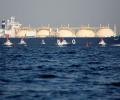
The government should bring natural gas under the Goods and Services Tax (GST) regime to realise Prime Minister Narendra Modi's vision for a gas-based economy and raising the share of the environment-friendly fuel in India's energy basket, an industry body that represents the likes of Reliance Industries as well as state-owned firms, has said. Natural gas is currently outside the ambit of GST, and existing legacy taxes -- central excise duty, state VAT, central sales tax -- continue to be applicable on the fuel. In its pre-Budget memorandum to the finance ministry, Federation of Indian Petroleum Industry (FIPI), which boasts of members from across the oil and gas spectrum, also demanded rationalisation of GST on transportation of natural gas through pipeline as well as on re-gasification of imported LNG to help bring down cost of the environment friendly fuel.

India will either have to create a system in which certain geographical areas will wind up being permanent political outsiders at the Union level or it will have to create a system in which certain votes are weighted more heavily than others, observes Mihir S Sharma.

Johnson will be only the second British leader since Indian independence to attend the annual Republic Day parade in New Delhi as Guest of Honour, after former prime minister John Major in 1993.

India shifted gears in rejuvenating strategic ties with its major partners like the US and Russia and focused on drumming up global support for its distinct strategy in the Indo-Pacific to check Beijing's increasing muscle-flexing in the region.

'From environmental impact assessment to forest clearances, this has turned out to be an unscientific road-widening project with catastrophic consequences.'

A genuine attempt was made to reset relations in a positive way, signalling a stepping back from the brink of conflict, much to the relief of the world, observes Ambassador T P Sreenivasan.

From Covid to climate change, Shankar Acharya's look at some of the trends and events that might shape 2022.

India's negotiating posture at the multilateral negotiations should be aligned with a significantly transformed development strategy domestically.' 'The positions the country takes at the negotiations will then carry credibility, says Shyam Saran, former foreign secretary and India's chief negotiator on Climate Change 2007-2010.
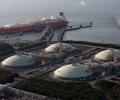
Around 15 years ago, when Reliance Industries (RIL) struck natural gas in the Krishna-Godavari (KG) basin off the east coast, the government made plans to supply that fuel cheaply to scores of generators that sprang up in India triggered by the discovery. Most of the plants, which account for 6 per cent of India's total generation capacity, operate sparsely after the KG-D6 area first failed to meet production targets, and then finally shut shop. Affordable domestic gas was why those thermal plants came up and the rate of the fuel today is why those generators hardly operate. Record liquefied natural gas (LNG) rates may yet again unravel India's ambitions to expand use of gas in industries, households and vehicles. Rates, while volatile, may stay strong this decade as developed nations with higher purchasing power embrace gas as the transition fuel.

Johnson also reiterated his plan to visit India ahead of the G7 summit, after a scheduled visit for Republic Day this month was called off due to the coronavirus crisis.

As the world grapples with extreme weather events and climate change becomes the buzzword of contemporary times, author Amitav Ghosh says the crisis has been in the making since the 17th century and it is imperative to take into account history before beginning to tackle the issue.
 © 2026 Rediff.com - Investor Information - Advertise with us - Disclaimer - Privacy Policy - Sitemap - Feedback - About us - Terms of use - Grievances