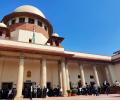
The Supreme Court on Monday agreed to consider listing for urgent hearing the petitions challenging the constitutional validity of the Waqf (Amendment) Act, 2025.

The high court noted that the contention of the petitioner demanding a virginity test of his wife is unconstitutional as it violates Article 21 of the Constitution which includes the right to dignity of women.
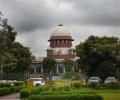
The Supreme Court of India will likely hear a batch of petitions challenging the constitutional validity of the Waqf (Amendment) Act, 2025 on April 15. The Act, which came into force on April 8, has been met with widespread criticism from various stakeholders, including politicians, the All India Muslim Personal Law Board (AIMPLB), and Jamiat Ulama-i-Hind. They argue that the law is discriminatory and violates the fundamental rights guaranteed under Articles 25 and 26 of the Constitution. The petitions allege that the amendments give the government more control over the administration of Waqf, effectively sidelining the Muslim minority from managing their own religious endowments.
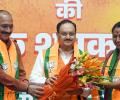
BJP president JP Nadda said on Sunday that the party does not seek to control the Waqf Board but wants to ensure that those managing it operate within the bounds of law and adhere to established rules. He said the properties and funds of the Waqf Board should be dedicated to promoting education, providing healthcare and employment opportunities for the Muslim community. Nadda also highlighted the BJP's growth and achievements, emphasizing its commitment to national unity and cultural heritage.

A three-judge Supreme Court bench will hear petitions challenging the constitutional validity of the Waqf (Amendment) Act, 2025, on April 16. The petitions, including those by politicians and the All India Muslim Personal Law Board (AIMPLB) and Jamiat Ulama-i-Hind, were filed in the top court challenging the validity of the newly-enacted law. The Centre has filed a caveat in the apex court, seeking a hearing before any order is passed.
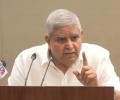
Rajya Sabha member Kapil Sibal has criticised Vice President Jagdeep Dhankhar for questioning the judiciary over the timeline for the president to take decisions, calling it "unconstitutional " and a lowering of the dignity of the chair. Sibal asserted that Dhankhar's remarks are not neutral and amount to an attack on the judiciary by the executive. He also pointed out that the president acts on the aid and advice of the council of ministers, and therefore, the president's power cannot be curtailed. Sibal urged Dhankhar to seek a review of the judiciary's decision or an advisory opinion from the Supreme Court if he has problems with it. He also questioned why Dhankhar only focuses on actions taken during Congress governments and not after 2014.
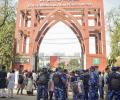
A fresh plea has been filed in the Supreme Court challenging the constitutional validity of the Waqf (Amendment) Act, 2025, claiming it was a "blatant intrusion" into the rights of a religious denomination to manage its own affairs in the matter of religion. The plea, filed by Samastha Kerala Jamiathul Ulema, argues that the amendments would distort the religious character of Waqfs and irreversibly damage the democratic process in their administration. Several other petitions have been filed in the apex court challenging the validity of the bill, including those by Congress MP Mohammad Jawed, AIMIM president Asaduddin Owaisi, and AAP MLA Amanatullah Khan.
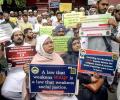
'The new Waqf bill sows the seed for conflict in every town and village of India.'
The Supreme Court of India has ordered the burial of a pastor whose body has been lying in a mortuary since January 7th, after a dispute arose regarding the location of his burial. The court issued a split verdict, with one judge ruling for burial on the family's private land and the other for a designated place away from the village. The decision was made due to the prolonged delay in the burial and the potential for unrest. The court ordered the state government to provide security to prevent any further incidents.
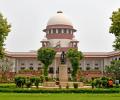
The Supreme Court will hear a plea seeking an independent selection process for the Comptroller and Auditor General of India (CAG) on March 17. The PIL, filed by the Centre for Public Interest Litigation, argues that the current system of appointment solely by the executive and the prime minister violates the Constitution and undermines the CAG's independence. The petition calls for a transparent process involving the prime minister, Leader of the Opposition, and Chief Justice of India. The PIL contends that the CAG's role as a watchdog over government finances requires a fair and non-arbitrary appointment procedure.

Comedian Kunal Kamra has been granted interim anticipatory bail by the Madras High Court in a case filed against him for allegedly making defamatory remarks against Maharashtra Deputy Chief Minister Eknath Shinde during a stand-up comedy show. Kamra, who resides in Tamil Nadu, was summoned by the Mumbai Police and feared arrest, prompting him to seek bail from the Madras HC. The court granted him bail until April 7, on the condition that he executes a bond to the satisfaction of the judicial magistrate at Vanur in Villupuram district, Tamil Nadu.

Stand-up comedian Kunal Kamra has once again found himself at the center of a controversy, this time for his comments about Maharashtra's Deputy Chief Minister Eknath Shinde. Kamra has been a controversial figure for years, with his comedy often targeting politicians and other public figures. This latest incident has led to a backlash from Shinde's supporters, who have vandalized the venue of Kamra's show. Kamra has a history of making controversial remarks, including heckling a TV anchor on a flight and making comments about the judiciary.
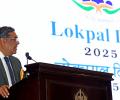
The Supreme Court of India will examine the jurisdiction of the Lokpal, India's anti-corruption ombudsman, in entertaining complaints against sitting high court judges. The court is considering a suo motu proceeding initiated over the Lokpal's January 27 order on the issue. The case involves two complaints filed against a sitting additional judge of a high court, alleging that he influenced a judge of the subordinate judiciary and a judge of the same high court set to deal with a suit filed against the complainant by a private company.
'One murder gets national coverage because of political connections.' 'The other two and the brutal torture? Not much outrage.' 'Are Dalit and OBC lives worth less?'
Kharge claimed that the wording as well as the tone and tenor of the remarks made by the Home minister "are clearly satirical and made in a very bad taste".

Opposition parties in India, led by the Congress, have demanded a detailed discussion in Parliament on alleged discrepancies in voter lists. Rahul Gandhi raised the issue in the Lok Sabha, highlighting concerns about the integrity of the electoral process. The opposition alleges large-scale duplication of EPIC numbers, which they claim undermines voter integrity and the electoral process. They have also pointed out instances of inflated voter lists in states like Maharashtra and Haryana. The Election Commission has acknowledged discrepancies but maintains that these are not widespread and that corrective measures are being taken. The opposition, however, insists on a comprehensive discussion on the matter to ensure the integrity of elections in India.

'What attitude has spawned such gruesomeness in the state of Saint Tukaram, Saint Dnyaneshwar, and great leaders like Chhatrapati Shivaji, Chhatrapati Shahu, Phule and Ambedkar?'
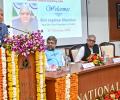
Vice President Jagdeep Dhankhar has questioned the Chief Justice of India's involvement in executive appointments, specifically citing the selection of the CBI director. He believes this practice undermines democratic principles and calls for revisiting the existing norms. Dhankhar also raised concerns about the "doctrine of basic structure", suggesting it has a debatable jurisprudential basis. He emphasized the importance of each institution operating within its constitutional boundaries and highlighted the need for coordinated autonomy. The vice president also discussed the need for a balanced approach to judicial review and the importance of judges focusing on judgments rather than other forms of expression. He stressed the need to revisit the current state of affairs to restore the judiciary's sublimity.

The Supreme Court of India has dismissed a plea seeking directions to states to take immediate action against mob lynching and cow vigilantism, particularly against Muslims. The court stated that it was not feasible to "micro-manage" such incidents from Delhi and referred to its 2018 verdict, which issued guidelines to address mob violence and cow vigilantism. The court also noted that the new Bharatiya Nyaya Sanhita (BNS) criminalizes mob lynching as a separate offence. The plea argued that there was "gross non-compliance" with the 2018 directions, but the court maintained that authorities were bound by its previous rulings.
The Supreme Court of India has expressed concern over the protracted trials in heinous offences related to Maoist activities, stating that indefinite incarceration violates the right to liberty under Article 21 of the Constitution. Two separate benches of the court granted relief to two accused, citing the delayed trials. One bench expedited the trial of a man accused of transporting ammunition for a banned organization, while the other granted bail to a man accused of transporting materials for Naxal activities. The court emphasized the importance of speedy trials and suggested the establishment of special courts to handle Maoist-related cases, aiming to expedite proceedings. The court also criticized the practice of examining an excessive number of witnesses, which can lead to indefinite delays in the conclusion of trials.
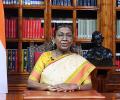
President's rule was imposed in Manipur on Thursday, with the state assembly put under suspended animation following the resignation of Chief Minister N Biren Singh. The decision came after months of ethnic violence that claimed over 250 lives. Singh's resignation was attributed to his handling of the violence and allegations of instigating conflict. The imposition of President's rule was met with a sense of hope by the Kuki-Zo community, who expressed distrust of the Meitei leadership.

Terming as 'unfortunate' the January 29 stampede at Maha Kumbh where at least 30 people were killed, the Supreme Court on Monday refused to hear a public interest litigation (PIL) for guidelines over safety of devotees and asked the petitioner to move the Allahabad high court instead.
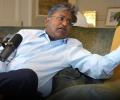
The Bombay High Court has imposed a cost of Rs 1 lakh on former cricket administrator Lalit Modi while dismissing his petition seeking an order to BCCI to pay penalty of Rs 10.65 crore imposed on him by ED for violating Foreign Exchange Management Act (FEMA).
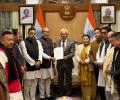
Amidst rumblings within the state Bharatiya Janata Party seeking a change of leadership in strife-torn Manipur, Chief Minister N Biren Singh on Sunday tendered his resignation to Governor Ajay Kumar Bhalla at the Raj Bhavan in Imphal.

The indecision of the then Maharashtra governor on the state government's recommendation to appoint 12 persons as MLCs is 'quite disturbing', the Bombay high court has said.
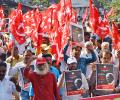
The Bombay High Court has discontinued its monitoring of the investigation into the 2015 murder of communist leader and rationalist writer Govind Pansare, directing the sessions court to expedite the ongoing trial. The decision comes after a report by the Maharashtra Anti-Terrorism Squad (ATS) indicated that the investigation has been thoroughly conducted, with only the arrest of two absconding accused remaining. The court has ordered daily hearings for the trial, which has already begun and has seen 28 prosecution witnesses examined as of December 16, 2024.
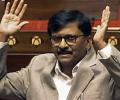
Shiv Sena (UBT) leader Sanjay Raut has stated that his party wants to go solo in the upcoming local body elections to strengthen its base. This statement has raised questions about the unity of the opposition INDIA bloc and the Maha Vikas Aghadi (MVA), which includes Shiv Sena (UBT), Congress, and NCP (SP). Raut clarified that the party has not called for the dissolution of either bloc and that the local body elections are an opportunity to empower party workers at the grassroots level. He also criticized Congress leaders for reacting to his comments without hearing the full context.

The Bombay High Court has ruled that the use of loudspeakers is not an essential part of any religion and has directed law enforcement agencies to take prompt action against loudspeakers that violate noise pollution norms. The court also ordered the state government to direct religious institutions to adopt mechanisms for controlling noise levels, including calibrated sound systems with auto-decibel limits. The decision came in response to a petition filed by two housing associations alleging police inaction against noise pollution caused by loudspeakers installed on mosques in the area.
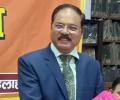
Members of several opposition parties in India have initiated proceedings to impeach Allahabad High Court Judge Shekhar Kumar Yadav for his alleged controversial remarks at a recent event. The impeachment motion, signed by 55 opposition MPs, cites the judge's speech at a Vishva Hindu Parishad (VHP) function, where he allegedly made provocative statements on a uniform civil code and the law working according to the majority. The Supreme Court has taken note of the controversy and sought details from the Allahabad High Court.
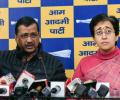
Aam Aadmi Party national convenor Arvind Kejriwal claimed on Wednesday that Delhi Chief Minister Atishi may be arrested in a 'fake' case by the central investigative agencies at the behest of the Bharatiya Janata Party.
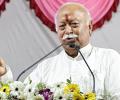
RSS chief Mohan Bhagwat has said that the date of Ram temple consecration in Ayodhya should be celebrated as "Pratishtha Dwadashi" as it marks the "true independence" of India, which faced "parachakra" (enemy attack) for several centuries. Bhagwat said that the Ram temple movement was not started to oppose anyone, but to awaken the "self" (swa) of Bharat so that the country could stand on its own feet and show the path to the world. He also said that the invaders destroyed temples of the country so that the "self" of India also perishes.

Congress leader Rahul Gandhi criticized the BJP for claiming to protect the Constitution while citing V D Savarkar's remarks that there was nothing Indian about it. He also drew parallels to the story of 'Eklavya' to illustrate the BJP's alleged economic policies hurting small businesses and farmers. He further supported the removal of the 50 percent cap on reservations and advocated for a caste census.

Leaders from around the world extended their greetings to India on its 76th Republic Day, emphasizing the importance of bilateral relations and expressing hope for a stronger future. The Indian diaspora across the globe celebrated the occasion with enthusiasm at Indian missions abroad, where the national tri-colour was unfurled, accompanied by cultural performances and patriotic fervour. The celebrations highlighted the strong bonds of friendship and cooperation between India and its global partners.

The Supreme Court on Friday said the plea seeking a policy for verification of electronic voting machines should go before the same bench that delivered a verdict in April rejecting the demand for bringing back the old paper ballots.

India's anti-corruption ombudsman, the Lokpal, has dismissed a complaint alleging corruption against former Chief Justice of India (CJI) DY Chandrachud, citing a lack of jurisdiction. The complaint, filed in October 2024, alleged abuse of office, corruption, and favoritism by Chandrachud while he was CJI. The Lokpal, in its order, concluded that sitting judges of the Supreme Court, including the CJI, are not subject to its jurisdiction under the Lokpal and Lokayuktas Act. The Lokpal stated that the Supreme Court was established by the Constitution of India, not an Act of Parliament, making it outside the scope of its jurisdiction.
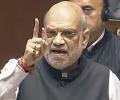
The Congress on Tuesday accused Home Minister Amit Shah of harboring "hatred" towards B.R. Ambedkar, demanding an apology from him for his remarks in the Rajya Sabha. Congress leaders pointed out that Shah's comments, which criticized the frequent invocation of Ambedkar's name by the opposition, demonstrate a deep-seated animosity towards the architect of India's Constitution. The allegations sparked outrage among Congress members, who accused the BJP and RSS of having a history of disdain for Ambedkar. The incident has fueled political tensions, with the Congress vowing to hold Shah accountable for his remarks.

Leaders of various INDIA bloc parties have written to Lok Sabha Speaker Om Birla, urging him to allow leaders of the opposition in both Houses of Parliament to speak during the Constitution Day function to be held on Tuesday. The function will be addressed by President Droupadi Murmu, Vice President Jagdeep Dhankhar, and Lok Sabha Speaker Om Birla. The letter, signed by leaders of various opposition parties, states that they believe in the best traditions and interests of Parliamentary democracy, the Leaders of Opposition (LoPs) in both Houses should also be given an opportunity to speak on this historic occasion. Parliamenary Affairs Minister Kiren Rijiju, however, said that Prime Minister Narendra Modi will not be addressing the event and accused "some of the Opposition parties " of giving reactions without knowing the actual arrangement. He added that sitting arrangements have been made for the Leaders of Opposition of both Lok Sabha and Rajya Sabha on the dais.

Shah alleged that Congress was "hell-bent on snatching reservations from OBCs, tribals and Dalits and "planned to give it to minorities".

Priyanka slammed Prime Minister Modi's 11 resolutions as "hollow" and said if there is zero tolerance towards corruption then why doesn't the BJP agree to a discussion on the Adani issue.

There was more to him than he let on, asserts Aditi Phadnis.
 © 2026 Rediff.com - Advertise with us - Disclaimer - Privacy Policy - Sitemap - Feedback - About us - Terms of use - Grievances