
'For the first time in a hundred years, the army has been taken out of the political equation. And for the first time ever, there is only one man who calls the shots. Not even Mao had this kind of power.'

The enduring relationship between the two countries have survived the disintegration of the erstwhile USSR in 1991, the end of the Cold War and the regime change in both countries, points out Rup Narayan Das.
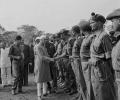
The well-fought defensive battles in Aksai Chin and eastern Arunachal, in remote and forbidding locations such as Galwan, Rezang La, Gurung Hill and Walong, effectively halted Chinese advances not once but twice during the campaign. These engagements, fought with grit and without adequate support, were not immediately known to the world in 1962, points out Dr Kumar.
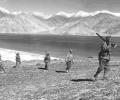
As India and China continue to face off across the Himalayas six decades later, the echoes of that earlier conflict remain unmistakable. The core of China's sensitivity lies not in maps or mountain passes, but in its perception of sovereignty over Tibet, points out Dr Kumar.

'If Washington has to balance Chinese power, she will have to turn to the third biggest power in the world which is India.' 'The United States and India will have to work together in order to keep Chinese ambitions in check.'
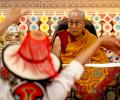
On July 2 or July 6, the Dalai Lama will reveal his mind on his successor. This makes Beijing extremely nervous as the Communist regime fully realises the importance of controlling the next Dalai Lama, points out Claude Arpi.

Demonstrators hold up signs during a protest over the freezing of deposits by some rural-based banks outside a People's Bank of China building in Zhengzhou, Henan province, China
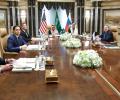
The US move to align with Russia is prompted by fear of a Sino-Russian joint threat. Russia, fully aware of its military vulnerability vis a vis China may cautiously welcome the American move, assesses Colonel Anil A Athale (retd).

After the 1962 War with China, there was a demand to forge greater defence cooperation between India and the West. One such voice was that of Sudhir Ghosh, a distinguished MP, to tie up strategic cooperation with the USA immediately after the Chinese attack on India, recalls Rup Narayan Das.

'Communist China continues to aggressively expand its domain in the Indo-Pacific region.' 'It's crucial for the USA to continue its support in countering these malicious tactics.' 'India, along with other nations in the region, is not alone.'
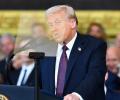
Donald Trump's exaggerated opinion of his dealmaking capacity can get him into trouble, observes R Sriram.

Times have changed, situations have changed, but the basic nature of superpower geo-politics remains the same and so also India's diplomacy -- call it non-alignment, strategic autonomy or neutrality; it all depends on the time scale, notes Rup Narayan Das.

Indian-origin Republican leader Nikki Haley on Wednesday asserted that like the erstwhile Soviet Union, Communist China will also end up on the "ash heap of history."

Passed by the House by 352 to 65 votes, the bill now heads to the US Senate for it to be sent to the White House for the President to sign it into law.

He is currently on a two-day swing to the crucial State of Iowa. On January 15, Iowa would kick off the 2024 Republican presidential primary season.

China has spent half a century plotting to defeat America and in some respects, the Chinese military is already at par with the US armed forces, Haley said in a major policy speech on the economy in the key early primary State of New Hampshire on Friday.
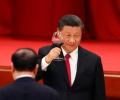
He claimed China has a policy of keeping "hot spots like Taiwan, South China Sea and Tawang burning" in order to divert attention to its own failings.

She said that America spent $46 billion on foreign aid last year, which is given to countries like China, Pakistan, and Iraq.

The Indian position on the Russia-Ukraine war and the unconditional treaty between China and Russia appear to have caused some ripples in India-US relations and led to a reappraisal of India's usefulness to the US in the eventuality of a conflict with China, notes Ambassador T P Sreenivasan.
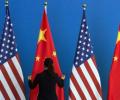
The US maintained normal diplomatic relations with the government in Taiwan until 1979, when then-President Jimmy Carter abruptly cut off formal ties with Taipei and recognised the Communist regime in Beijing.

'If the situation deteriorates and there is further escalation, the USA is in preparedness.'

The US president in the last several weeks has been very critical of China's inability to control the spread of the novel coronavirus within its territory. By Thursday more than 94,000 Americans have died due to the coronavirus and over 1.6 million have tested positive.

'Although Hong Kong weathered many a storm and displayed a remarkable resilience to bounce back, the developments in the territory have raised question marks with regard to its future stability and prosperity.' A revealing excerpt from Rup Narayan Das's Hong Kong Conundrum: Pangs of Transition.

'Leaders of the Indian community in Hong Kong had broached the idea of developing the Andaman and Nicobar islands for investment and setting up manufacturing units,' points out Rup Narayan Das.
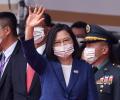
An independent Taiwan under President Tsai Ing-wen's Democratic Progressive Party is anathema to China, observes Rup Narayan Das.

... As the world swings from 'financialisation' to 'artificial intelligence', asks Ajit Balakrishnan.
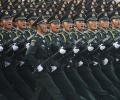
Protests at this time when efforts are underway to strengthen the PLA and keep morale high would be worrying for the military leadership, observes Jayadeva Ranade, the retired senior RA&W officer and distinguished China expert.

Two elderly Chinese aerospace experts are hospitalised after a violent attack by a 'Princeling', states Jayadeva Ranade, the distinguished China expert and retired RA&W officer, highlighting the power the 'Princelings' ironically hold in the Communist People's Republic.

On December 10, Kissinger began to encourage the Chinese to take action against India: 'If the People's Republic were to consider the situation on the Indian subcontinent a threat to security, and if it took measures to protect its security, the US would oppose efforts of others to interfere with the People's Republic.' On the 50th anniversary of India's greatest military victory, Claude Arpi recalls how the US suggested that China intervene militarily on Pakistan's side.

Haley warned Americans that a Biden-Harris administration would lead the country on the path of socialism, which has failed everywhere in the world.

;The world paid a heavy price for the megalomania of the Third Reich's fuehrer.' 'Will it pay a similar price for the ambitions of China's leader-for-life?' asks Amulya Ganguli.

Those who dare to slam hard on the foundations of the great wall of communism are treated with no mercy in the land of Chairman Mao.
Authorities are addressing a lack of religious facilities for millions of Muslims who have moved to coastal cities in search of jobs and livelihood, a senior official at the State Administration for Religious Affairs said.
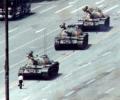
Why omit the Tiananmen massacre from the history of China's Communist party, asks Claude Arpi.

Arpi deserves to be complimented for the commitment and hard work that have gone into this production. The frustrations of seeking reliable documentation from the catacombs of the Indian bureaucracy did not deter him from going after the best information available, and the result is one that he can take much satisfaction in. Ambassador Prabhat P Shukla, Member Advisory Council, Vivekananda International Foundation, reviews Claude Arpi's The End of an Era: India Exits Tibet.

Europe's bloated welfare state helps you understand the old communist adage 'from each according to his ability, to each according to his need'.
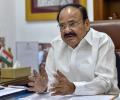
'My immediate concern is restoring prestige and decorum of Rajya Sabha...'

Tawang is very much a part of India, and if the present Dalai Lama decides one day to take rebirth in Tawang, the Indian government will openly welcome him and support him, notes Claude Arpi.

Important for India was Xi's meeting with representatives of PLA officers and soldiers stationed in Tibet. The video of the encounter was interesting to watch, especially the large number of lieutenant generals and major generals, observes Claude Arpi.
Today for China to threaten Arunachal Pradesh and demand a slice of Sikkim after assured of its vice-like grip on India, is a natural progression even as New Delhi continues its slumber.
 © 2026 Rediff.com - Investor Information - Advertise with us - Disclaimer - Privacy Policy - Sitemap - Feedback - About us - Terms of use - Grievances