
Professor Robert Thurman, senior scholar at Columbia University and one of the Dalai Lama's oldest supporters, speaks to Claude Arpi about his relations with the Tibetan spiritual leader, the present state of capitalist' China, the Buddhist wave in the West, his idea of a Second Renaissance and his work for preserving Indian shastras.
Ladakh MP Thupstan Chhewang on Chinese incursions, the environment and effects of global warming in Ladakh and the relations between the Muslim and Buddhist populations.
As Chinese celebrate the People's Republic of China's 60th anniversary, Claude Arpi explores the rise of the dragon from the days of the Cultural Revolution to its projection of itself as a soft superpower in the modern world.

Soon, the greatest global show will be over. Life will not be the same, probably a bit boring with no octopus, no blundering referees, no Paraguayan starlet or horrible cacophony (though by the end of the competition we will be missing it!).

France native Claude Arpi shares his thoughts on Saturday's quarter-finals at the World Cup.

France native Claude Arpi shares his thoughts on the first two quarter-final at the World Cup.

The adventure is over for Carlos Queiroz's boys who had not lost 19 consecutive World Cup matches.

'Brazil possess something which makes the stuff of the greatest team: Dunga's players are good in all compartments of the game.'

Claude Arpi captures the fan's passion for football in an ongoing e-mail exchange with Ivan Crasto, Rediff.com's Sports Editor.
The Portugal-Brazil was dull, with both teams having already qualified. The players were mainly interested to evade yellow cards which could bar them for future matches and most importantly avoid injury.

'France and Italy were finalists in 2006, but both left at the end of the first round in 2010. It is only the third time that a champion has said bye before the knockouts.'

'Maradona, who had the unique 'privilege' of having been expelled by his federation as a player and as a coach, seems to be doing well with his players. And they have a genius amongst them. It makes the difference.'
Mukherjee will brief Natwar Singh on the situation in Nepal.

Did Vinod Sehgal die in Tsangdgar or was he taken PoW to Tibet or China? Why has the IAF kept so quiet for all these years, asks Claude Arpi.
'One of the most decisive factors in the Tibetan issue is this newly found interest for Buddhism in China.'
General N C Vij who is expected to meet his Chinese counterpart and the defence minister of the Communist giant, said he was hopeful the talks would help in giving further boost to bilateral ties.

India's reaction came in response to Beijing announcing Chinese names for 15 more places in Arunachal Pradesh which the neighbouring country claims as South Tibet.

The Chinese admitted that they had suffered the maximum casualties fighting in the first battle on October 20, 1962, and these casualties had been inflicted mostly by 2 Rajput. Claude Arpi salutes Major B K Pant and his fighting force of 112 men, 82 of whom lost their lives in the Battle of Namkha Chu, and whose courage must never ever be forgotten by a grateful country for who they laid down their lives.

Arpi deserves to be complimented for the commitment and hard work that have gone into this production. The frustrations of seeking reliable documentation from the catacombs of the Indian bureaucracy did not deter him from going after the best information available, and the result is one that he can take much satisfaction in. Ambassador Prabhat P Shukla, Member Advisory Council, Vivekananda International Foundation, reviews Claude Arpi's The End of an Era: India Exits Tibet.

How does blatantly claiming Indian territory help to maintain 'peace in border regions', is a mystery that only China can explain, notes Claude Arpi.
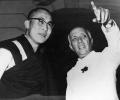
One priority for Delhi (for the new foreign secretary in particular) is to have an in-depth discussion with Dharamsala as soon as possible, suggests Claude Arpi.

India was fooled into believing that Communist China wanted a 'negotiated' settlement with the Tibetans; it was never the case, says Claude Arpi.

Why is China's supreme leader promoting Han Chauvinism so aggressively, asks Claude Arpi.

Though General Naravane's visit will not deal with 'impermanent' issues like the changing stands of politicians, it will certainly reinforce the deeper 'permanent' links between the people of Nepal and India. Time will hopefully tackle the present impermanence of the Sino-Nepalese romance, notes Claude Arpi.

Often when I meet a new Indian friend, who is not aware of my background, he exclaims: "So many years in India! but why, why? I can't understand! My dream is to go to the States or Europe and you are living in 'this' country!" Claude Arpi, who was born a Frenchman, looks back on his 40 years in India.

The Tibetan nation still lives under the yoke of the Chinese Communist Party, and Beijing today has a guilty conscience; this creates a great uneasiness for Xi Jinping and his colleagues observes Claude Arpi.
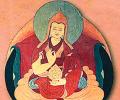
Tawang is very much a part of India, and if the present Dalai Lama decides one day to take rebirth in Tawang, the Indian government will openly welcome him and support him, notes Claude Arpi.

Why omit the Tiananmen massacre from the history of China's Communist party, asks Claude Arpi.

'Why did your generals try to grab a few square kilometres of Indian territory in Ladakh?' 'And what happened to the hard work that you and Prime Minister Modi put into the Wuhan and Mamallapuram meets?' Claude Arpi writes a letter to Xi Jinping, China's self-styled supreme leader, who turns 68 today, June 15.

'It appears that Prime Minister Modi has to undo 50 years of State monopoly in the defence sector during which public undertakings like HAL or DRDO monopolised defence production and development with disastrous consequences.'
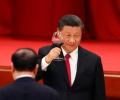
After the Ladakh fiasco where Xi Jinping did not expect the Indian Army to resist his land-grabbing tactics, he has to save face before his colleagues in the Communist party.' To bring the threat of a mega-dam to the northern Indian border is a clever move, observes Claude Arpi.
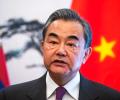
Was Wang Yi'S visit intended to remind India of 1962, asks Claude Arpi?

The first priority for the new Tibetan administration in Dharamsala should be to look at Tibetan recruitment in the PLA, suggests Claude Arpi.

Today, the Ladakhis and Tibetans have been joined by the Sikhs, the Madrassis, the Garhwalis, the Rajputs, who are well trained psychologically and otherwise, to defend the nation, observes Claude Arpi.
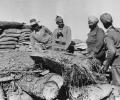
'The Himmatsinghji Report is still 'missing'.' 'It is a great loss for the knowledge of India's borders.' 'It would have an immense value at a time China is bound to shift its attention to other border fronts in the Himalayas,' notes Claude Arpi.
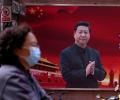
China has not limited the 'battle' to the diplomatic field alone; the People's Liberation Army has become aggressive on the ground too. The recent 'fights' in Northern Sikkim and Ladakh are part of the pattern, asserts Claude Arpi.
