
'Over the last two decades, the India-French relationship has grown steadily, no major political difference having darkened the sky between Paris and Delhi,' says Claude Arpi.

'In India, China's capacities to conduct new types of warfare is critically underestimated,' says Claude Arpi.

'Why assail the Tibetan leader at a time when many in China realise that the Buddhist monk is the best bet if Beijing is seriously trying to find a solution to the Tibetan issue?' asks Claude Arpi.

'People beat their chests when the Babri Masjid was brought down, not realising that it was just one event in a chain going back centuries; to look at the last link or two in isolation is absurd.'
'As long as Pakistan exists, the situation will not stabilise and violence is bound to erupt from time to time.' 'Though not a final solution, a step that could help localise the abscess -- trifurcate Jammu and Kashmir state into three parts: Jammu, Ladakh and the Valley.'

As football fans arrive to watch Euro 2016, France's trade unions have undertaken a series of strikes to provoke a make-or-break situation. Claude Arpi encounters both Gallic beauty and ugliness in the country of his birth.

China's ruling Communist Party has cracked down on Tibetans who planned to attend the Kalachakra Puja in Bodh Gaya. But the Tibetan people have dared the Communists by listening to the Dalai Lama's sermons on the Internet and sharing videos on social media.

'The Congress, all these decades, worked on a slow Hindi-isation and Indianisation of Arunachal tribes. The RSS wants rapid Hinduisation,' says Shekhar Gupta.

While the Rafale deal seems to be the main order of business during French President Francois Hollande's visit, other aspects could help sweeten the deal, says Claude Arpi.
'It is very much a danger.' 'With Tibet following the India tradition of ahimsa and the global visibility of the Dalai Lama who embodies these values, he should be supported by India as a diplomat.' 'It would be in India's self-interest and instead of being embarrassed about his presence, India should recognise this (role).' 'By appeasing China, India does not get anything in return; they (the Chinese have not stopped) claiming Arunachal, part of Kashmir, etc.'

Communist China has recently developed a great expertise in 'soul reincarnation', feels Claude Arpi
India's enemies be warned: The Rafale deal will bring a sea change in India's defence preparedness.

'The "Hollandisation" of British policy may not bring the expected gains as the future may show,' says Claude Arpi.

Nearly two decades ago, then defence minister George Fernandes said: 'China has built roads up to the border, while there has been negligence on India's part.' Since Fernandes uttered these brave words, what has been done on the Indian side? The Modi Sarkar is apparently trying, but little has been achieved so far, says Claude Arpi.
'Delhi was not concerned.' 'It would continue sleeping for several more years, with the result that Indian territory is still occupied by China today,' says Claude Arpi.

'How can a State, which claims to be a responsible power, unilaterally grab a "disputed" area to build a road on it?' asks Claude Arpi.

With the Rafale fighter deal stuck over price negotiations, can the prime minister step in and find a way out for both countries?

'Narendra Modi knows how to calculate and remain pragmatic. Take the unexpected Rafale deal - perhaps the first time a PM has considered the country's defence procurement as a priority, over the considerations of the babus... and over his own pet project 'Make in India',' says Claude Arpi.

Will China's new military reforms endanger Xi Jinping's rule?

'The question remains: Was the Obama visit truly a success? Only the future will tell us if the "breakthrough" in the nuclear liability issue will concretise into electricity.' 'As importantly, it will be interesting to watch how India's relations with China will evolve in the months to come.'

A new book reproduces original Chinese maps that contradict Chinese propaganda. The book reveals Chinese intelligence admissions that Beijing never maintained any army base, customs office or other government function in the disputed area until 1983.
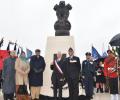
'The Indian Army served with honour and distinction in France and Flanders, East Africa, Gallipoli, Aden, Egypt, Mesopotamia, Palestine, Transcaspia, Persia and even China.' 'The sacrifice of India's soldiers was consigned to the dustbin of history in the post-colonial world.'
China is spending billions of dollars to improve infrastructure in Tibet and other parts of its border with India. Claude Arpi explains why New Delhi can't afford to ignore Beijing's plans.
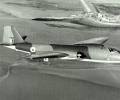
'If we had sent a few airplanes (into Tibet), we could have wiped the Chinese out.' 'And everything could have been different in the 1962 War.' 'They did not believe me there was no Chinese air force.' 'Can you imagine what would have happened if we had used the IAF at that time?' 'The Chinese would have never dared do anything down the line.'
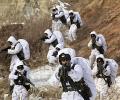
In all the noise surrounding the Dok La confrontation, Claude Arpi focuses on a crucial issue that has hardly been covered -- the construction of roads for the armed forces and the local population to reach the most remote border posts.

Honorary Captain Bana Singh won the Param Vir Chakra, India's highest ranking gallantry award, for recapturing a Pakistani post on the Siachen Glacier. Living a retired life in a quiet village in Jammu and Kashmir, he makes you feel that his act of phenomenal courage was part of a soldier's day at work.

The chaos on its stock markets, a fierce battle between the old and new guard in the Communist Party and the restive border provinces of Tibet and Xinjiang forebode tough times ahead for China, says Claude Arpi.
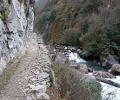
'It is certainly time for New Delhi to open up. Not only should it go ahead at full steam with the roads to the LAC, but the government must also allow tourists to visit these stunningly beautiful areas of Indian territory.'

What was the need for Xi Jinping, general secretary of the Chinese Communist Party, President of the People's Republic of China and Chairman, Central Military Commission, to don the new role of Commander in-Chief? Does this mean that the most powerful Chinese leader since Mao faces numerous threats from within the Communist Party?

'Tibet remains a prickly issue between the giant Asian nations. China still claims more than 80,000 sq kilometres of Indian territory in the Northeast. Why? Just because Beijing refuses to acknowledge the McMahon line which separates India and Tibet, and this, simply because the 1914 Agreement delineating the border was signed by the then government of independent Tibet with India's then foreign secretary (Sir Henry McMahon),' says Claude Arpi.

'Under the present Defence Procurement Procedure, it would have been a nightmare, and a long, long one at that, to build 108 Rafales in India. Modi realised this and took the wise decision, though it is a definitive setback for his Make in India scheme.'

'Make in India' will be central to Mr Modi's visit to Europe and Canada. It is difficult to predict what will happen with the Rafale deal, but if it goes through, it will undoubtedly become the 'Mother' of all 'Make in India' projects,' says Claude Arpi.

'Chinese leaders rarely receive their foreign guests in cities other than Beijing. Such respect for India!' 'Does it mean that Modi could replicate "the warmth and unconventional way" by sending Indian troops into Tibet, as Xi did in Chumur (Ladakh) when he arrived in India? Of course, Indians are far too polite to do so,' says Claude Arpi.
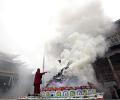
China has been keeping tabs on the restive Tibet province through a 'grid' system and some 600 'convenience police posts' armed with high-tech equipment that monitor the daily life of the citizens of Lhasa and other Tibetan towns. Worse, 'volunteer security groups' known as 'Red Armband Patrols' are roaming around in order to get more information and 'classify' each and every citizen, says Claude Arpi
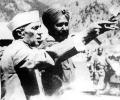
Let us hope that what happened in 1962 will never happened again, prays Claude Arpi

'If, as appears to be the case, India is on way to 'mending fences' with China, and China is equally desirous to 'reset' the relationship, this could be a self-reflexive moment in India's positioning vis-a-vis not just the Dalai Lama, but also the Tibetan issue and China as a whole,' points out China expert Alka Acharya.
Nehru's sentimental attachment to the Mountbattens deeply vitiated the Kashmir issue. It was certainly the most important factor for the failure to find a solution in the first years of the conflict.

On the title page of the Top Secret Report, Henderson-Brooks quotes the Chinese tactician Sun Tzu: 'Know yourself, know your enemy: A hundred battles, a hundred victories', says Claude Arpi, highlighting where the Indian Army and government failed to counter the Chinese attack in 1962.
