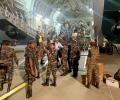
India has ramped up its humanitarian mission to cyclone-hit Sri Lanka under Operation Sagar Bandhu, with the Indian Air Force lying a 65-tonne Bailey bridge to Colombo to restore connectivity in devastated regions.

The largest tranche came in July, in the wake of Operation Sindoor, with the DAC according acceptance of necessity -- or initial approval -- for 10 capital acquisition proposals amounting to approximately 1.05 trillion through indigenous sourcing.

The Indian Air Force has stepped up its efforts to assist Sri Lanka in the wake of Cyclone Ditwah, deploying aircraft and helicopters for relief operations and evacuation of stranded citizens under Operation Sagar Bandhu.

The Defence Acquisition Council (DAC) has approved military projects worth approximately Rs 67,000 crore, including drones, radars, and missile systems, aimed at enhancing India's military capabilities.

India on Tuesday evacuated over 1,100 citizens from Iran and Israel amid ongoing tensions between the two countries, taking the number of evacuees under Operation Sindhu to 3,170.
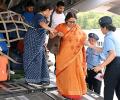
165 Indian nationals were evacuated from Israel by the Indian Air Force under Operation Sindhu in an effort to get citizens back home safe amid the Israel-Iran conflict.

One Iranian woman, who is the wife of an Indian national has also been evacuated, he added.
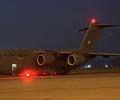
GPS spoofing is considered to be a form of cyber attack that includes generating false GPS signals. The false signals result in misleading the navigation equipment which creates a significant risk to aircraft.
'The strategic direction of the relationship will not be affected. But the perception has been affected.'

The Indian Air Force (IAF) has confirmed that its crew are well-equipped to handle potential GPS spoofing incidents, asserting that all relief missions to earthquake-hit Myanmar were successfully completed as planned. The IAF's statement follows reports of GPS signal tampering during relief flights, which raised security concerns. Sources in the military establishment had earlier suggested that IAF transport aircraft carrying relief materials to Myanmar faced "GPS spoofing", prompting the IAF to assure that its crew are capable of handling such situations.
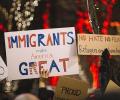
The United States has deported a group of Indian migrants on a military transport aircraft, marking the first such deportation to India as part of President Donald Trump's crackdown on illegal immigration. The US embassy in New Delhi confirmed that Washington is tightening immigration laws and removing illegal migrants. The deportation comes as India and the US are finalizing details for Prime Minister Narendra Modi's visit to Washington in February. India has indicated its willingness to work with the US on addressing illegal immigration, and has said it will take back all Indians who have overstayed or are in the US without documentation.
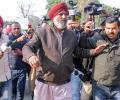
Jaspal Singh, one of 104 Indians deported from the US on Wednesday, claims he and other deportees were handcuffed and had their legs chained during the flight. Singh, who hails from Punjab, says he was captured by US Border Patrol after crossing the border illegally in January. He blames a travel agent for deceiving him, claiming he was promised a legal route to the US. The deportation comes ahead of Prime Minister Narendra Modi's visit to Washington for talks with President Donald Trump.
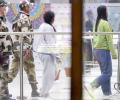
The Indian government has defended the use of Amritsar as a deportation hub for US flights carrying Indian deportees, despite objections from Punjab Chief Minister Bhagwant Mann. Government sources said Punjab has the highest number of deportees among Indian states, with 126 out of 333 people deported since February 5. The sources added that 23 flights carrying Indian deportees have arrived in the country since May 2020, all landing in Amritsar. The move has sparked controversy, with opposition parties protesting the treatment meted out to the deportees and demanding that the Indian government take up the issue with the US. Mann has accused the Centre of trying to defame Punjab and said a holy city like Amritsar should not be made a "deport centre".
'The flight did not land in Gujarat because the 'Gujarat model' would then get exposed.'
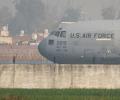
The deportation of 104 Indian nationals from the US, followed by another 119 set to arrive in Amritsar on Saturday night, has sparked controversy in India over the treatment of returnees. The US government's intensified crackdown on undocumented immigrants has led to criticism of the use of handcuffs and shackles for deportees, even those who have committed no crimes beyond immigration violations. The issue has led to heated debates in the Indian Parliament, with opposition leaders demanding an inquiry into the deportation process. The Indian government is engaging with US officials to ensure the humane treatment of deportees, while also facing the challenge of reintegrating returnees into Indian society. The deportations highlight the ongoing tension between border control and human rights, and the complexities of US-India relations.
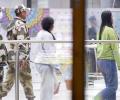
He said the air conditioners were run non-stop at a very low temperature, and they were given thin blankets, which were even thinner than silver foil paper and one could see through them.
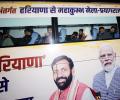
A Haryana man who paid Rs 35 lakh to agents to facilitate his journey to the USA via the 'dunki' route was deported back to India after being apprehended in the US. The man, Pankaj Rawat, has filed a complaint with the Gujarat police accusing the agents of human trafficking and cheating.
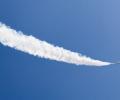
The 76th Republic Day Parade concluded with a memorable display of aerial acrobatics, including a stunning victory roll by Rafale aircraft and daring maneuvers by Sukhoi-30 fighter jets. The flypast, featuring over 40 aircraft, captivated the large crowd gathered along Kartavya Path, including President Droupadi Murmu, Indonesian President Prabowo Subianto, and Prime Minister Narendra Modi. The parade showcased the strength and skill of the Indian Air Force and provided a spectacular visual experience for the audience.
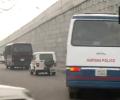
Daljit Singh, one of the 116 illegal Indian immigrants deported from the US on Saturday night, has claimed that they were handcuffed with their legs chained during the journey. Singh, who traveled via the 'donkey route', an illegal and risky pathway used by migrants to enter the US, said that he was deceived by a travel agent who promised him a direct flight to the US. The C-17 aircraft that landed at the Amritsar airport on Saturday was the second batch of Indians to be deported by the Donald Trump administration as part of its crackdown on illegal immigrants. A third plane carrying 157 deportees is expected to land at the Amritsar airport on Sunday.
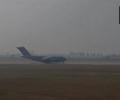
It was not immediately known whether the deportees were in shackles, as the previous batch was.
The Congress on Wednesday expressed sadness over 'pictures of Indians getting handcuffed and humiliated' while being deported from the United States and recalled that America had to express regret over the treatment meted out to India diplomat Devyani Khobragade in 2013 after the then United Progressive Alliance government retaliated sharply.
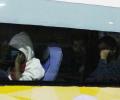
India has expressed concern to the US authorities over the treatment of deportees on a flight that landed on February 5, particularly with respect to the use of shackles, especially on women. The Ministry of External Affairs (MEA) has also registered its concerns regarding the need to accommodate the religious sensitivities and food preferences of the deportees. The US side has confirmed that no women or children were restrained on the deportation flights that landed in India on 15th and 16th February, 2025.
A US military aircraft carrying 112 Indian deportees landed at the Amritsar airport late on Sunday night, marking the third such flight in recent weeks. The deportees, who hail from various states across India, will be allowed to return home after completing necessary immigration procedures. The deportations are part of a crackdown by the Donald Trump administration against illegal immigrants.
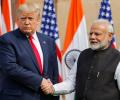
The China threat continues to resonate in the strategic partnership between India and the USA, points out Rup Narayan Das.
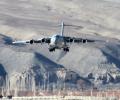
The C-17 Globemaster can airlift around 230 passengers in one go and takes less time to fly between different places.
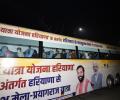
Rohit, a young man from Punjab, India, was deported from the United States after a perilous journey that cost him his life savings and left his family in financial ruin. He had been promised legal entry to the U.S. by a travel agent in Amritsar, but his hopes were dashed when he was apprehended for illegally crossing the border. The ordeal highlights the risks associated with illegal migration and the exploitation faced by vulnerable individuals seeking a better life.
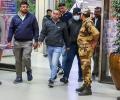
India has raised concerns with the US over the recent deportation of 104 Indian immigrants, with Foreign Secretary Vikram Misri revealing that US authorities have identified up to 487 presumed Indian citizens with "final removal order." Misri also highlighted the "ecosystem to promote illegal migration" and stressed the need for action against those involved in facilitating such operations.
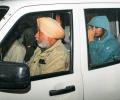
Families of illegal immigrants from Punjab who were deported from the US are facing a crushing debt they took to facilitate their travel to America. They allege that travel agents used unfair means to facilitate the youths' travel without their knowledge and are seeking strict action against them. The families are burdened by the debt they took on hoping for a better future and are appealing to the government for help.
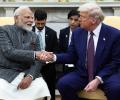
The real intention of the 'Tariff Man' (as Trump calls himself) may not even be to put the 'Tariff King' (as he describes India) on the mat with a knockout punch but to arm-twist the Indian leadership to agree to some multi-billion dollar mega arms deal, argues Ambassador M K Bhadrakumar.
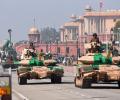
India will showcase its military prowess and rich cultural heritage on Kartavya Path in New Delhi on January 26 to mark the 76th Republic Day. Indonesian President Prabowo Subianto will be the chief guest at the event, which will also see the participation of a marching contingent and a band contingent from Indonesia. The theme of the parade is 'Swarnim Bharat: Virasat aur Vikas', focusing on the platinum jubilee of the enactment of the Constitution. The parade will feature a number of cutting-edge defense platforms, including BrahMos, Pinaka and Akash, as well as the Army's Battle Surveillance System 'Sanjay' and DRDO's surface-to-surface tactical missile 'Pralay'.
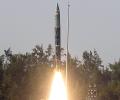
Ahead of Republic Day, the Indian Army announced on Thursday the addition of two new features to this year's parade: battlefield surveillance systems and a Defebce Research and Development Organisation tableau showcasing Pralay, short-range ballistic missiles.

'Prime Minister Modi should sit with Trump and find a solution to this issue.'

Another proposal of the army and the IAF for the procurement of 55 low level light weight radars was also cleared by the DAC for Rs 419 crore.

This keeps the American aircraft giant on track to deliver five of the large, versatile military transport aircraft to the IAF this year, and five more in 2014.

As part of a massive rescue operation, three C-17 Globemaster aircraft of Indian Air Force have clocked nearly 150 flying hours in the last few days bringing back over 1,300 Indians from Djibouti after their evacuation from strife-torn Yemen.

Indian Air Force's latest acquisition, the C-17 Globemaster-III made its maiden flight to the Andaman & Nicobar Islands on June 30.
Bolstering the Indian Air Force's capability to swiftly transport combat troops and equipment such as tanks to the front, Defence Minister A K Antony will on Monday formally induct its biggest 70-tonne C-17 heavy-lift transport aircraft into service at the Hindon Air Base near New Delhi.

The C-17 Globemaster, the biggest military aircraft in the Air Force, will carry a large consignment of medical supplies to China and bring back more Indians from Wuhan, the epicentre of the coronavirus epidemic, the sources said.

Glimpses from the Indian Air Force participation in the multinational Red Flag 24 exercise at the US air force's Eielson base in Alaska.
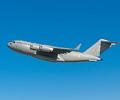
India has placed orders for 10 C-17s Globemaster III airlifters, of which five would be delivered this year and rest five in 2014. The flight test programme would be carried out at the Edwards Air Force Base in Valifornia.
 © 2026 Rediff.com - Investor Information - Advertise with us - Disclaimer - Privacy Policy - Sitemap - Feedback - About us - Terms of use - Grievances