
S&P Global Ratings on Thursday cut India's growth forecast for the current fiscal to 9.5 per cent, from 11 per cent earlier, and warned of risk to the outlook from further waves of COVID pandemic. The agency lowered the growth outlook saying that a severe second COVID-19 outbreak in April and May led to lockdowns imposed by states and sharp contraction in economic activity. "We forecast growth of 9.5 per cent this fiscal year from our March forecast of 11 per cent," S&P said.

Low home loan rates by banks could put large players in an advantageous position over smaller non-bank players, believe analysts.

The adverse impact on the margins of auto, consumer staples and consumer durables sectors will be counterbalanced by an earnings uptick in the metals, cement and oil & gas sectors.

Check out some of the stocks that will react on the basis of their numbers in the near term.

Only 10 per cent of stocks account for 93 per cent of investments.

Consolidation is the prime mood of the Indian equity market at the moment.

'In the overall global portfolio, India's weighting has come down in the past seven months.'

As share of cash volumes in trading mix sees decline, it will result in moderation of profitability from core broking operations.

Market leader Maruti Suzuki is putting finishing touches to its plan of finding its feet in what is being hailed as a battle of epic proportions in India's fastest-growing passenger vehicle segment, reports Arindam Majumder.

Analysts at foreign brokerage Bank of America Merrill Lynch said the RBI will cut rates by 0.25 per cent in December, and follow it up with a 0.15 per cent in February.

The order, a "negative" overall, will be a short term positive for corporate focused state-run and private lenders because of the possibility of delaying incremental stressed asset recognition.

This is not the first time that users of Zerodha clients have faced technical issues. As recently as February, 2019, the platform faced a connectivity issue that led to a pile-up of orders.

Indian funds did better than Asian ones in only four of the 10 months -- till October. Despite much market optimism, presumably around policy interventions and guided by buoyant flows, India's macro backdrop may be turning for the worse.

Deb said that he would ask people whether they want him to continue as the chief minister.

India's real estate industry staged a rebound from 2020's downturn, with housing sales seen rising by over 50 per cent. The performance, though short of pre-COVID levels, has property developers hoping for stronger gains in the New Year and the beginning of a long upcycle. A strong foundation has been laid this year for revival in the Indian real estate sector, which is projected to reach $1 trillion mark by 2030 from $200 billion in the pre-pandemic year.
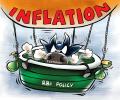
Analysts say RBI will cut rates because the liquidity crunch that began this time last year is still hurting the economy and also with an eye on the August industrial production numbers, which showed a contraction by 1.1 per cent -- the steepest in seven long years.

Channel partners have started adding more value in marketing and sales. They are increasingly acting as advisors -- sales professionals than brokers.

'Today, there is no easy money to be made after the run-up in equities.'

Some of the firms that have witnessed major drop in analysts' coverage include Dish TV, YES Bank, and JSW Energy.

The gains came on expectations that the company will post strong growth given its presence in application to peer services and the fast-growing communication platform as a service segment.

Over the next three - six months, UBS believes earnings will be the main driver for EM equities outperformance.

Billionaire Mukesh Ambani-led Reliance Industries Ltd's plans for investing Rs 75,000 crore in solar, batteries, fuel cells and hydrogen could create valuation of $36 billion (Rs 2.6 lakh crore) for the new energy business, Wall Street brokerage Bernstein Research said in a report. Reliance currently has three verticals -- oil-to-chemical (O2C) business that houses its oil refineries, petrochemical plants and fuel retailing business; digital services that comprises telecom arm Jio; and retail including e-commerce. New Energy will be the fourth vertical. At the company's annual general meeting of shareholders last month, Ambani announced a plan to invest Rs 75,000 crore in a new energy business over the next 3 years in the next stage in its transformation.

What's required is proper implementation of the rules and better coordination between market intermediaries such as stock exchanges and clearing members who play a key role in monitoring brokerages.

A 2019 investigation of Bombay Dyeing by market regulator Sebi has put a brake on the initial public offering process of sister company Go Air. The Wadia group-owned low cost airline had earlier planned to launch the IPO to raise Rs 3,600 crore by August, but may be forced to postpone it by a month or two as Sebi completes its investigation.

Fitch Ratings on Wednesday cut India's growth forecast to 10 per cent for the current fiscal, from 12.8 per cent estimated earlier, due to slowing recovery post second wave of COVID-19, and said rapid vaccination could support a sustainable revival in business and consumer confidence. In a report, the global rating agency said the challenges for banking sector posed by the coronavirus pandemic have increased due to a virulent second wave in the first quarter of the financial year ending March 2022 (FY22). "Fitch Ratings revised down India's real GDP for FY22 by 280bp to 10 per cent, underlining our belief that renewed restrictions have slowed recovery efforts and left banks with a moderately worse outlook for business and revenue generation in FY22," it said. Fitch believes that rapid vaccination could support a sustainable revival in business and consumer confidence; however, without it, economic recovery would remain vulnerable to further waves and lockdowns.

In a base case, the consultant said that sales could drop 25 per cent to 1.96 lakh units this year from 2.61 lakh units in 2019 across seven major cities -- Delhi-NCR, Mumbai Metropolitan Region, Kolkata, Chennai, Bengaluru, Pune and Hyderabad.

The government is considering a provision to provide an exit window to holders of cryptocurrencies (cryptos), keeping in mind that banning them outright could deal a blow to investors sitting on them for years. According to sources in the government, the framework in the making may propose a grace period of three to six months for investors before prohibiting the possession, trading, mining, and issuing of cryptos. A group of secretaries chaired by the Cabinet secretary is learnt to have met in mid-March and discussed issues associated with cryptos, including the consequences of banning them and also on possible substitutes of blockchain technology - an advanced technology Bitcoin uses.

Even if the Paytm fiasco does not mark the end of the bull run, at least some sanity will return to the wild IPO market, observes Debashis Basu.

Investors need to evaluate the offerings of a broker in totality before selecting one.

India Inc's profit share in the country's GDP at 15-year low in 2018. Since 2013, net profit for top 500 companies has remained in the range between Rs 4 trillion and Rs 4.8 trillion despite steady growth in nominal GDP.

Sanjiv Mehta, chairman of the country's largest consumer goods company, HUL, believes that the second wave of the Covid-19 pandemic between April and June this year has been a mere pause in India's consumption story, and that it will not change the country's overall growth trajectory. India is poised for growth, especially in the fast-moving consumer goods (FMCG) sector, Mehta told shareholders at the company's annual general meeting on Tuesday. The signs of recovery are becoming evident with many states lifting lockdown restrictions in recent weeks.

The dozen firms to have listed following their IPOs have seen an average listing day gain of 49 per cent. IPO applicants have made money on all the deals, barring two, which saw modest declines on listing day.

Investment in market leaders with a safety-first approach could yield reasonable returns across sectors.

Half of the nation's 100 richest saw gains rising a collective 14% to $517.5 billion, says Forbes. Forbes released 2020's top 100 richest Indians on Thursday, which included newcomers, Sanjeev Bikhchandani, co-founder of Info Edge (India), who owns popular job and property websites; siblings Nithin and Nikhil Kamath, co-founders of discount stock brokerage Zerodha Broking, and three specialty chemicals producers - Vinod Saraf, founder of Vinati Organics, Arun Bharat Ram, the patriarch of SRF, and brothers Chandrakant and Rajendra Gogri of Aarti Industries. Other newcomers included Delhi-based brothers Ramesh Kumar and Mukand Lal Dua of Relaxo Footwears, which owns affordable footwear brands; dairyman, R G Chandramogan of Hatsun Agro; Premchand Godha, who chairs IPCA Laboratories, manufacturing formulations, bulk drugs and drug intermediates; G Rajendran, founder of jewellery chain, GRT Jewellers.

Foreign brokerages said if SBI decide to buy stake in the bank, they should buy it at Rs 1 per share as the net worth is hugely impaired.

Though India was under lockdown for only seven days of the quarter, global demand and commodity prices began falling from February as COVID-19 was spreading in other countries. 1,002 listed companies - excluding banks, non-bank lenders, insurers, brokerages, and IT firms - reported a combined pre-tax loss of around Rs 2,700 crore during Q4.

With the increased death rate in the ongoing second wave of Covid-19, domestic cement companies are in no better condition than they were in the April-June quarter of FY21 when the country faced nationwide lockdown. "This wave has had high death rate which has impacted the business. "We are in no better situation than last (year) April. "Deaths of drivers, dealers, contractors and also employees have hit the industry really very hard since April (FY22)," M Ravinder Reddy, director of Bharathi Cements said.

The uptick in prices ranging from steel to wheat could benefit lots of commodity-based companies -- from State-owned SAIL to the agro exporters.
BMA's clients allege that depository firm CDSL and stock exchanges did not act on their complaints, prompting them to protest before Sebi. They say their shares have been transferred to a pool account without their knowledge and have been used to avail loans. Clients alleged that BMA has pledged their securities with a leading private bank, who could have sold their holdings.

The so-called high networth individual portion saw 620x more demand than shares on offer.
 © 2026 Rediff.com - Investor Information - Advertise with us - Disclaimer - Privacy Policy - Sitemap - Feedback - About us - Terms of use - Grievances