
India's first unicorn Zomato will make its stock market debut on Friday, marking a historic moment for the domestic capital market. As per initial schedule, Zomato's listing was to take place on July 27. However, investment banks managed to complete the share allotment and listing formalities ahead of the deadline. Under the Sebi framework, the timeline between IPO closing and listing has to be six working days. Zomato's IPO had closed on July 16.

Corporate revenues will decline for a third consecutive quarter in March on a YoY basis - one of the worst shows by these companies in many years.

Citing the massive surge in Omicron infections and the resultant impact on overall economic activities in the March quarter, Swiss brokerage UBS Securities has revised downwards its India's growth forecast for the current financial year to 9.1 per cent from 9.5 per cent earlier. However, UBS Securities does not see the third wave impact extending to the next financial year as it has revised upwards its real GDP forecast to 8.2 per cent, up from 7.7 per cent earlier, expecting the real GDP growth to remain well above the historical average. The World Bank pegs it at 8.3 per cent, unchanged from its June assessment, saying the recovery is not broad-based yet.

Reliance Industries Ltd's focus on the next hypergrowth opportunities in clean tech and its path to decarbonisation has the potential to spur re-rating, raises clarity on investment cycles and reduces investor worry, brokerages said. RIL chairman Mukesh Ambani at the company's 'Green AGM' on Thursday committed Rs 75,000 crore over the next three years to set up an integrated Green Energy Giga Complex across 5,000 acres in Jamnagar, Gujarat which will contain four giga factories. The complex, which would be one of the world's largest renewable manufacturing facilities, would have an integrated solar photovoltaic module factory, an energy storage battery factory, electrolyser manufacturing for hydrogen production, and manufacturing of fuel cells so that hydrogen can be used in transportation.

One of the biggest advantages of index funds and ETFs is their low cost, points out Sarbajeet K Sen.

Many of them are housewives looking to increase income in households struggling with the economic devastation caused by COVID-19.

Wall Street brokerage Goldman Sachs has lowered its estimate for India's economic growth to 11.1 per cent in fiscal year to March 31, 2022, as a number of cities and states announced lockdowns of varying intensities to check spread of coronavirus infections. India is suffering the world's worst outbreak of COVID-19 cases, with deaths crossing 2.22 lakh and new cases above 3.5 lakh daily. This has led to demand for imposition of nationwide strict lockdowns to stem the spread of the virus - a move that the Modi government has so far avoided after the economic devastation last year from a similar strategy.

Given the dimensions, it is bound to have at least ripple effects across markets. Could ripple turn into cascade? asks Devangshu Datta.

Warning that the new year will be riskier than the previous two in terms of growth, inflation and the perils of monetary policy normalisation on consumption demand in particular, along with other external risks, a Wall Street brokerage has pencilled in an 8.2 per cent GDP growth next fiscal, with more downside risks to the projection. The biggest risk to the projection is a derailed consumption demand that has been the main growth driver in the past many years, said the Bank of America Securities India house economists who still believe that consumption demand will remain the key driver of growth next fiscal as well.

The Budget, to be presented on February 1, is likely to be less worried about fiscal deficit and will be focused more on nursing the fragile growth, according to a Wall Street brokerage report. Bank of America Securities India expects the budget to peg "fiscal deficit at a high 5 per cent of GDP for FY22 and 7.2 per cent for FY21, as it is likely to step up capex, recap public sector banks, push asset sales to break government monopolies, offer sops for real estate, tax cuts for lower income groups and creation of a bad bank". Its house economists expect these spends to be funded by debt and partly by imposing a cess on high income groups and also by some non-fiscal measures like tapping the central bank's revaluation reserves and bank recapitalisation and infra bonds.

'We try to pick up stocks early and hold onto them for the long term.' 'We are not someone who buys and sells on a daily basis.'
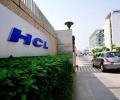
Shares of HCL Tech hit a fresh record high of Rs 1,118.55 on Friday, up 2 per cent on the BSE in intra-day trade, surpassing its previous high of Rs 1,101 touched on Thursday in intra-day deals.

Thousands of retail investors are reaping the benefits of the disruption that the latest technologies have brought to the equity market. Brokerage firms are aggressively investing in technologies such as artificial intelligence, machine learning, big data and analytics, social media, chatbots, virtual assistants and so on.

The firm is on course to replace state-owned Gail India in the widely-followed index during the semi-annual review set for March.

A total of 49 companies raised Rs 81,615 crore in Samvat 2077, more than the preceding four years and almost double the amount raised in the previous year. Samvat 2078 appears even more promising with mega issues of Paytm and Life Insurance Corporation (LIC) of India. However, Paytm's record could be short-lived as state-owned LIC is planning to launch a Rs 1-trillion IPO by March 2022.

Waves of foreign portfolio investments worth over Rs 51,000 crore splashed into the Indian market in 2021 as overseas investors turned net buyers of domestic securities for the third straight year while excess global liquidity and other factors steered the ebb and flow of their investing ways. With the global financial system still flush with liquidity, emerging market assets, especially equities, might well remain the preferred investment avenue for many more months to come, experts opined. As the equities sizzled during most of 2021, that also saw economy slowly coming back into the recovery path, Foreign Portfolio Investors (FPIs) turned net buyers but their investment is much less compared to net inflows of Rs 1.03 lakh crore in 2020.

'Some of the launches may get deferred due to the semiconductor shortage, which is unlikely to get resolved before the second half of 2022.'

The broader market performance, however, is expected to be better by virtue of good performance of state-owned banks on a low base.

Sebi also plans to examine if any comments made by company officials or the bankers could have misled investors.

Categories such as washing machines, refrigerators and television sets have seen sales growth of around 8-10 per cent in August compared to last year, industry sources said, with September also reporting a similar growth trajectory.

The answer to that depends on whether the globe is able to contain the virus spread, says Samie Modak.

The share of public sector undertakings (PSUs) in the total market capitalisation of listed companies--at an all-time low of 10 per cent currently --- may get a leg-up from the government's divestment push. Recently the government announced the successful sale of national carrier Air India to Tata Sons, India's first privatisation of a PSU since 2002-03. The transaction is expected to be completed by December.

Markets regulator Sebi's proposal of treating all orders emanating from application programming interface (API) as algorithmic or algo order can restrict the growth of such trading in India, brokerage houses said on Monday. In market parlance, algo trading refers to any order that is generated using automated execution logic. The algo trading system automatically monitors the live stock prices and initiates an order when the given criteria are met.

This is the fastest the markets have taken to get out of bottom, compared to previous crises.

These include increasing the public float in listed companies to 35 per cent from 25 per cent, increasing the minimum statutory limit for FPI investment in a firm from 24 per cent to the sectoral foreign investment, and lowering government holding in listed public sector undertakings.
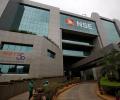
Leading stock exchanges NSE and BSE on Monday said all their operations are functioning in a normal manner after HDFC Securities flagged that confirmations were not received for orders placed in the NSE cash segment due to a "technical glitch". After mentioning about the technical glitch in a tweet at 10.01 am, HDFC Securities, at around 11.53 am, issued a statement saying the issue "got resolved at 9.50 am" and that investigation is going on to find out the root cause. The episode, which happened less than one hour after markets opened for trading, comes within days of a technical glitch forcing NSE (National Stock Exchange) to halt trading for nearly four hours on Thursday. In a statement, a NSE spokesperson said that all the operations on its platforms were "functioning smooth and normal".

Describing the recent two consecutive spikes in retail inflation beyond the 6 per cent as a 'transitory hump', a Wall Street brokerage on Monday said it expects the RBI to overlook it and unanimously stick to the dovish stance at the forthcoming policy review, even though a further upward revision of its already-revised inflation target is more likely. The Reserve Bank-led monetary policy panel is scheduled to announce the third monetary policy review on August 6, amidst the continuing spike in retail inflation that has breached the 6 per cent upper tolerance level for the past two consecutive months.

Pegging the cost of the covid-19 lockdown at USD 120 billion (approximately Rs 9 lakh crores) or 4 per cent of the GDP, analysts on Wednesday sharply cut their growth estimates and stressed on the need to announce an economic package. The Reserve Bank of India (RBI), which is scheduled to announce its first bi-monthly policy review on April 3, is set to deliver a deep rate cuts and it should also be assumed that the fiscal deficit targets will be breached, analysts said.

In the past 10 trading sessions, shares of the state-owned company have shot up more than 50 per cent.

Auto sales in April have started showing the impact of lockdowns that has put the brakes on the recovery of the sector, a report said on Tuesday. With more states announcing lockdowns and some more OEMs expecting to go for maintenance shutdowns, as many as 50 per cent of the dealers are likely to be impacted by the move, it added. However, the full-year prospects remain positive if the COVID wave recedes in the April quarter and the vaccination drive goes as planned, brokerage firm Centrum said in the report.

Fitch Ratings has cut India's economic growth forecast to 8.7 per cent for the current fiscal but raised GDP growth projection for FY23 to 10 per cent, saying the second COVID-19 wave delayed rather than derail the economic recovery. In its APAC Sovereign Credit Overview, Fitch Ratings said India's 'BBB-/Negative' sovereign rating "balances a still-strong medium-term growth outlook and external resilience from solid foreign- reserve buffers, against high public debt, a weak financial sector and some lagging structural factors". The 'Negative' outlook, it said, reflects uncertainty over the debt trajectory following the sharp deterioration in India's public finances due to the pandemic shock.

The bulk of the incremental profits will come from oil & gas and automobile sectors.

With a potential for a 10x growth in pre-tax profit from the business over the next decade, retail including e-commerce will be the next growth engine for Reliance Industries Ltd, Goldman Sachs said in a report. After growing 5x over FY16-FY20, RIL's core retail revenue growth has taken a pause in FY21 (April 2020 to March 2021) due to Covid related macro headwinds including lower footfalls. The oil-to-telecom conglomerate run by billionaire Mukesh Ambani used the period to build strong digital capabilities of the retail business while continuing to expand its physical reach.

Yes Securities, the broking and investment arm of Yes Bank, on Wednesday said the Supreme Court directive on loan moratorium due to pandemic has brought the much needed clarity and there will not be any financial impact on the banks as the compound interest waiver is to be reimbursed by the government. On its verdict on a batch of pleas seeking moratorium extension beyond August 31, 2020, the apex court on Tuesday said it is a policy decision, refusing to interfere with the Centre's and RBI's decision to not extend the loan moratorium beyond the limit. However, it observed that the benefit of moratorium should go to all set of borrowers irrespective of the loan amount and asked to refund any amount collected as penal interest and compound interest during March-August 2020.

What is more worrying, according to the report, is the fact that in over 20 per cent of the topic caseload districts where the second has ebbed, the third wave has set in firmly, which was only 5 per cent a month ago.

BMW is over-capitalised and is awash with cash and it could quickly lower JLR's investment costs and raise margins by leveraging its own platforms, powertrains, purchasing scale and quality control.

Will 2022 be a year of contrasting narratives -- one filled with caution and the other with continued optimism?
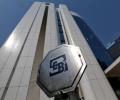
Securities and Exchange Board of India (Sebi) chairman Ajay Tyagi on Thursday defended the recent reforms announced by the regulator, such as peak margin norms and shortening of the trade settlement cycle, saying they were in the interest of investors. The moves were criticised by the broking community and the foreign portfolio investors (FPIs). Speaking to the media after his inaugural address at the CII Financial Markets Summit, Tyagi said: "The new peak margin norms are in everyone's interest.

Zerodha will not raise external funds now or in the future, because it is profitable and has zero debt.
S&P Global Ratings on Thursday cut India's growth forecast for the current fiscal to 9.5 per cent, from 11 per cent earlier, and warned of risk to the outlook from further waves of COVID pandemic. The agency lowered the growth outlook saying that a severe second COVID-19 outbreak in April and May led to lockdowns imposed by states and sharp contraction in economic activity. "We forecast growth of 9.5 per cent this fiscal year from our March forecast of 11 per cent," S&P said.
 © 2026 Rediff.com - Investor Information - Advertise with us - Disclaimer - Privacy Policy - Sitemap - Feedback - About us - Terms of use - Grievances