
The target of mopping up Rs 1.75 lakh crore from divestments of some of the public sector companies, including LIC and BPCL during the current fiscal, is on track and groundwork is being prepared for the goal, Chief Economic Advisor Krishnamurthy Subramanian said on Monday. On the COVID-19 pandemic, Subramanian said the impact of the second wave is lesser than that of the first one. In an interactive session, organised by Federation of Telangana Chambers of Commerce and Industry, the CEA said robust GST collections, over Rs one lakh crore per month for eight months in a row shows that consumption is picking up indicating positive signal for growth.
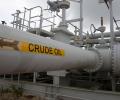
Crude oil shipments from the US to India rose to the highest levels in November since the conflict began in Ukraine in late February, sparking hopes of a resurgence in oil flows from the US to the subcontinent, reveals shipping data. Shipments from the US have surged as Western nations prepare to impose additional sanctions on Russian crude flows. The US shipped around 450,000 barrels per day of crude last month to India, twice that of shipments in October, according to data from London-based commodity intelligence provider Vortexa.
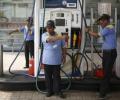
International oil prices have hit a six-month low, helping Indian fuel retailers breakeven on petrol but they continue to lose money on diesel - the most used fuel in the country, officials said. The world's best-known crude benchmark, Brent was trading at $94.91 per barrel on Thursday after concerns of a global recession led to it slipping to a six-month low of $91.51 on the previous day. The current rates are a relief to India, which is 85 per cent dependent on imports for meeting its oil needs.
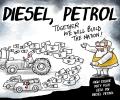
Petrol and diesel price soared to an all-time high across the country on Friday after rates were hiked again by 25 paise and 30 paise a litre, respectively. The price of petrol in Delhi rose it its highest ever level of Rs 101.89 a litre and to Rs 107.95 in Mumbai, according to a price notification of state-owned fuel retailers. Diesel rates too touched a record high of Rs 90.17 in Delhi and Rs 97.84 in Mumbai.

The government on Thursday permitted 100 per cent foreign investment under the automatic route in oil and gas PSUs which have received in-principle approval for strategic divestment. The move would facilitate privatisation of India's second biggest oil refiner Bharat Petroleum Corp Ltd (BPCL). The government is privatising BPCL and selling its entire 52.98 per cent stake in the company.
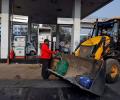
Diesel price on Friday was hiked by 20 paise per litre - the first increase in rates in over two months - as international oil prices neared their highest since 2018. Price of diesel was hiked to Rs 88.82 per litre in Delhi and to Rs 96.41 in Mumbai, according to a price notification of state-owned fuel retailers. Petrol price was not changed. It costs Rs 101.19 a litre in Delhi and Rs 107.26 in Mumbai.

'He builds confidence in players. He has the knack of motivating people.' 'A few good words from Ravi and that player will be an altogether different player in minutes.'
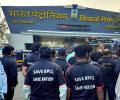
Privatisation of BPCL, which was dubbed India's biggest ever, has been stalled with just one bidder left in the fray after two others walked out over issues such as lack of clarity in fuel pricing, a top source said. The government had planned to sell its entire 52.98 per cent stake in Bharat Petroleum Corporation Ltd (BPCL) and invited Expression of Interest from bidders in March 2020. At least three bids came in by November 2020 but only one remains now after the others withdrew from the race.

The three oil PSUs have told Air India that if it did not make the monthly lump sum payment, they will stop fuel supply from October 11 at six major domestic airports.

State-owned oil firms such as ONGC and IOC will invest over Rs 1.11 lakh crore in the next fiscal year starting April as they supplement the government's massive spending programme to spur economic growth. Oil and Natural Gas Corporation (ONGC), Indian Oil Corporation (IOC), GAIL (India) Ltd, Bharat Petroleum Corporation Ltd (BPCL), Hindustan Petroleum Corporation Ltd (HPCL) and Oil India Ltd (OIL) will together make a 7.4 per cent higher capital expenditure in the 2022-23 fiscal (FY23). The capex spending of Rs 1.11 lakh crore in 2022-23 compares with a revised estimate of Rs 1.04 lakh crore for the current fiscal year that ends in March, according to Union budget documents.

As oil marketing companies (OMCs) stare at huge under-recoveries, India is facing fuel shortage across the country with states like Rajasthan, Madhya Pradesh, Karnataka Uttarakhand, Gujarat and Haryana being the worst hit. The under-recoveries suffered by OMCs are around Rs 20-25 a litre for diesel and Rs 14-18 a litre for petrol, said sources. Government and state-run companies denied reports of any crisis or supply-side issues on the availability of fuel.
Bharti Airtel aims to leverage its 180 million plus digital service customers and its wide presence in rural areas to grow its payment bank business. "We are well placed as we can leverage the 180 million plus customers we have across our digital assets. "We offer a plethora of services such as lucrative interest rates, gift cards, FASTag, telecom recharges, payments and debit cards. "Our large merchant base of more than eight million allows us to drive both engagement and monetisation.
The government is looking to sell shares of Reliance Industries (RIL) held through Specified Undertaking of the Unit Trust of India (SUUTI) and is soon going to appoint an intermediary to manage it. The plan is to sell about 8 lakh shares of RIL that will help the government garner around Rs 180 crore. The Department of Investment and Public Asset Management (DIPAM) will appoint an intermediary that will act as a custodian of these shares. The intermediary, based on its market analysis, will offload these shares at the best price, said an official. A final approval on the proposal is expected soon.
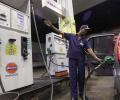
Petrol price in Delhi was hiked to Rs 77.28 per litre from Rs 76.73, while diesel rates were increased to Rs 75.79 a litre from Rs 75.19, according to a price notification from State oil marketing companies. Rates have been increased across the country and vary from state to state depending on the incidence of local sales tax or VAT.

Corporate earnings grew in double digits during the April-June 2022 (Q1FY23) quarter but the momentum waned. Overall corporate earnings in the quarter were down sharply from their highs in FY22. The combined net profit of 2,981 listed companies across sectors in the Business Standard sample was up 22.4 per cent YoY to Rs 2.24 trillion in the June quarter, driven by a big jump in the earnings of banks, non-banking lenders, oil & producers, and FMCG companies. Also, earnings in the corresponding quarter a year ago were affected because of the second wave of the Covid pandemic, even though the numbers were a lot better than Q1FY21 when there was a nationwide lockdown.

Suryakumay Yadav has become the toast of Indian cricket
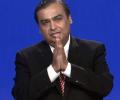
Billionaire Mukesh Ambani's oil-to-telecom conglomerate Reliance Industries Ltd slipped 59 places to rank 155th on the 2021 Fortune Global 500 list released on Monday. Reliance took a beating on the rankings as revenues dropped owing to the COVID-19 pandemic. This is its lowest ranking since 2017. Walmart continues to top the Fortune list with a revenue of $524 billion, followed by China's State Grid at $384 billion.
In nine hikes, petrol price has gone up by Rs 5 per litre and diesel by Rs 4.87 a litre.
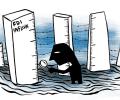
The Union Cabinet on Thursday approved a proposal to allow 100 per cent foreign direct investment (FDI) in public sector refiners, expanding the scope for FDI in the privatisation of Bharat Petroleum Corporation Ltd (BPCL). The approval by the Cabinet will enable the sale of the government's 52.98 per cent stake in BPCL to a foreign buyer, and, at the same time, will open the door for FDI in other public sector companies in the oil sector put up for privatisation.
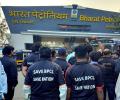
Global oil majors may be teaming up with investment funds that are already in the race to acquire Bharat Petroleum Corporation Ltd (BPCL), a document detailing steps needed to complete India's biggest privatisation showed. Billionaire Anil Agarwal's Vedanta group as well as two US funds -- Apollo Global and I Squared Capital - had last year submitted initial bids to buyout the government's entire 52.98 per cent stake in India's third-biggest oil refiner and second-largest fuel retailer. Detailing the 'Next Step', the 'Brief Note on BPCL Disinvestment' said Transaction Advisor and Asset Valuer are to submit an inception report, bidders have to complete due diligence of the company and sale purchase agreement has to be finalised.

Indian Oil Corp is ranked highest at 161st in the Fortune 500 list.
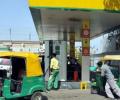
State-owned Indian Oil Corporation (IOC) and a joint venture of billionaire Gautam Adani's gas arm and Total of France -- Adani Total Gas Ltd -- have bid for maximum number of licenses to retail CNG to automobiles and piped cooking gas to households in the latest city gas bidding round.

'The correction could take two to three months and traders need to be careful.' 'For investors, this could be a good time to nibble in.'
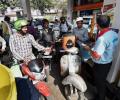
In 13 hikes, petrol price has gone up by Rs 7.11 per litre and diesel by Rs 7.67 a litre.

Prakash Rohra, 54 shares his story.

The third-quarter financials didn't excite market watchers. But equity investors can still make money if they invest in the right stocks.
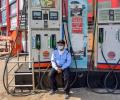
Petrol price on Tuesday breached the Rs 85 a litre mark in the national capital and diesel neared record high after rates were raised for the second consecutive day. Petrol and diesel prices were hiked by 25 paise per litre each, according to a price notification from oil marketing companies. This took the petrol price in Delhi to Rs 85.20 per litre and to Rs 91.80 in Mumbai. Diesel rate climbed to Rs 75.38 a litre in the national capital - just shying away from its record high - and to an all-time high of Rs 82.13 in Mumbai, the price data showed.
The department of investment and public asset management is racing against time to launch the LIC IPO, which could become the largest-ever listing on the Indian bourses. This would lead to some delay in the strategic divestment of IDBI Bank.

In 12 hikes, petrol price has gone up by Rs 6.55 per litre and diesel by Rs 7.04 a litre.
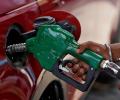
The price of petrol was hiked to Rs 101.39 a litre in Delhi from Rs 101.19 and to Rs 107.47 per litre in Mumbai, according to a price notification of state-owned fuel retailers. Diesel rates went to Rs 89.57 a litre in Delhi and Rs 97.21 in Mumbai.

BPCL to introduce single-screen theatres at Ghar outlets.
In all, petrol price has gone up by Rs 1.74 per litre and diesel by Rs 1.78 a litre in three days.

Many residents complained of suspected gas leak from Chembur, Ghatkopar, Powai and Vikhroli areas late on Saturday night, an official of the BMC's disaster management cell said.

The government has tweaked the income tax laws to make it easier for the new owners of loss-making public sector undertakings (PSUs) to carry forward the accumulated losses and set them off against future profits. This will result in significant tax savings for the new owners if they are able to turnaround operations of the ailing PSU within a few years. This will, in turn, boost the post-tax earnings and returns for the new owners.
Petrol and diesel prices were hiked by 80 paise a litre each on Wednesday, taking the total increase in rates in 16 days to Rs 10 per litre.

This is the highest any Indian company has been ranked on the Fortune Global 500 list.
Diesel price on Monday was hiked by 25 paise per litre -- the third increase since last week -- and more rate hikes for both diesel and petrol are in the offing in the coming days as international oil prices have soared to a three-year high. The price of diesel was hiked to Rs 89.32 per litre in Delhi and to Rs 96.94 in Mumbai, according to a price notification of state-owned fuel retailers. This is the second straight day of increase in diesel prices and the third since September 24 when the state-owned oil firms ended a three-week hiatus in rates.
India's top fuel retailers IOC, BPCL and HPCL together lost around $2.25 billion (Rs 19,000 crore) in revenue for keeping petrol and diesel prices on hold during elections in five states, including Uttar Pradesh, Moody's Investors Services said on Thursday. State fuel retailers did not revise petrol and diesel rates for a record 137 days despite prices of crude oil (raw material for producing fuel) rising to $120 per barrel compared to around $82 in early November when the hiatus began. "Based on current market prices, the oil marketing companies are currently incurring a revenue loss of around $25 (over Rs 1,900) per barrel and $24 per barrel on sale of petrol and diesel, respectively," Moody's said in a report.
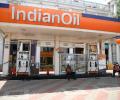
Petrol price on Tuesday was increased by 15 paise per litre and diesel by 18 paise as State-owned fuel retailers started passing on the increase in international oil prices to consumers after an 18-day hiatus.
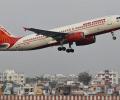
The timeline for disinvestment of Air India and Bharat Petroleum Corporation (BPCL) may be pushed by two to three months due to impact of the second Covid-19 wave. However, the government is confident of wrapping up the sale of the two companies by FY22 and meeting the disinvestment target of Rs 1.75 trillion. This will be achieved by sale of government stake in core and non-core public sector undertakings (PSUs).
