
Drivers of commercial vehicles, including trucks and tankers, stopped work in several states on Monday and blocked roads at some places to protest against the provision in the new penal law regarding hit-and-run accident cases involving motorists.

With general elections on the horizon, the government's privatisation bandwagon has almost but stalled as a government wary of being accused of selling family silver opts for minority stake sales on stock exchanges over outright privatisation. The result -- the divestment target for current fiscal year is again likely to be missed. Big ticket privatisation plans such as that of Bharat Petroleum Corporation Ltd (BPCL), Shipping Corporation of India (SCI) and CONCOR are already on the backburner and analysts feel meaningful privatisation can happen only after April/May general elections.

Capital expenditure (capex) by 54 large central public sector enterprises (CPSEs) and five departmental arms with an annual capex target of Rs 100 crore and above has reached around 42.5 per cent of their annual target of about Rs 7.33 trillion in this financial year so far, a senior official from the Ministry of Finance told Business Standard. "The Centre is pushing the big public undertakings in the infrastructure and refinery sector to achieve 90 per cent of their target by the end of the third quarter," he said. The capex by this group of CPSEs stands at around Rs 3.1 trillion in the April-August period so far.

Petrol pumps in Mumbai, Nagpur and other parts of the state witnessed long queues on Tuesday as people came to fill up their vehicle tanks fearing shortage of fuel amid the protest by truck drivers.

Noting that Gandhi had claimed that armed forces can restore peace in the state within days if allowed, BJP leader and former Union minister Ravi Shankar Prasad wondered if he wanted what his grandmother and then prime minister Indira Gandhi had done by ordering the Air Force to drop bombs in Aizawl in the 1960s.

Russian energy giant Rosneft has appointed a former Indian Oil Corporation (IOC) director to its board in signs it may be looking at boosting trade links with India. G K Satish, who retired as director for business development at IOC in 2021, is one of the three new faces appointed to the 11-strong board of directors of Rosneft, according to a statement issued by the Russian firm. Satish, 62, is the first Indian to be appointed to the board of Rosneft.

India's corporate sector is likely to report a slowdown in revenue growth and earnings for the July-September 2023 period (Q2FY24), according to earnings estimates by brokerages, after the country's top listed companies posted higher than expected profits for the first quarter. The combined net profit of Nifty50 companies, based on brokerage estimates, is expected to have grown by 19.6 per cent year-on-year (Y-o-Y) to Rs 1.75 trillion in Q2FY24 - a sharp deceleration from 37.6 per cent Y-o-Y growth in the combined earnings of index companies in the April-June 2023 period. According to estimates, the combined earnings in the second quarter would be down 8.8 per cent on a quarter-on-quarter (Q-o-Q) basis and the lowest in the past three quarters.

The slowdown in corporate revenue growth over the last one year has begun to reflect in India Inc's capital expenditure, or capex. The country's top listed companies are going slow on fresh investment in capacity expansion, in line with a deceleration in their top line growth. The combined fixed assets of the listed companies, excluding banking, finance services and insurance (BFSI) and the government-owned oil & gas firms, were up 10.1 per cent year-on-year (Y-o-Y) during April-September 2023 (H1FY24) - the slowest in 18 months - as against 21.1 per cent Y-o-Y growth in H2FY23 (October 2022-March 2023) and 11.6 per cent growth in the April-September 2022 period (H1FY23).

There has been a sharp recovery in the headline corporate earnings in the April-June 2023 quarter (Q1FY24), after a dismal showing by early bird companies. The combined net profit of the 983 listed companies that have declared their quarterly results, so far, was up 64.7 per cent year-on-year to record a high of Rs 2.68 trillion in the first quarter, but growth in earnings remained lopsided because most of the incremental gains came from a handful of companies. Moreover, the quarterly numbers showed a continued slowdown in revenue growth.
Notwithstanding the robust turnaround in the financial performance for the June quarter (Q1FY24), stocks of state-run oil marketing companies have been in a downtrend in the last month. The fall comes on a rise in crude oil prices that have surged to a 7-month high of $88 a barrel. A busy political calendar in the months ahead that may see the government keep a lid on auto fuel prices is also a dampener, analysts said. Shares of Hindustan Petroleum (HPCL), Bharat Petroleum (BPCL) and Indian Oil (IOC) have shed 9-11 per cent since their respective earnings announcement between July 26 to August 4.
Capital expenditure by 54 large central public sector enterprises and five departmental arms, having a capex minimum target of Rs 100 crore, rose 93 per cent year-on-year (YoY) in the April-May period to Rs 1.39 trillion. The National Highways Authority of India (NHAI) and the Railways have started this financial year's capex cycle on a stronger note. In the first two months of FY24, the 54 CPSEs, along with the departmental arms, achieved 19 per cent of their combined budget target of Rs 7.33 trillion, Business Standard has learnt.
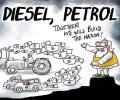
Petrol and diesel prices are unlikely to be increased despite firming raw material costs because of upcoming general elections next year, Moody's Investors Service said. Three state-owned fuel retailers -- Indian Oil Corporation (IOC), Bharat Petroleum Corporation Ltd (BPCL) and Hindustan Petroleum Corporation Ltd (HPCL) -- which control roughly 90 per cent of the market, have kept petrol and diesel prices on freeze for a record 18 months in a row. This is despite the raw material (crude oil) cost surging last year, leading to heavy losses in first half of 2022-23 fiscal year before easing oil prices propelled them to profitability.

North Zone IG Neeraj Kumar Gupta said the man, who was a beggar, is suspected to have done the act "due to mental trauma", as he could not get any money from begging in the state.

After Reliance Industries Ltd and its partner bp plc of the UK, Nayara Energy - the nation's largest private fuel retailer - has started selling petrol and diesel at Re 1 less than the fuel sold by state-owned retailers, officials said. While state-owned Indian Oil Corporation (IOC), Bharat Petroleum Corporation Ltd (BPCL) and Hindustan Petroleum Corporation Ltd (HPCL) continue to hold prices despite a drop in international rates, private fuel retailers have started passing on the benefit to consumers. "To further stimulate domestic consumption and cater to local customers better, we have introduced a Re 1 discount in our retail outlets until the end of June 2023," a spokesperson for Nayara Energy said.

Brokerages expect Nifty50 companies to have cumulatively witnessed strong double-digit growth in their earnings in the first quarter of FY24 (Q1FY24). This growth in the combined earnings is expected to have been driven by banks, automakers, and oil & gas companies. Other sectors may report muted profit growth.

Investors are showing some interest in the downstream energy cycle. Refiners and marketers, especially the public sector (PSU) oil marketing companies (OMCs) could see a revival of marketing margins. Lower crude oil and gas prices may also improve margins in industries like paints, logistics, synthetic fabrics, plastics, and fertilisers. In the medium-term, however, there could be a supply overhang affecting OMCs as new refining capacities are scheduled to be commissioned, especially in China, and this may lead to a drop in the refining margins as capacity would be surplus to demand until and unless there's a pick-up in global growth.

The limited availability of flexible (flex)-fuel vehicles in the Indian market and the slow rollout of ethanol-blended petrol by oil-marketing companies (OMCs) remain major obstacles to achieving widespread use of biofuels in the transportation sector in India. Recently, two Union ministers have emphasised India's biofuel potential, arguing that it has the capacity and potential to lead a transition towards widespread biofuel adoption. Road Transport Minister Nitin Gadkari signalled that this transition is well underway and urged car manufacturers to quickly adapt and introduce new biofuel-run vehicles, lest the government resort to taxing diesel vehicles.

Tata Consultancy Services (TCS), the group's biggest cash generator, overtook Vedanta to become the highest dividend payer in India in FY23. The IT services major paid Rs 42,090 crore for FY23, up 167.4 per cent from Rs 15,738 crore for FY22. The 10 biggest payers together shelled out Rs 2.06 trillion for FY23, more than double the Rs 98,371 crore for FY22.
The incident occurred on the Alappuzha-Kannur Executive Express train in which two months ago a man had set fire to his co-passengers, which resulted in three deaths including a toddler, leading to speculation that it might be a case of sabotage and connected to the earlier one.
The government on Thursday withdrew its offer to sell its entire 52.98 per cent stake in Bharat Petroleum Corporation Ltd, saying that majority of bidders have expressed their inability to participate in the current privatisation process due to prevailing conditions in the global energy market.

Moody's Investors Service on Wednesday raised the rating outlook for 18 Indian corporates and banks, including Reliance Industries, Infosys, SBI and Axis Bank, to 'stable' from 'negative'. This follows the upgrade by the US-based rating agency in India's sovereign rating outlook to 'stable' from 'negative' on Tuesday. The agency had affirmed the sovereign rating at 'Baa3'.
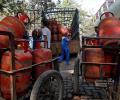
Petroleum and oil marketing companies raised the price of commercial liquid petroleum gas (LPG) cylinders by Rs 350.50 per unit and domestic LPG cylinders by Rs 50 per unit with immediate effect from Wednesday.

Arun Kumar Singh, former chairman of oil refining and marketing company BPCL, was on Wednesday appointed chairman and managing director of ONGC -- the first instance of a retired person being appointed the head of a Maharatna PSU. "The Appointments Committee of Cabinet (ACC) has approved the proposal of ministry of petroleum and natural gas for appointment of Arun Kumar Singh, ex-CMD, BPCL as chairman, ONGC for a three-year tenure with effect from the date of his assumption of charge of the post," an official order said. PTI first reported of Singh's appointment on November 17.

Re-rating of Bharat Petroleum Corporation, Container Corporation, Shipping Corporation, SAIL, and Hindustan Copper, for which the government has already shown intent to divest its stake, possible now, say analysts.
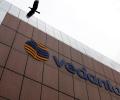
Vedanta group chairman, Anil Agarwal, 69, is well known for his business journey from a scrap dealer from Bihar to a London-based globe-girdling metal and oil and gas conglomerate with revenues of $19 billion. Now his abilities to keep his group from over-leveraging itself will be put to the test. Over the years, Agarwal, now based in London, set up the conglomerate via acquiring iron ore producer Sesa Goa, Cairn's oil producing assets in India, and Electrosteel Steel.
Indian Oil Corporation (IOC), Bharat Petroleum and Hindustan Petroleum may post a combined loss of Rs 10,700 crore in June quarter on selling petrol and diesel at rates below cost, a report said on Monday. While the raw material (crude oil) prices soared in April-June, petrol and diesel prices were not revised, leading to marketing losses which offset strong refining margins, ICICI Securities said in the report. The three state-owned oil marketing companies -- IOC, BPCL and HPCL -- control 90 per cent of the retail petrol and diesel sales in the country.

It was touted as a game changer but big-ticket privatisation has been a mixed bag as the government faces unanticipated challenges of lukewarm investor response, employee union agitation and legal hurdles. Prime Minister Narendra Modi's often-repeated statement 'the government has no business to be in business' guided the drawing up of an ambitious privatisation pipeline. While Air India sale succeeded, Bharat Petroleum Corporation Ltd (BPCL) divestment failed.
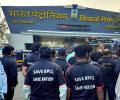
Oil Minister Hardeep Singh Puri on Thursday indicated that the much-delayed privatisation of oil major BPCL may not happen in the near future, saying there is "no proposal whatsoever" on his table for now. As part of its asset monetisation plan, the government had in November 2019 put Bharat Petroleum Corporation (BPCL) on the block and said it would completely sell its 52.98 per cent stake in the country's second largest state-run oil refiner and marketer. Though it had received three tentative bids, it got only one financial bid from Vedanta group, forcing it in May 2022 to shelve the plan pending a "comprehensive review".

Petrol and diesel prices were hiked by 80 paise a litre each on Saturday, the fourth increase in five days as oil firms passed on to consumers the spike in cost of raw material. Petrol in Delhi will now cost Rs 98.61 per litre as against Rs 97.81 previously while diesel rates have gone up from Rs 89.07 per litre to Rs 89.87, according to a price notification of state fuel retailers. All the four increases since the ending of a four-and-half-month long hiatus in rate revision on March 22, have been of 80 paise a litre.

These stocks offer the best combination of maximum 'buy' recommendations from brokerages and share price upside over the next 12 months.

As much as 8 billion rubles (about Rs 1,000 crore) of dividend income belonging to Indian oil firms is stuck in Russia after the Putin administration clamped down on dollar repatriation, officials said on Friday. Indian state oil firms have invested $5.46 billion in buying stakes in four different assets in Russia. These include a 49.9 per cent stake in Vankorneft oil and gas field and another 29.9 per cent in TAAS-Yuryakh Neftegazodobycha fields.

Congress president Mallikarjun Kharge alleged that the price of domestic cooking gas cylinder has been raised by Rs 50 and that of commercial gas cylinder by Rs 350 at a time when every person in the country is facing the brunt of high inflation.

'And Joshimath has already shown the dangers ahead.' 'We have to acknowledge that our mountains are still young babies.' 'You don't put an extra load on the back of a growing child!'

'After exiting jail, I thought some of my IIM-A classmates would contact me. None did.' 'The case indeed scared people, which perhaps was the objective of the State.'

Automaker MG Motor India on Monday said it has partnered with Bharat Petroleum Corporation Ltd (BPCL) to bolster EV charging infrastructure across the country. The partnership with BPCL will add momentum to EV adoption by expanding opportunities for intercity travel as the two entities will install EV chargers across highways and within cities, the automaker said in a statement. With BPCL's vast customer reach and operations and MG's strides in the EV space, the two entities can combine expertise to strategically identify charging sites, garner consumer insights, devise loyalty programs, and create technology to manage charging systems, it added.
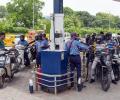
Petrol price on Monday was hiked by 30 paise a litre and diesel by 35 paise, taking the total increase in rates in the last one week to Rs 4-4.10 per litre. Petrol in Delhi will now cost Rs 99.41 per litre as against Rs 99.11 previously while diesel rates have gone up from Rs 90.42 per litre to Rs 90.77, according to a price notification of state fuel retailers. Rates have been increased across the country and vary from state to state depending upon the incidence of local taxation.

India's plan to produce ethanol from second-generation (2G) sources -- mainly farm waste -- is taking time to materialise even as the government is set to dedicate to the nation on Wednesday a Rs 900-crore plant set up by Indian Oil Corporation (IOC) in Panipat. Though state-run oil companies had decided to set up at least 12 plants in 2016-17 with an investment of around Rs 10,000 crore, this will be the first unit coming on track while others are stuck in various stages owing to issues like capital expenditure, lack of feedstock, and high rates of finished products compared to traditional ethanol units. According to industry sources, three more second-generation plants are coming up.
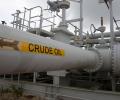
The basket of crude oil that India buys has hit a decade high of $121 per barrel, but retail selling prices of petrol and diesel continue to remain frozen. The Indian basket on June 9 touched $121.28, matching levels seen in February/March 2012, according to data available from the oil ministry's Petroleum Planning and Analysis Cell (PPAC). As per the PPAC, the Indian basket of crude oil averaged $111.86 per barrel between February 25 and March 29 - the immediate period after Russia's invasion of Ukraine sent oil on fire.
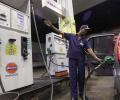
Petrol price on Sunday was hiked by 50 paise a litre and diesel by 55 paise, taking the total increase in rates since resumption of daily price revision less than a week back to Rs 3.70-3.75 per litre. Petrol in Delhi will now cost Rs 99.11 per litre as against Rs 98.61 previously while diesel rates have gone up from Rs 89.87 per litre to Rs 90.42, according to a price notification of state fuel retailers. Rates have been increased across the country and vary from state to state depending upon the incidence of local taxation.
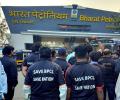
"The Corporation has decided to offer a voluntary retirement scheme, with a view to enable employees who are not in a position to continue in service of the Corporation due to various personal reasons, to request for grant of voluntary retirement from the services of the Corporation," Bharat Petroleum Corp Ltd (BPCL) said in an internal notice to its employees.
