
Addressing a press briefing, Union Health Ministry Secretary Rajesh Bhushan said on the basis of a seven-day rolling average the positivity rate of COVID-19, which was 11 per cent during the first week of August, has come down to 8 per cent now.

States should ensure a weekly positivity rate of less than 5 per cent, vaccination coverage of at least 70 per cent among the vulnerable section, and community ownership of Covid-appropriate behaviour, reports Ruchika Chitravanshi.

The remarks come amid suspected cases of COVID-19 reinfection being reported from abroad and from Indian states like Telangana, Karnataka, Gujarat, Punjab and Maharashtra.

The govt said there are 18 states and UTs in the country where the total number of active cases are between 5,000 and 50,000, while there are only four states with more than 50,000 active cases.

Prime Minister Narendra Modi was on Saturday briefed about the new 'Omicron' variant of the coronavirus, and he asked officials to review the plans to ease international travel restrictions in light of the 'emerging new evidence.'

The Centre said the upsurge of COVID-19 cases is happening in cities and the Omicron variant is the predominant circulating strain.
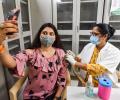
Vaccines Covishield and Covaxin work against SARS-CoV-2 variants Alpha, Beta, Gamma and Delta, while effectiveness tests against the Delta Plus variant is ongoing, the government said.
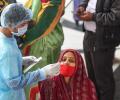
People must also avoid mass gatherings, and new year celebrations need to be at low intensity, the government said.

Deaths are significantly less in the third wave of the Covid-19 pandemic in comparison to the second wave, and the current surge is not witnessing increase in severe illness or death following high vaccination uptake, the government said on Thursday.

Two cases of the new Omicron variant of coronavirus have been detected in Karnataka, the Union government said on Thursday while asking people not to panic but follow Covid-appropriate behaviour and get vaccinated without delay.
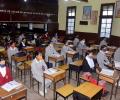
Evidence indicates that restoration of functioning of the education system as it was in pre-Covid times, as early as possible appears prudent in the current Indian context, they said.

The phase 3 trial findings indicate that Covaxin induces a robust antibody response with no severe vaccine-related adverse events or deaths reported among the trial participants, the authors of the study said.
The stage of alert will be based on positivity rate (on two consecutive days), cumulative number of new cases (over a week) and average oxygenated-bed occupancy (for a week).

The govt warned the second wave of coronavirus infection in India was not yet over even though the weekly positivity rate was showing an overall declining trend.

A third wave of COVID-19 -- if it occurs -- is unlikely to be as severe as the second wave given the extent of spread of coronavirus infections that has already taken place in the country, according to a study.
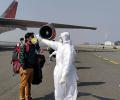
Strict norms for arriving international passengers, especially from 'at-risk' countries, will come into effect from Tuesday midnight and authorities are stepping their vigil for effective surveillance amid mounting concerns over the emergence of the coronavirus variant Omicron.

Thirty districts in the country, including 13 in Kerala, eight in Mizoram, four in Meghalaya, three each in Manipur and Arunachal Pradesh, two in Sikkim and one in Meghalaya are reporting a weekly positivity rate of over 10 per cent.
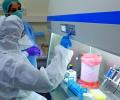
Since India is one of the largest vaccine producers in the world, it is the country's 'moral responsibility' to fast-track vaccine development process to break the chain of coronavirus transmission, ICMR Director General Dr Balram Bhargava said referring to the two vaccine candidates developed indigenously.

'Please don't read something which is not there in DG, ICMR's letter. The intent of the letter is only to expedite duly approved clinical trials without compromising on security and safety concerns'
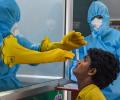
From 3.38 per cent in April, the fatality rate in the country has come down to 2.87 per cent as against 6.4 per cent globally.

According to a study done by Singapore University of Technology and Design Data, coronavirus will 100 per cent end across the world on December 8.
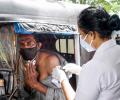
'In the coming two-three months, we need to be cautious that there is no upsurge'
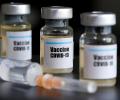
A 40-year-old man who was a volunteer in the third phase of the ''Covidshield'' vaccine trial in Chennai has alleged serious side effects, including a virtual neurological breakdown and impairment of cognitive functions.
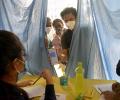
Over 21 per cent of the population, aged 10 years and above, showed evidence of past exposure to COVID-19 in the Indian Council of Medical Research's latest national serosurvey, the government said on Thursday, noting that a large proportion of people are still vulnerable to the infection.
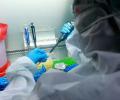
ICMR says it is following all globally accepted norms to fast-track vaccine and wants to 'cut red tape'.

People aged 45 and above account for about 88 per cent of all COVID-19 deaths in India making them the most vulnerable section, the Union health ministry said on Wednesday, a day after the government opened up vaccinations for all those in the age bracket from April 1.

Kerala health minister Veena George, who reviewed the state's COVID-19 situation two days ago, today blamed the violation of home quarantine directives for the worsening situation and cautioned against the increased indoor transmission of coronavirus at homes.
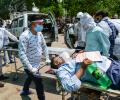
A rise in the number of daily COVID-19 cases and mortality has been observed in Assam, West Bengal, Odisha, Bihar and Jharkhand, indicating the pandemic is moving eastwards, the Union health ministry said.
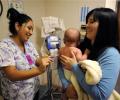
Hindi news channel News Nation TV showed laboratories in the national capital offering commissions as high as 50 per cent to doctors who referred patients to their diagnostic centres.

As the global debate on booster shots gathers momentum, several scientists in New Delhi said the priority must be to ensure that more people are inoculated with at least their first jab.
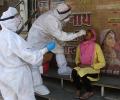
"Lockdown and containment (measures) have been successful in keeping it low and preventing rapid spread," ICMR Director General Balram Bhargava said, citing the sero-survey on COVID-19 spread.

The aim of the mission is to accelerate the development of at least six vaccine candidates and ensure that they are licenced and introduced in market for emergency use at the earliest.

All travellers and contacts have been tested and quarantined.
'SII has started stockpiling the vaccine and now has roughly 40 million doses ready. It is using some of the capacities it had for under development products for the COVID-19 vaccine and by January we will have a capacity to make 100 million doses per month and a stockpile of 200 million doses.'

Easing restrictions, all private hospitals were on Tuesday allowed to give the vaccines if they adhere to the laid down norms, while the 9 am to 5 pm timing was also done away with.

While the United States' share in global COVID-19 cases is 22.4 per cent, those who have recuperated there comprise 18.6 per cent of total worldwide recoveries, according to data presented by Bhushan.
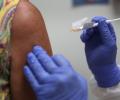
Indian Council of Medical Research Director General Balram Bhargava said the purpose of the COVID vaccine drive would be to break the chain of viral transmission.

The first part of the study conducted by the Indian Council of Medical Research (ICMR) revealed that 0.73 per cent of the population surveyed showed evidence of past exposure to SARS-CoV-2, and that urban slum population was the most vulnerable to the infection, ICMR Director General Balram Bhargava said at a press conference.

"Also, 35 per cent deaths were recorded in the age group of 45-60 years, 10 per cent in the age group of 26-44 years and one per cent each in the age group of 18-25 years and below 17 years," the health secy said.
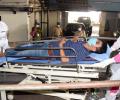
The Union health minister said of the total active COVID-19 cases in the country, 1.5 per cent are on oxygen support and 2.34 per cent are in ICUs.
 © 2026 Rediff.com - Investor Information - Advertise with us - Disclaimer - Privacy Policy - Sitemap - Feedback - About us - Terms of use - Grievances