
Is Bhutan merely experimenting with digital finance -- or is the Himalayan kingdom punching far above its weight, quietly playing one of the most sophisticated strategic games in Asia today? asks Varun Arya.

Why are DIIs holding such a high stake in Zee, which is beset with alleged governance issues? Perhaps they think Zee is a deep-value stock, observes Debashis Basu.

Peter Mukerjea, Star TV India CEO, talks to Surajeet Das Gupta about the current controversy over his news channel's ownership.
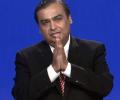
Billionaire Mukesh Ambani's Reliance Industries and Tata Group have made it to the prestigious TIME's list of 100 World's Most Influential Companies of 2024. TIME called Reliance 'India's Juggernaut'. This is the second time that Reliance has found its way into the TIME list. Jio Platforms, the firm that holds digital properties of the conglomerate, was included in the inaugural TIME 100 Most Influential Companies List of 2021. Serum Institute is the other Indian company on the list.
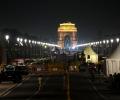
Prime Minister Narendra Modi will on Thursday inaugurate the newly-christened Kartavya Path -- a stretch from Rashtrapati Bhavan to India Gate that will have red granite walkways with greenery all around, refurbished canals, state-wise food stalls, new amenity blocks and vending kiosks.

Three firms, Vishvapradhan Commercial Pvt Ltd along with AMG Media Networks and Adani Enterprises Ltd, have offered a price of Rs 294 for the acquisition of up to 1,67,62,530 fully paid-up equity shares of NDTV having a face value of Rs 4 from the public shareholders.

India's consumer digital economy which was pegged at $85-90 billion in calendar year 2020, is expected to become a $800 billion market by 2030, according to reports released by consulting firm RedSeer at its flagship event Ground Zero 5.0. The digital economy includes 60 per cent of travel, 40 per cent non-grocery retail, 30 per cent of education, 25 per cent of food and beverages services and 6 per cent of pharma/grocery going through digital channels by calendar year 2030. Online retail is set to become the third-largest market by scale by CY30 with an annual gross merchandise value (GMV) of $350 billion in CY30, said RedSeer.

Even today when news organisations and their owners have stooped before the powers that be when they were only asked to bend, Prannoy is still standing tall, asserts Sanjay Ahirwal, , former managing editor, NDTV Worldwide.

Swiss building material major Holcim has said its $6.38 billion deal with Asia's richest man Gautam Adani's group is tax-free. Holcim had on Sunday signed a binding agreement with the Adani Group to sell its business in India -- about a 63 per cent stake in Ambuja Cement, which owns a 54.53 stake in ACC (of which 4.48 per cent is direct shareholding). "So, according to our analysis, it is a tax-free transaction," Holcim CEO Jan Jenisch said while addressing investors after the deal on Monday." When asked about the tax implications, he said: "Never know if any complication arises, but we assume that we will get the 6.4 billion Swiss Francs as net proceeds." As per the deal, Adani Group will acquire Holcim's full stake in Ambuja Cement and ACC for CHF (Swiss franc) 6.4 billion ($6.38 billion).

Lalit Modi's interview with television news channel explaining how Vasundhara Raje took his wife to Portugal for cancer treatment shows that he is seeking revenge against the Rajasthan chief minister.

'People on the wait list will be accommodated for vaccination when the scheduled beneficiaries don't turn up.'

With over 135 news channels, about a third owned by politicians and real estate guys, the news TV market is a nightmare, says Vanita Kohli-Khandekar.

To beat its rivals, Nokia has done what most Chinese brands did soon after they entered the Indian market. Tied up with a well-known Bollywood actor as endorser, associated with cricket and established fan engagement initiatives, reports T E Narasimhan.

Does Uddhav (and indeed the Sena) have the pizzazz and staying power to continue to be an actor in Maharashtra politics as a paler version of the NCP and an orange rather than saffron version of the BJP, asks Aditi Phadnis.

Zee and Star, the two largest media companies in India, are undergoing some radical ownership changes. What could it mean? Vanita Kohli Khandekar attempts an answer.

Maybe Modi could ask a patriarch of the stature of the late G D Birla to flesh out the details of a new company to manage government land privatisation.

Indian govt is trying hard to get global investors to invest in the country.
.jpg)
The creation of the Amul brand and its famous mascot gave a rural revolution a durable competitive edge.

Karunanidhi was convinced that using the 2G cases against the DMK and reopening the fodder case against Lalu Prasad Yadav were products of the Congress leadership's short-sightedness. A revealing excerpt from A S Panneerselvan's Karunanidhi: A Life.

'India-US defence pacts are seen by many analysts as a subtle move to jointly contain China's growing militarism, especially in the strategic Indian Ocean Region.'

Here's the full text of President's address with a word cloud.

The Bharatiya Janata Party regime will have to make good on this election slogan to restore state-owned banks to health, says Rajiv Lall.
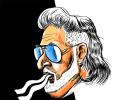
Mallya has lived on the edge for long enough to know that his extradition from UK is not a given, says N Sundaresha Subramanian.
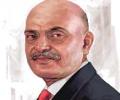
For some, he is a visionary who grew his one-channel firm into a media giant by the sheer dint of his courage; for others, he is a compulsive risk-taker.

The JNU student leader said, "There is an atmosphere of fear in the country and anybody who speaks against the government is threatened."
.jpg)
Scooters such as those from Kinetic Motors had become gearless by then and were no more family rides, but peppier individual modes of transport.
.jpg)
Privatising public sector companies would have encountered significant opposition from their managers as well as from strong unions.

'The Reserve Bank's independence has remained a work in progress, an enduring challenge that the nation has been grappling with on an ongoing basis,' says RBI Deputy Governor Dr Viral Acharya.
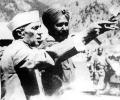
Let us hope that what happened in 1962 will never happened again, prays Claude Arpi
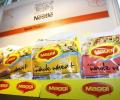
Lessons Nestle must learn from its big mistakes
 © 2026 Rediff.com - Advertise with us - Disclaimer - Privacy Policy - Sitemap - Feedback - About us - Terms of use - Grievances