
Indian benchmark indices, Sensex and Nifty, saw early gains driven by strong buying in IT stocks like HCL Tech, Tech Mahindra, TCS, and Infosys, alongside a significant boost from HDFC Bank.

Indian stock market benchmark indices Sensex and Nifty recorded their second consecutive day of decline, with the Sensex dropping 555.23 points and the Nifty falling 144.05 points, primarily due to rising crude oil prices and ongoing US-Iran hostilities in West Asia.

The cricket world paid glorious tribute to West Indies legend Sir Garfield Sobers who died in Barbados on Friday, describing him as the benchmark of excellence and terming his death an "irreplaceable loss" for the sport.
Indian benchmark equity indices, Sensex and Nifty, closed mixed on Friday. While a drop in crude oil prices offered some relief, weakness in IT stocks and several Tata Group counters, including a significant dip in Tata Chemicals and ongoing boardroom issues at Tata Sons, limited a broader market recovery.

Most Indian investors start their investment journey with the wrong question. They ask, "Which fund will give the highest return?" instead of "How do I structure my investments so that I pay less tax, manage risk effectively, and still compound wealth over time?"

India's IT services industry is witnessing a surge in mergers and acquisitions, particularly among mid-cap companies, as AI-led pricing pressure and macroeconomic uncertainty compel firms to seek scale, capabilities, and broader market reach. This trend is exemplified by the recent merger of Happiest Minds Technologies and ITC Infotech, aiming to offer end-to-end solutions and compete for larger transformation programmes.

Comparing the two states is comparing an apple to an orange. I ate apples for years. Then I felt I needed some citrus, and I moved to oranges. That doesn't make the apple a lesser fruit, reflects Binu Alex.

Rhinestones have officially escaped the jewellery box. The girlies are sticking them on phone cases, water bottles, face masks and even their shoes, turning literally everything into a tiny disco ball.

I have to thank the 1980s for its soul-stirring music. It added so much melody and cheer to my life -- there hasn't been so much lovely music like that since, recalls Vaihayasi Pande Daniel.

Industry leaders at an AIMA panel discussion emphasised the need for businesses to quickly adapt to changing market conditions and invest in technologies like artificial intelligence to build resilience and achieve long-term growth. They highlighted the current era of uncertainty driven by geopolitical tensions, supply chain disruptions, and rapid regulatory changes, stressing that tactical responses are as crucial as long-term strategy.

Fast-moving consumer goods (FMCG) companies in India are committed to maintaining current prices through the festive season, despite facing increased commodity costs and geopolitical disruptions. This strategy aims to protect consumer demand and sustain volume growth, even as margins remain under pressure.

Indian benchmark indices, Sensex and Nifty, closed nearly flat on Thursday, influenced by the US Federal Reserve's interest rate hike and indications of further monetary tightening. Despite some intraday gains, caution prevailed, with foreign institutional investors continuing to offload equities. Meanwhile, the National Stock Exchange of India's (NSE) mega initial public offering opened for subscription, garnering 39 per cent subscription on its first day.

India's wholesale price-based inflation (WPI) increased to 9.92 per cent in August, up from 9.78 per cent in July, primarily due to rising prices across food, manufactured items, and fuel and power sectors.

India's deposit growth has reached a 15-year high of 17.8 per cent, primarily driven by a surge in foreign currency non-resident (bank), or FCNR(B), deposits. This influx of funds is expected to lead to a softening of corporate loan rates as banks seek to deploy their excess liquidity.

Gold prices in India extended their losing streak, falling by Rs 1,500 to Rs 1,60,900 per 10 grams, influenced by hawkish remarks from Federal Reserve Chair Kevin Warsh and rising oil prices, which have increased expectations of an interest rate hike.

Indian benchmark equity indices, Sensex and Nifty, rebounded in early trade after a three-day slide, driven by strong buying in blue-chip bank stocks and a firm trend in global markets, supported by easing US bond yields and record foreign-currency deposit inflows.

India's venture capital deal value grew by a modest 5 per cent in the first seven months of the year, significantly lagging the global average surge of 161 per cent, reflecting continued investor caution and valuation discipline.

India's student housing shortage is widening, but high land costs, weak rental yields and regulatory hurdles are keeping organised developers away.

The Indian women's cricket team declined to accept the Asia Cup trophy from Asian Cricket Council chairman Mohsin Naqvi, a decision confirmed by BCCI vice-president Rajeev Shukla as a 'collective' stance. This follows a precedent set by the men's team after a terror attack, with the BCCI having communicated its position to the ACC in advance.

Heavy rainfall and swollen rivers have led to severe flooding in 15 districts of Bihar, affecting over 49 lakh people. Major rivers like the Ganga and Kosi are flowing above danger levels, prompting the deployment of disaster response teams and the establishment of relief camps and community kitchens for those displaced.

Analysts predict that developments in the West Asia conflict, crude oil prices, and upcoming US inflation data will be the primary factors influencing the Indian stock market next week, alongside foreign investor activity and global market trends.

Foreign portfolio investors (FPIs) have withdrawn nearly Rs 5,109.21 crore from Indian government securities under the fully accessible route (FAR) in just three days, driven by global uncertainty, elevated crude prices, rising US Treasury yields, and a depreciating rupee.

Indian benchmark indices Sensex and Nifty opened higher, driven by a significant drop in crude oil prices and a positive trend in global equities, with foreign fund inflows further bolstering domestic markets.

The Indian women's cricket team, after winning their eighth Asia Cup title against Sri Lanka, declined to accept the trophy from ACC chairman Mohsin Naqvi, continuing a trend seen with the men's team last year. This incident highlights an ongoing impasse regarding trophy presentations involving the Pakistani official.

Students are learning to combine technology with agriculture, healthcare, biotechnology, architecture and fashion, explains Mandeep Singh, assistant professor and deputy dean, Lovely Professional University.

The Paradise is a mind-numbingly senseless, hellish cycle of violence, gore, and torture porn that makes you question if everyone involved in the film harbours some sort of bloodlust, complains Sreeju Sudhakaran
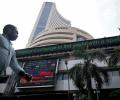
India's derivatives market experienced a significant 23 per cent fall in average daily contracts traded in August, reaching a 13-month low of 224 million. This decline is primarily attributed to regulatory changes, including a higher securities transaction tax (STT) and enhanced collateral requirements, alongside the introduction of a closing auction session.
Foreign Portfolio Investors (FPIs) withdrew Rs 13,138 crore from Indian equities in the first half of September, driven by heightened global uncertainty, rising crude oil prices, firm US bond yields, and a strong dollar, impacting risk appetite.

The BCCI has clarified that the Indian women's cricket team's decision not to accept the Asia Cup trophy from Asian Cricket Council's Pakistani chief Mohsin Naqvi was a "conscious, institutional" call, made due to prevailing circumstances and national sentiments.

Private corporations in India invested approximately 30.3 trillion in fixed assets during FY25, marking a 7 per cent increase from the previous year, according to the statistics ministry. This growth in private capital expenditure contrasts with a slowdown in government capital spending.

Indian benchmark indices Sensex and Nifty experienced significant declines in early trade, driven by soaring crude oil prices amidst escalating tensions in West Asia, coupled with weak global market trends and foreign fund outflows.

The Ministry of Home Affairs informed a Joint Committee of Parliament that the number of active NGOs registered under the Foreign Contribution (Regulation) Act has halved over the last decade, even as foreign funds received by them have significantly increased. Christian associations received the largest share of these funds in 2024-25. The report comes amidst discussions on a contentious FCRA amendment bill aimed at tighter government oversight.

The challenge for India lies in navigating complex landscape to its best advantage. The BRICS Summit will test its navigation skills, asserts former foreign secretary Shyam Saran.

Indian benchmark indices, Sensex and Nifty, traded flat in early deals due to elevated crude oil prices exceeding USD 100 per barrel and persistent geopolitical tensions, which subdued investor risk appetite.

The trophy is supposed to be the full stop to a tournament, not another comma in an India-Pakistan controversy, points out K R Nayar.

India's Davis Cup Final 8 aspirations are in peril after losing both singles matches to Korea in their Qualifier tie. Dhakshineswar Suresh and Sumit Nagal both squandered promising starts, leaving India trailing 0-2 and needing to win all three remaining matches to advance.

Foreign portfolio investors (FPIs) have injected Rs 30,919 crore into Indian equities in August, marking their second consecutive month of net buying. This follows a Rs 20,200 crore investment in July, indicating a potential reversal after four months of significant outflows, driven by improving corporate earnings, resilient economic activity, and a stable rupee.

Rural commercial vehicle (CV) registrations have consistently outpaced urban sales from April to July 2026, driven by a significant diversification of the rural economy and the positive impact of GST-led consumption, according to experts and data from Fada.
Indian stock markets closed lower due to selling in IT and FMCG shares, triggered by renewed tensions in West Asia which led to a rally in crude oil prices and concerns over inflation and interest rates.

A Microsoft Work Trend Index report reveals India has the highest share of "Frontier Professionals" globally, with 32% of its AI users employing AI agents in multi-step workflows, double the global average. Indian professionals are not just adopting AI but are actively redesigning work processes, demonstrating strong leadership alignment and a focus on human oversight and critical thinking. Major Indian IT firms like Infosys, TCS, and Wipro show rapid adoption and significant productivity gains with Microsoft 365 Copilot.
