
Hisense has strengthened its television range in India with the introduction of the U7SE ULED Mini-LED series. Designed to appeal to entertainment enthusiasts and gamers alike, the new line-up emphasises advanced picture quality, gaming-focused enhancements and smart TV functionality. The range is available in screen sizes spanning from 55 inches to a massive 100 inches.

At Kolga Aabla, the closest beach to her grandmother's home, at the edge of a birch forest, we immersed her balance ashes. It was a sombre, precious day for both of us. But a day that also brought long-needed closure. My mother's spirit, chained for so many years in a Parkinson's-locked body, was free. But my father came back from the beach a visibly older man.

India significantly increased its crude oil imports from Russia and the United Arab Emirates in June, securing supplies as the Strait of Hormuz began to reopen, with Russian barrels remaining attractive due to discounts and UAE supplies offsetting earlier uncertainties.

S&P Global Ratings warns that Indian oil marketing companies like IOC, BPCL, and HPCL may face reduced profit margins due to rising crude oil prices and government pressure to maintain stable retail prices.
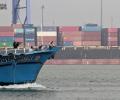
India's exports reached a six-month high, growing by 18 per cent to USD 45.2 billion in May, driven by electronic goods, petroleum products, engineering items, and pharmaceuticals. However, the trade deficit widened to USD 28.21 billion due to a 10 per cent rise in imports, particularly petroleum products and gold, amidst surging crude oil prices.

The luxury carmaker plans to drive growth through local assembly of the MINI Countryman, expansion into 10 new cities and a broader product portfolio.
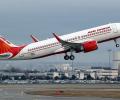
Air India has temporarily reduced its domestic flights by 22 per cent due to the impact of high fuel prices, following a previous reduction in international flights. The airline is offering re-accommodation, date changes, or refunds to affected passengers.

Indian benchmark stock indices, Sensex and Nifty, recorded their fourth consecutive day of declines, driven by selling in FMCG, financial, and auto sectors. The downturn is attributed to fresh tensions in the Middle East, uncertainty surrounding the US-Iran 60-day ceasefire, and elevated crude oil prices.

With the worst in terms of pricing pressures behind Tata Steel, its outlook is expected to improve. Europe has seen hot rolled coil prices rise this January after the European Union's (EU's) carbon border adjustment mechanism (CBAM) kicked in and further price improvements may be on the cards once import quotas come into play in June.

'Hospitals sometimes compel patients to purchase medicines only from pharmacies owned by or attached to the hospital, refuse to provide prescriptions, withhold prescriptions, or send prescriptions directly to the hospital pharmacy without patient consent.'

New York City will offer residents a chance to buy $50 World Cup tickets through a lottery system, including free transport to New Jersey matches, amid soaring tournament ticket prices.

With momentum building around the IPO, the NSE saw a surge in retail investors in the last two years, making it one of the widely traded stocks in the unlisted market.
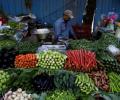
India's wholesale price inflation (WPI) increased for the fourth consecutive month in February, reaching 2.13 per cent, primarily due to rising prices of food and manufactured goods, according to government data.

A new book, "Heroes: The Changemakers of Indian Sports" by journalist-author Thirumoy Banerjee, chronicles the inspiring journeys of 15 Indian athletes, including Manu Bhaker, C A Bhavani Devi, Nikhat Zareen, Aman Kumar Kadyan, and Sumit Antil. It highlights their determination, resilience, and triumphs over setbacks, offering insights into their paths to success and celebrating their unwavering spirit.
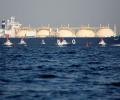
Analysts predict India will face oil price volatility and macroeconomic effects due to the escalating Iran crisis, though the country's oil supply chain is not yet structurally insecure.
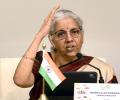
Union Finance Minister Nirmala Sitharaman has urged an increased focus on '3Fs'-fuel, fertiliser, and forex-to maintain India's economic resilience amidst the West Asia crisis, while also criticising those who spread pessimism.

Trinamool Congress leader Abhishek Banerjee alleges the BJP-led government may increase fuel prices after the West Bengal assembly elections, accusing them of neglecting the common man and withholding funds from the state.
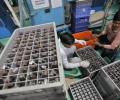
Escalating geopolitical tensions in West Asia are beginning to disrupt India's automotive supply chain, leading to rising commodity prices, logistics bottlenecks, material shortages, and pressure on consumer demand, with two-wheeler makers already raising prices.

'We thought everything will be back to normal within one month. Now it's four months and still a final solution is miles away.'

Discover the top fashion moments of May as Indian celebrities like Kriti Sanon, Hina Khan, Ananya Panday, and others serve up major style inspiration.

Ideology is dead; long live the numbers game that is being played with the sole intention of securing a two-third majority in the Lok Sabha for the NDA, observes Nilanjan Mukhopadhyay.
Trinamool Congress leader Abhishek Banerjee has warned of a significant increase in cooking gas and fuel prices by the BJP-led central government following the West Bengal assembly elections. He accused the BJP of neglecting the fuel crisis and challenged them to pledge no price hikes for the next five years.

'The MPC is likely to prioritise the key mandate, which is inflation, while relying on other instruments to stabilise the currency and bond markets.'

Zee Entertainment said on Monday it had secured the rights to broadcast the 2026 FIFA World Cup and 38 other FIFA events through 2034.

"There is a sharp jump that we have seen in bookings of EVs... The jump, at least in our case, in just two months, it is about 2 to 2.5 times of what it used to be"
Following through announcements with enforcement of measures is key, as a run through recent Indian economic history shows, points out A K Bhattacharya.

Indian benchmark indices Sensex and Nifty experienced a sharp decline in early trading due to escalating tensions in the Middle East, driving crude oil prices higher. Global market bearishness and foreign fund outflows further contributed to investor unease.

'It will take a long time to recover from the impact of this war.'

Say hello to the S 450 e Launch Edition. Priced at 2.20 crore upwards.
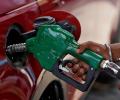
Petrol diesel price today March 20, 2026: IOCL & HPCL hike premium petrol (XP95, Speed, Power) by 2/litre and industrial diesel by 22/litre. Regular petrol in Delhi 94.77, diesel 87.67 unchanged. Full city-wise rates inside.

The Indian rupee weakened against the US dollar due to a strengthening dollar, high crude oil prices, and foreign fund outflows amid geopolitical uncertainties.

The government's e-marketplace platform, GeM, is significantly enhancing public procurement through the integration of AI, advanced analytics, and digital monitoring systems. This strategic adoption has led to substantial savings for the exchequer and improved transparency, while also playing a crucial role in health sector procurement.

Reliance Industries Ltd (RIL) has expressed caution regarding 'extreme volatility' risks stemming from the West Asian conflict, which could impact global oil demand and the company's margins, while also noting that near-term retail consumption demand may remain sensitive to macro conditions. Chairman Mukesh Ambani, in the annual report, remained silent on the timeline for Jio Platforms' anticipated public listing, stating the group will 'continue to evaluate strategic pathways'.

Indian eateries are adapting to the LPG crisis by cutting menus, increasing prices, and switching to alternative fuels like coal, as LPG supplies are disrupted due to global events. State authorities are cracking down on hoarding and black marketing of LPG cylinders.
Petrol diesel price today March 20, 2026: IOCL & HPCL hike premium petrol (XP95, Speed, Power) by 2/litre and industrial diesel by 22/litre. Regular petrol in Delhi 94.77, diesel 87.67 unchanged. Full city-wise rates inside.

A peace deal between the US and Iran, set to be signed in Geneva, faces significant hurdles over the release of Iran's USD 12 billion in frozen assets, with conflicting reports from both sides on the conditions for their release.

Despite international crude oil rates crossing USD 100 per barrel due to Middle East tensions, the Indian government plans to maintain current petrol and diesel prices, ensuring uninterrupted fuel supply across the country.

Acer has launched its new Aspire 5 AI laptop in India, featuring Intel Core Ultra 7 processors, a 14-inch WUXGA display, up to 32 GB LPDDR5 memory, and a starting price of Rs 79,999.

'Customers do not recover the original making charges paid on old jewellery. Sentimental value is lost when heirlooms are exchanged.'
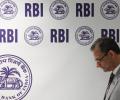
India Ratings and Research predicts the Reserve Bank of India (RBI) will maintain the repo rate at 5.25 per cent throughout FY27, despite potential inflationary pressures from higher fuel prices, with inflation expected to remain within the central bank's tolerance band.
