
Indian benchmark indices, Sensex and Nifty, experienced declines in early trade due to elevated crude oil prices, escalating US-Iran hostilities, and renewed concerns over a potential US interest rate hike.

ICICI Bank has successfully raised $1 billion through a five-year senior unsecured US dollar bond, marking its first public dollar bond issuance since 2017 and the largest single-tranche US dollar bond issuance by an Indian issuer so far this year.

RBI Deputy Governor Rohit Jain highlighted that banks are well-positioned to deploy $133 billion mobilised through FCNR(B) deposits, especially with strong credit demand ahead of the festival season, while also stressing the importance of robust technology governance and cyber defences in the financial sector.

Indian benchmark equity indices, Sensex and Nifty, closed mixed on Friday. While a drop in crude oil prices offered some relief, weakness in IT stocks and several Tata Group counters, including a significant dip in Tata Chemicals and ongoing boardroom issues at Tata Sons, limited a broader market recovery.

Indian benchmark indices, Sensex and Nifty, saw early gains driven by strong buying in IT stocks like HCL Tech, Tech Mahindra, TCS, and Infosys, alongside a significant boost from HDFC Bank.

Indian benchmark indices, Sensex and Nifty, traded marginally higher in early trade despite the US Federal Reserve's recent rate hike and indications of further tightening, with the National Stock Exchange's much-anticipated Rs 22,569-crore IPO also opening for subscription.

Noel Tata, chairman of Tata Trusts, has presented a proposal for the Shapoorji Pallonji (SP) group to sell its 18.37 per cent stake in Tata Sons for approximately 25,000 crore, aiming to address the SP group's liquidity needs without a public listing of Tata Sons.

Indian benchmark indices Sensex and Nifty rebounded on Wednesday, driven by value buying in banking stocks and select heavyweight counters, with the Sensex climbing 332.63 points and the Nifty ending above 23,200.

'Regulations give a particular minimum amount of shares to be given in the OFS or IPO -- without which one cannot do the IPO.' 'We got that number on the day of filing of updated DRHP -- sufficient for us to go live with the IPO.'

Holding-company discounts and losses at key unlisted ventures could weigh on Tata Sons' IPO valuation, though its diversified portfolio may still command a premium.

Indian benchmark indices Sensex and Nifty opened higher, extending gains from the previous session, driven by a rally in global markets and a slight cooling in crude oil prices. Optimism around a potential meeting between US and Iranian presidents also contributed to positive sentiment.Later both indices pared gains and were trading in red. Track Sensex, Nifty on September 22.

Indian benchmark indices, Sensex and Nifty, closed higher on Thursday, breaking a three-day losing streak, driven by late buying in financial heavyweights like HDFC Bank and Axis Bank, despite persistent geopolitical tensions and crude oil prices exceeding USD 100 per barrel.

India's student housing shortage is widening, but high land costs, weak rental yields and regulatory hurdles are keeping organised developers away.

Maharashtra Deputy Chief Minister Eknath Shinde concluded a two-day visit to the UK, focusing on attracting foreign direct investment and promoting the state's economic potential. His engagements included receiving leadership awards, meeting with sports figures like Virat Kohli to discuss Olympic aspirations, and appealing to British investors to bring technology and capital to Maharashtra, leveraging the India-UK FTA.

The benchmark Sensex plummeted 813 points to a three-month low, with the Nifty settling below 23,450, as escalating tensions in West Asia drove crude oil prices above USD 100 per barrel, leading to widespread selling in IT, FMCG, financial services, and oil & gas shares.

India is strategically positioned to develop a robust domestic semiconductor ecosystem, driven by increasing electronics consumption, strong government support through incentives, and a global shift in supply chains. Boston Consulting Group Managing Director Ankush Wadhera highlights India's potential as a safe haven for investments, with the AI boom further fuelling demand for advanced chips. The nation aims to expand its capabilities across the entire semiconductor value chain, attracting significant global and domestic investments.
Indian stock market benchmark indices Sensex and Nifty recorded their second consecutive day of decline, with the Sensex dropping 555.23 points and the Nifty falling 144.05 points, primarily due to rising crude oil prices and ongoing US-Iran hostilities in West Asia.

India's venture capital deal value grew by a modest 5 per cent in the first seven months of the year, significantly lagging the global average surge of 161 per cent, reflecting continued investor caution and valuation discipline.
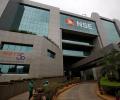
The National Stock Exchange (NSE) has set its initial public offering (IPO) price band at Rs 1,700-1,785 per equity share, with the subscription period running from September 17 to September 21, aiming to raise up to Rs 22,569 crore.

'Buy on dips, buy on dips and sell on rise.'
Indian benchmark equity indices extended their losing streak for a fourth consecutive day, with the Sensex tumbling 417 points due to rising crude oil prices and a significant sell-off in IT stocks, impacting overall investor sentiment.

The French Football Federation has announced it is withdrawing its support for Gianni Infantino's bid for re-election as FIFA president, following widespread criticism over his abandoned proposal to sell a stake in FIFA competitions.

SEBI Chairman Tuhin Kanta Pandey stated that the National Stock Exchange (NSE) has not submitted any proposal seeking approval to trade on its own platform after getting listed, and such trading is currently not permitted. He also confirmed that SEBI would examine concerns raised by brokers and asset management companies regarding the new UPI Merchant Discount Rate (MDR) framework.

India needs to move beyond ease and cost of doing business and focus on the "speed of doing business" as the next leg of reforms to sustain economic growth and private investment, Confederation of Indian Industry (CII) President R Mukundan said.

Analysts predict that developments in the West Asia conflict, crude oil prices, and upcoming US inflation data will be the primary factors influencing the Indian stock market next week, alongside foreign investor activity and global market trends.

Indian stock exchanges are actively preparing to implement a new closing auction mechanism (CAS) from August 3, aimed at enhancing transparency in determining closing prices for securities with derivative contracts.

The benchmark BSE Sensex rebounded by 362 points, ending a four-day losing streak, driven by strong buying in metal, private banking, and oil and gas shares, while the broader NSE Nifty saw modest gains despite paring some advances in the closing session.

BAFs seek to offer a smoother experience across market cycles, not the full upside of a bull market.
Indian benchmark equity indices, Sensex and Nifty, rebounded in early trade after a three-day slide, driven by strong buying in blue-chip bank stocks and a firm trend in global markets, supported by easing US bond yields and record foreign-currency deposit inflows.

Dig into the prospectus. Use the prospectus to understand the business and its risks.

'Every period of excessive optimism eventually gives way to a correction, while periods of extreme pessimism often create the best investment opportunities.'
Indian stock markets, including the Sensex and Nifty, experienced a significant tumble in early trade, driven by escalating tensions in West Asia that pushed crude oil prices close to the USD 100-per-barrel mark, alongside selling in IT stocks and fresh foreign fund outflows.

Indian benchmark indices, Sensex and Nifty, ended marginally lower after recovering from sharp intraday losses, driven by cooling crude oil prices and buying interest in HDFC Bank and IT sector stocks.

Germany, Netherlands, Sweden and Wales have questioned Infantino's reform pledge, arguing that FIFA needs deeper governance changes, stronger accountability and broader leadership reforms to restore trust.

Indian stock markets, including the Sensex and Nifty, experienced their third consecutive day of declines, driven by a global selloff, escalating tensions in West Asia, and a subsequent rise in crude oil prices.
Indian equity benchmark indices Sensex and Nifty rebounded sharply in early trade, with the Sensex jumping over 530 points, tracking a broad-based rally in Asian markets after four consecutive days of decline.

Private corporations in India invested approximately 30.3 trillion in fixed assets during FY25, marking a 7 per cent increase from the previous year, according to the statistics ministry. This growth in private capital expenditure contrasts with a slowdown in government capital spending.

'There is a long set of decisions that have to be made along the way for anything to actually get actuated in the real world.'

Equity mutual fund schemes in India attracted a net inflow of Rs 29,329 crore in August, marking the highest in four months, primarily fuelled by strong investor interest in mid-cap and small-cap funds.

PAYD suits infrequent drivers who can estimate annual mileage.
