
The idea addresses an increasingly difficult problem on Earth: Data centres consume enormous amounts of electricity and water.

A new US study reveals that hyperscale data centres, vital for cloud computing and artificial intelligence, consumed between 68 and 99 terawatt-hours of electricity in one year, an amount comparable to several US states. This consumption, largely powered by fossil fuels, contributed to approximately 25.7 million metric tons of CO2 emissions, significantly higher than previous estimates.

Delhi experienced its most polluted Diwali in five years, but the official air quality figures are under scrutiny. Several monitoring stations reportedly went offline during the peak firecracker period on Sunday night, leading to discrepancies between government and private agency data. Experts and opposition leaders have raised concerns about the reliability of the AQI tracking, with allegations of "data fraud" and calls for greater transparency and accountability.

Delhi Police have apprehended a 14-year-old boy from Haryana for allegedly hacking a website and attempting to sell sensitive data of 4,000 Agniveer personnel on the dark web, raising significant cybersecurity concerns.

Researchers at IIT Guwahati have developed advanced traffic stream models using high-resolution drone data from a Delhi highway. These models are specifically designed to analyse and predict traffic movement under the heterogeneous conditions prevalent on Indian roads, addressing limitations of existing global models. The study aims to improve traffic management, road design, and intelligent transportation systems in India.

Educationists and policy experts at the Indian Statistical Institute (ISI) in Kolkata emphasised the critical need for developing a robust database, leveraging modern technology and artificial intelligence, to enhance effective policymaking. The two-day conclave, featuring prominent speakers like Prof S Mahendra Dev, highlighted the ongoing transformation in official statistics and the importance of public trust and research.

The Supreme Court has sought the Centre's response on a petition filed by the Digital News Publishers Association (DNPA) challenging the Digital Personal Data Protection (DPDP) Act, 2023, and its accompanying Rules. The DNPA argues that the law, lacking exemptions for journalism, could impede news gathering and infringe upon citizens' right to information. The challenge highlights concerns over consent requirements for reporters and the Act's impact on the Right to Information.

India is proposing the Data Empowerment and Protection Architecture (DEPA) for AI Training, a national framework designed to enable startups, researchers, and companies to train AI models using data from hospitals, banks, and public agencies while ensuring privacy and security. This initiative aims to unlock significant AI-driven value for India's GDP by 2030.

Uttar Pradesh Chief Electoral Officer Navdeep Rinwa clarified that the Election Commission's database does not store voter religion information, refuting claims of a conspiracy to target specific communities. This statement comes after Chief Minister Yogi Adityanath's remarks about "missing" Hindu voters and subsequent allegations from the Samajwadi Party. Rinwa explained that any analysis of voter religion by external parties is based on publicly available voter lists and software tools, not EC data.

The Digital News Publishers Association (DNPA) has informed the Supreme Court that newsrooms will be forced to shut down if journalists are required to seek permission before publishing information under the Digital Personal Data Protection (DPDP) Act and its accompanying Rules. The Supreme Court has issued notices to the Union ministries of Law and Justice, and Electronics and Information Technology (MeitY) on the DNPA's petition.

Tech hiring demand at India's Global Capability Centres (GCCs) saw a 3.5 per cent sequential decline in Q2 FY27, indicating a slowdown in fresh recruitment. However, demand for specialised skills like AI, data analytics, and cybersecurity professionals continued to rise significantly, with AI and data roles growing 14 per cent quarter-on-quarter.

Tata Power is positioning itself as a key partner in India's rapidly expanding data centre ecosystem, with a significant opportunity pipeline across renewable energy, transmission, and distribution. The company is broadening its offerings to include comprehensive solutions like powered land and grid connectivity, actively supporting hyperscalers and AI-ready digital infrastructure, particularly in the Mumbai Metropolitan Region.

A report in the Reserve Bank of India's (RBI's) monthly bulletin suggests that satellite-based night-time lights data and Google search trends can significantly improve quarterly economic growth estimates for Gujarat, Maharashtra, and Karnataka, reducing errors by up to 62 per cent.

NITI Aayog has recommended treating data centres as strategic infrastructure rather than mere investment projects, releasing a report titled 'Data Centre Evaluation Framework to Help States Plan for Sustainable Growth'. The report advocates for common standards, central government guidance, and a structured approach for states to manage data centre growth, considering resource requirements and economic benefits.
Cortex DC, a company of The Chatterjee Group (TCG), announced its entry into the data centre market with plans to develop 2 GW of AI-ready capacity across India over the next seven years. The initiative aims to meet the growing demand for high-performance computing, targeting hyperscalers, cloud service providers, and advanced AI workloads with a focus on speed, scale, and sustainable power.

A man named Shahid Akhtar has been arrested in Purnea, Bihar, for allegedly sharing sensitive information with suspected handlers in India and abroad via WhatsApp. The Intelligence Bureau, local police, NIA, and Bihar STF are investigating his suspected links to an Islamic radical group and networks in neighbouring countries like Pakistan.
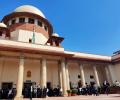
The Supreme Court has made permanent its order protecting a journalist from coercive action in a road rage case and quashed a police notice to 'X' seeking his digital details. The court noted the police sought data from before the alleged crime and granted the journalist liberty to challenge the FIR and seek guidelines for data collection.
Adani Enterprises and US-based Jabil have signed a non-binding agreement to establish a 50:50 joint venture in India. This JV will manufacture artificial intelligence and data centre equipment, including AI racks, servers, storage, networking gear, and cooling systems, targeting both Indian and global markets. The collaboration aims to capitalise on India's accelerating data centre demand and the surging global investment in AI compute infrastructure.

Artificial intelligence major Anthropic has launched AI inference capabilities in India through Amazon Bedrock, allowing its Claude AI models to process data within the country's jurisdiction. This strategic move addresses the growing demand from Indian entities, particularly in regulated sectors, for compliance with local data processing norms as per the Digital Personal Data Protection Act. The initiative strengthens Anthropic's commitment to the Indian market, enabling secure and compliant AI deployment for sensitive workloads and fostering trust among major enterprises like Reliance, CRED, and NPCI.

AI infrastructure firm AM Intelligence announced plans to invest over USD 20 billion in the next 15 months to significantly expand its data centre capacity, including firm orders for 20,000 NVIDIA Rubin GPUs. This expansion will bring its total capacity to 100 Megawatt initially, with a broader goal of 1 GW of compute-as-a-service capacity globally, establishing it as a major buyer of advanced AI hardware.

CAG Sanjay Murthy has urged statutory auditors to enhance their scrutiny of Public Sector Undertakings (PSUs) by examining systems, testing controls, and utilising data analytics to identify unusual transactions. Speaking at a workshop, Murthy stressed the importance of auditors understanding business to challenge judgments and ensure audits lead to better enterprise decisions. He also highlighted the critical need for PSUs to treat cyber security and data governance as core business risks, advocating for boardroom discussions on these issues and prompt incident reporting.

The Union Home Ministry's High-Level Committee on Demographic Changes has requested states and Union Territories to provide detailed data on "visible changes" in religious demography over the last 15 years. This includes information on birth registrations, religious structures, vehicle registrations, property transfers in tribal areas, and educational institutions, aiming to assess demographic shifts and recommend policy measures.
A new IDC report reveals that artificial intelligence is prompting organisations worldwide to retrieve and utilise previously archived, "cold-tier" data for AI training, significantly increasing its perceived value and leading to longer data retention periods and a burgeoning market for datasets.

Domestic telecom gear maker HFCL reported its highest-ever quarterly consolidated net profit of Rs 394.22 crore for the second quarter ended September 30, 2026, a multi-fold increase from Rs 72 crore a year ago, primarily due to strong demand for optical fibre cables from AI data centres.

An independent commission of retired judges has formally requested Uttar Pradesh Chief Minister Yogi Adityanath to furnish supporting data for his statement alleging the exclusion of 1.27 crore Hindus from the state's voters' list, amidst concerns over impending elections.
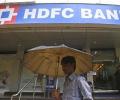
HDFC Bank has initiated an internal enquiry into the alleged leak of confidential information by two senior executives, with investigators examining whether the disclosed information was misused.
Pune-based deep-tech firm olee.space has won a contract from DRDO to develop an indigenous laser-link drone communication system. This system will provide secure, high-speed, jam-proof data transfer between ground stations and drones, addressing vulnerabilities seen in conflicts like the Russia-Ukraine war. The project aims to deliver ground-based and airborne free space optical communication terminals within 18 months.
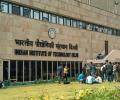
Researchers at IIT Delhi have successfully demonstrated the simultaneous transmission of quantum-entangled photons and classical data over a 50-km optical fibre link. This breakthrough addresses key challenges in integrating fragile quantum signals with existing telecommunications infrastructure, paving the way for more scalable and secure future quantum networks.

Despite a significant increase in the number of individual tax filers declaring Long Term Capital Gains (LTCG) from 0.75 million in AY20 to 3.8 million in AY24, they still represent only about 5% of all individual tax filers in India. This data fuels the ongoing debate about potential LTCG tax relief, especially for foreign portfolio investors.

Indian automakers like Tata Motors Passenger Vehicles and Mahindra & Mahindra are experiencing increased semiconductor procurement costs due to surging demand from AI data centres. This global shift is tightening chip supplies for conventional automotive applications, forcing manufacturers to pay premiums and build inventories to maintain production, with concerns about prolonged supply constraints and rising prices for memory chips.

'India will become number one. There is no doubt about it. Andhra Pradesh will be number one in India.'

State Bank of India (SBI) is developing an innovative solution to assess the creditworthiness of small businesses lacking GST registration by utilising UPI transaction data. This initiative aims to provide end-to-end digital loans within a day, addressing the financial exclusion of many small enterprises.

Cash-strapped SpiceJet has cancelled over 70% of its scheduled flights across major Indian airports, including Delhi, Mumbai and Bengaluru, as the airline grapples with severe financial and operational challenges, impacting thousands of travellers.

Analysts predict that the Indian stock market's direction in the upcoming holiday-shortened week will be primarily influenced by foreign investor activity, crude oil prices, and broader global economic trends, with significant FPI inflows already observed.

India's net oil and gas import bill surged by 60 per cent year-on-year to USD 16 billion in October, driven by Brent crude prices nearly doubling, while cooking gas consumption simultaneously saw a significant decline.
The Haryana government has mandated a comprehensive audit of all departmental online portals and digital payment systems. This initiative aims to identify technical vulnerabilities, prevent financial fraud, and safeguard public funds, with Chief Secretary Anurag Rastogi stressing collaboration between banks and government departments.

A report by Envirocatalysts reveals that Delhi was the most polluted among 24 state and Union Territory capitals between Diwali 2025 and Diwali 2026, with annual average PM2.5 concentrations more than double the national standard. The analysis highlights that Diwali-day pollution contributes minimally to the overall annual exposure, with other sources like vehicles, dust, and industrial emissions being the primary culprits. The report calls for year-round clean-air action plans.

The Comptroller and Auditor General of India (CAG) is set to introduce an in-house large language model (LLM) on Monday, developed by IIT Madras, to streamline auditing processes by providing a single platform for internal inspection reports, auditing standards, and guidelines.

Sarvam AI co-founder Pratyush Kumar has clarified that the company's 'Token Factory' inference offering operates on privately procured GPUs without government support, countering social media scrutiny regarding its links to IndiaAI Mission subsidies. Kumar stated that while Sarvam AI used IndiaAI Mission subsidies for training its Sarvam 105B model, the Token Factory is independently funded, aiming to provide cost-effective, low-latency inference services in India using open-weight models.
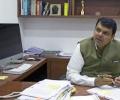
Maharashtra Chief Minister Devendra Fadnavis launched several facilities under the Mega City Policing initiative, emphasising that technology should enhance transparency, accountability, and efficiency in policing without detaching officers from ground realities. He highlighted the development of an AI-based investigation system 'Tapas Sarathi' and the integration of digital evidence, aiming to improve conviction rates and ensure timely justice.
