
Odisha Police seized approximately 800 litres of chemicals and solvents, along with marijuana and hashish oil, from a vehicle in Malkangiri district, thwarting a hashish oil manufacturing operation.

The Petroleum Planning and Analysis Cell (PPAC) has denied an RTI request for data on oil imports from Russia, citing its 'commercial and confidential' nature and exemptions under the RTI Act. The Central Information Commission supported this decision, referencing strategic and economic interests.

Indian refiners are recalibrating their crude sourcing strategy due to supply disruptions in West Asia, leading to Venezuela and Brazil emerging as top five suppliers in April, replacing traditional sources like Iraq and the United States.

Delhi Police dismantled a counterfeit engine oil manufacturing unit in Ghazipur, arresting two individuals and seizing hundreds of litres of fake oil labelled as popular brands.

Indian stock markets are poised for volatility this week, driven primarily by the outcomes of five state assembly elections, ongoing high crude oil prices amid West Asia tensions, and the release of Q4 corporate earnings, according to market analysts.

Indian benchmark indices Sensex and Nifty experienced declines due to a sharp rally in crude oil prices, continuous foreign fund outflows, and geopolitical uncertainties. Regulatory developments in the banking sector, particularly the implementation of the Expected Credit Loss (ECL) framework, also contributed to the selling pressure.

The Indian government has refuted claims of an impending Rs 25-28 per litre hike in petrol and diesel prices post-assembly elections, stating no such proposal is under consideration by the Ministry of Petroleum and Natural Gas.

'FPIs are unlikely to return unless there is equilibrium between valuation premium and earnings growth.'

India's largest private refiner, Reliance Industries Ltd, successfully navigated a volatile energy market in the last quarter of FY26 by diversifying crude sourcing and demonstrating operational agility, particularly in response to geopolitical disruptions and cost fluctuations.

Police in Warangal, India, have arrested four members of an interstate gang and seized 20 kg of hash oil worth Rs 2.5 crore. The gang, hailing from Odisha and Andhra Pradesh, was apprehended near the Warangal bus stand while allegedly preparing to leave for Mumbai with the contraband.

Indian benchmark indices Sensex and Nifty experienced a significant slump in early trade, driven by a sharp surge in crude oil prices above USD 120 per barrel, weak global market trends, and continued foreign fund outflows.
Indian benchmark indices, Sensex and Nifty, opened lower on Tuesday, driven by a surge in global crude oil prices and continued outflows by Foreign Institutional Investors (FIIs), reflecting fragile market sentiment influenced by external factors.

One Indian oil tanker successfully crossed the Strait of Hormuz, while others turned back after Iran signalled the waterway's closure, amidst rising tensions and disruptions to global energy flows.

The United States has announced it will not renew sanctions exemptions for the purchase of Russian and Iranian oil, ending a 30-day waiver that allowed some countries, including India, to continue importing Russian oil despite sanctions related to the Ukraine war.

Oil processing facilities form the foundation of the worldwide energy sector, converting crude petroleum into essential fuels such as petrol, diesel, aviation fuel and various petrochemical products.

The United States has extended a waiver from sanctions to allow countries to buy petroleum products from Russia by a month, days after it ruled out renewal of the special measure.

Indian refiners have access to only limited Iranian volumes compared with Russian oil, and even the barrels on offer come with 'too many hassles'.

Indian stock markets extended their gains for a third consecutive day, with the Sensex climbing 753 points and the Nifty closing above 24,550, driven by a drop in crude oil prices and optimism surrounding potential peace talks between Iran and the US.

Indian stock markets experienced a second consecutive day of losses, with the Sensex tumbling 852 points, as crude oil prices surpassed USD 100 per barrel due to stalled US-Iran negotiations and escalating geopolitical tensions in West Asia.

The Indian rupee depreciated by 34 paise to close at 93.78 against the US dollar, marking its third consecutive session of decline. This fall is attributed to escalating crude oil prices driven by uncertainty surrounding US-Iran peace talks and fresh attacks in the Strait of Hormuz, alongside significant foreign institutional investor outflows from domestic equity markets.
Indian benchmark indices Sensex and Nifty experienced a significant tumble in early trade, driven by surging global oil prices, continuous outflows by Foreign Institutional Investors (FIIs), and persistent geopolitical uncertainties, particularly in West Asia.
Indian equity benchmark indices Sensex and Nifty tumbled over 1 per cent for the third consecutive day, driven by a sharp rally in crude oil prices, massive selling in IT stocks, and unabated foreign fund outflows amid ongoing geopolitical tensions in the Middle East.

Aviation stocks experienced a significant surge following the announcement of a two-week ceasefire between the US and Iran, which led to a sharp decline in crude oil prices. This development has positively impacted stock markets and the broader economic outlook for India.
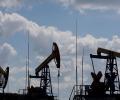
Global energy markets saw a significant correction as oil prices nosedived following Iran's announcement that the Strait of Hormuz has been fully reopened, dismantling the 'war-risk' premium that had gripped the market.
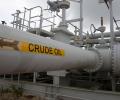
Crude oil prices experienced a significant drop following the announcement of a US-Iran ceasefire and the reopening of the Strait of Hormuz, leading to heavy selling by traders.

The Reserve Bank of India (RBI) has projected that crude oil prices will average USD 85 per barrel and the rupee will weaken to 94 against the dollar by FY27, according to its bi-annual Monetary Policy report.

Crude oil prices have surged to record highs due to escalating tensions between the US and Iran, raising concerns about supply disruptions and market volatility.

A fire broke out among several oil tankers in Jammu, India, but was quickly brought under control by fire services, preventing a major disaster. No casualties were reported.

A US-sanctioned tanker carrying Iranian crude oil is heading to India, marking the resumption of oil imports from Iran after seven years.

Indian benchmark stock indices, Sensex and Nifty, surged over 1 per cent, driven by optimism surrounding potential US-Iran peace talks and a significant drop in crude oil prices below the USD 100 per barrel mark. This de-escalation in geopolitical concerns and easing inflation pressures provided a substantial boost to investor sentiment.

India has refuted claims of payment issues hindering crude oil imports from Iran, clarifying that refiners have the flexibility to source oil from various global suppliers. The Ministry of Petroleum and Natural Gas addressed reports of a tanker rerouting to China, emphasising standard industry practices and secured oil requirements.
Live updates on the US-Israel-Iran war: Trump escalates threats, Iran retaliates, and oil prices surge as the Strait of Hormuz crisis disrupts global markets.

A US-sanctioned tanker carrying Iranian crude oil has rerouted mid-voyage from its previously indicated destination of India to China, raising questions about payment issues and the future of India's Iranian oil imports.

The US has threatened to prosecute those buying or selling sanctioned Iranian oil and has announced a blockade of the Strait of Hormuz after peace talks failed.

Indian companies, however, are now paying a premium of $6-$7 a barrel for Russian oil, compared with discounts of $8-$10 a barrel before the start of the conflict.

Indian stock market benchmarks Sensex and Nifty closed higher on Tuesday, buoyed by a drop in crude oil prices, a rally in global markets, and strong buying in IT stocks.
Indian benchmark indices Sensex and Nifty rebounded sharply on Monday, driven by a correction in crude oil prices due to ceasefire efforts in West Asia and strong buying in bank stocks.

Analysts warn that global markets are significantly underpricing the risk of an oil price shock, with Brent crude potentially soaring to $150 per barrel if the West Asia conflict escalates or damages critical oil and gas infrastructure. This could lead to severe inflation and economic repercussions, particularly for import-dependent nations like India.

In a statement issued by Iran's consulate in Mumbai, it said, "At present, Iran essentially has no floating crude or surplus available for international markets. The US Treasury Secretary's remarks appear aimed at reassuring buyers and managing market sentiment."

Amidst global energy market volatility driven by the West Asia crisis, Russia has proposed increasing its crude oil and natural gas supplies to India, strengthening bilateral energy ties and aiming for USD 100 billion in annual trade by 2030.
 © 2026 Rediff.com - Advertise with us - Disclaimer - Privacy Policy - Sitemap - Feedback - About us - Terms of use - Grievances