
India needs to increase the investment rate to 34-35 per cent from 31-32 per cent currently to achieve a growth rate of 7 per cent and above, said S Mahendra Dev, chairman, economic advisory council (EAC) to the Prime Minister, on Wednesday.

Recent documents by NITI Aayog and periodic labour force surveys on employment show that the importance of agriculture is rising in the Indian economy.
The protesting farmers' main demand to legalise the minimum support price (MSP) regime has divided opinion. One school of thought says it would lead to crop diversification and help India keep under check its burgeoning import bill on edible oils and pulses, while another says it would incentivise farmers to produce low-quality crops. Contrary to popular perception, India has a trade surplus in agriculture and allied activities, which stood at $18.65 billion during 2022-23 (FY23) against $15.92 billion in the previous year. However, the surplus was mainly on account of rice, wheat, sugar, spices, and buffalo meat.
Earlier this month, the Central government said in a reply in Parliament it had taken measures to double farmers' income by the end of FY23 and the progress made so far indicated it was "on the right track". However, a close look at the data and at the assumptions made shows that as of now, it appears the country is unlikely to achieve the goal in real terms.
In May, Satpal Singh, who runs a dairy business with three buffaloes in Jewar, near Noida, was worried about the steep spike in input costs. Singh said dry fodder rates, which cost Rs 1,500-2000 per tractor trolley last year, were quoting at Rs 4,500-5,000. The price of other cattle feed ingredients (that include mustard meal and similar mixes) had also gone up from Rs 2,000 per quintal to Rs 3,100-3,200 per quintal.
Nirmala Sitharaman's maiden Budget has not disappointed but vision and details, particularly for the revival of agriculture, are missing.

The immediate need is to put more money in the hands of agriculture-based and rural households to improve their purchasing power, says S Mahendra Dev.
Among the key demands of agitating farmers has been a legal guarantee on minimum support price (MSP). The protest reached a crescendo when thousands of farmers from Punjab and elsewhere marched towards Delhi late last year and decided to block the main entry points once they were denied entry. The Centre, on its part, held 11 rounds of discussions with the protesters and even offered to amend some of the provisions without much success. With now one of their chief demands met, farmers have now moved on to force the government to concede on MSP.

As India looks to mend its Covid-battered economy, one thing that will grab the attention of all concerned is the path that both wholesale and retail inflation will follow. Even the Reserve Bank of India in its latest policy statement said, "Going forward, the inflation trajectory is likely to be shaped by uncertainties impinging on the upside and the downside.
But the measures, particularly in agriculture, may not be enough to revive the sector and double the farm income, says S Mahendra Dev.

Economists forecast the benchmark food price indicator to slip to 12 per cent in near future


Free provision of food, cash transfers, and jobs in villages see enhanced flow of funds despite a precipitous fall in revenue. Till May, defence spend was nearly 30 per cent less than the previous year.

'If you see the composition of items which are causing this spike in prices, most of them have little to do with the kharif harvest, except for pulses and vegetables to some extent.' 'I don't know on what basis the government is claiming that food prices will moderate in the weeks to come.'

It would involve constructing over 125,000 kilometres of roads and would form part of the third phase of the Pradhan Mantri Gram Sadak Yojana.

Crops including fruit, vegetables account for 60% of GDP in agriculture, forestry, fishing sector.

Much of the rural recovery story is based on the premise of agriculture doing well. Even if it clocks a growth of 2.5-3 per cent this year, it is still just around 15 per cent of the overall GDP. The non-farm sector, which constitutes a bigger portion of the overall rural economy, is now hampered by disruptions and lockdowns.
Kiran Vissa, co-convenor of National Alliance for Sustainable Agriculture, said that amendments to the EC Act have nothing to do with farmers' welfare but instead meant to please big players and agriculture companies. This is because small and marginal farmers don't have the storage capacity to attract provisions of the EC Act.

Most economists were of the view that the NSSO should release the data, as any move to withhold it will dent the image of country's statistical system.

Concerned by GDP slowdown and unrealistic tax targets, the economists urged Finance Minister Nirmala Sitharaman to implement long-term structural steps like land and labour reforms. Warning against any off-Budget financing the economists said the government should prepare a statement of intent for its social, rural and welfare sector expenditure.
The scheme, which would give Rs 6,000 to small farmers in a year or Rs 500 a month, will add more money to the account of these cultivators than the money he/she saves every month on an average.

Although demonetisation and improper implementation of GST along with falling prices are being blamed for much of the distress in rural India for some time, experts believe those may not be the only reason.
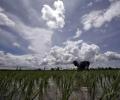
Good monsoon is likely to create more jobs in the agriculture sector, which in turn could save the exchequer around Rs 10,000 crore

Allegations abound that traders milked the scheme to artificially keep prices down, while a significant amount of growers didn't even register owing to multiple difficulties in registration and were deprived of the payout.

The fund allocated for pulses buffer is more than 40% of entire farm ministry's 2016-17 budget.

The prices of oilseed, coarse cereals & vegetables could also be affected.
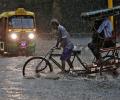
The IMD attributed the projection to a weakening of El Nio and the Indian Ocean Dipole turning positive.
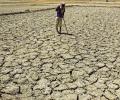
Most farmers depend on rainwater for farming.

Indian farming was transformed after the mid-60s.
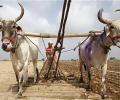
Agri experts are meeting FinMin ministry officials on Monday to give their inputs on the Budget.
 © 2026 Rediff.com - Investor Information - Advertise with us - Disclaimer - Privacy Policy - Sitemap - Feedback - About us - Terms of use - Grievances