
If Xi Jinping can establish control over the PLA Ground Force, relations between India and China will settle down to an even keel. The next few weeks will show whether Xi has finally succeeded in gaining control over the PLA Ground Force. That could bring about the substantive shift in India-China relations that both our leaders have been working for, observes Ambassador Prabhat Shukla.

The Congress party has accused the Modi government of a 'deny, distract, lie, and justify' (DDLJ) policy regarding China, alleging territorial setbacks and misplaced economic priorities.
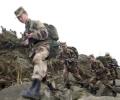
The stand-off in Chumar area of Ladakh area took a new turn on Sunday with Chinese People's Liberation Army pitching 7 tents well within the Indian territory and showing no signs of withdrawing from the territory.

The standoff in Chumar region in Ladakh worsened on Saturday after a second intrusion by Chinese army personnel in two days was reported at another point after they had withdrawn from the same area.
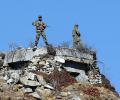
Chinese army on Wednesday reportedly made a fresh incursion in Chumar area and refused to return even as a flag-meeting between the two sides is believed to have made no headway in breaking the deadlock.

Indian and Chinese troops had come face to face in Chumar area of Ladakh in July when the latter transgressed into Indian territory along the Line of Actual Control. Army sources said after the two sides came face to face in Chumar -- which is northeast of Leh in Jammu and Kashmir -- they both showed banners as per the agreed drills and returned to their respective positions peacefully.
After heightened tension in Chumar area in Northeast Ladakh for four days, Chinese troops on Thursday night began withdrawing from the Indian territory, official sources said.
Hours after withdrawing from the Chumar region in Ladakh, Chinese People's Liberation Army soldiers were on Friday reported to have crossed into Indian territory again and stationed themselves on a hillock.
Heightening tension, the Chinese army pushed in more troops into Chumar village along the Line of Actual Control in the wee hours on Thursday, hours before the summit meeting between Chinese President Xi Jinping and Prime Minister Narendra Modi.
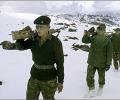
Virtually defending the latest incursion by the People's Liberation Army in the Chumar sector in Ladakh, China on Thursday said its troops were patrolling on its side of the Line of Actual Control and asserted that "status quo" should not be changed pending a final settlement.

The BRO has constructed a 52-km long black-topped road through Umlingla Pass, bettering the previous record of a road in Bolivia connecting to its volcano Uturuncu at 18,953 ft, the ministry's statement noted.

'Although perhaps not with a greater majority, and maybe even a slightly reduced majority in the Lok Sabha.'

The structure and the level at which the hotline would be set up is likely to come up for discussion in future meetings between the two countries at the military level, they said.
The Chinese aircraft have been regularly flying close to the LAC in the last three to four weeks which is seen as an attempt to probe the Indian defence mechanism in the area.
'On the LAC, China can undertake military action at any place with much fewer resources. It can do 'salami slicing'.'

'We should not allow ourselves to be surprised in any manner in future on the border.'
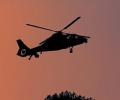
The PLA choppers violated Indian airspace in the Chumar sector on July 11 around 0800 hours and returned after flying for some time there, sources said.
Three months after the 21-day stand-off in Depsang valley in Ladakh, Chinese troops again came deep inside the Indian territory in that area last week to reach upto 2 kms close to Indian posts, in one of five such incursions in the recent past.
Since the June 15 clash, the PLA has inducted large numbers of troops, armoured vehicles and artillery along the LAC, from Depsang and Galwan in northern Ladakh to Hot Springs, Pangong Tso, and Chushul in central Ladakh, to Demchok and Chumar in southern Ladakh.
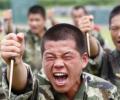
Close on the heels of over a dozen incursions since the face-off in Ladakh in April from across the Line of Actual Control, Chinese troops made a fresh attempt to violate the International Border at Chumar area in north-east of Leh on July 20, but were forced back by Indian troops.

The Indian army is planning to put back a surveillance camera in the Chumar area along the Line of Actual Control to keep an eye on the movement of the Chinese troops, which had reportedly taken away a similar device last month.
Twenty Chinese soldiers, who had last week entered Indian territory near the Line of Actual Control and pitched their tents in the Chepzi area in Ladakh, have returned after a flag meeting between the two sides, sources said on Monday.

Around 20 Chinese soldiers last week entered Indian territory near the Line of Actual Control and pitched their tents in Chepzi area in Ladakh, sources said on Sunday. Around 20-22 Chinese People's Liberation Army soldiers had last week pitched around 8-10 tents in the west of Chepzi in Ladakh area, the sources said.

Prime Minister Narendra Modi raised the issue of Chinese incursions with the visiting Chinese President Xi Jinping during their meeting on Wednesday night.

Besides clearing the proposal to buy assault rifles, the other significant acquisitions approved by the DAC include procurement of smart anti-airfield weapon (SAAW) systems for the navy and the Indian Air Force at an approximate cost of Rs 970, the officials said.

In the wake of reported incursion attempts by China, India on Wednesday said such incidents take place due to difference of perception about boundary and leaders of both the countries are in talks to resolve the issue.
Chinese troops made a fresh attempt to violate the border with India in Chumar area in Ladakh on Sunday and retreated only after the Indo-Tibetan Border Police and the army jawans formed a human wall to block their incursion bid.
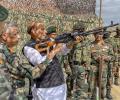
Rajnath Singh believes it would be naive to see disengagement of the armies from the LAC as the end of the trouble. The defence minister has urged the defence forces to be ready for a long haul
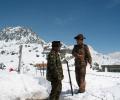
Against the backdrop of recent incursions by the Chinese troops, India and China on Saturday held a flag meeting in eastern Ladakh where the Indian side is understood to have raised concerns over detention of its nationals by the People's Liberation Army.

Prime Minister Narendra Modi is serving 'dhokla' to Chinese President Xi Jinping when incursions from that country continue, Congress leaders said on Thursday taking a dig at the Bharatiya Janata Party and Modi.
External Affairs Minister Salman Khurshid on Wednesday claimed there was no deal between India and China for ending the 21-day stand-off between the armies of the two countries in Ladakh. "No deals in international levels... we do not do deals at this level," he said when asked if India and China had inked a deal to end the stand-off.

China on Thursday tried to play down the continuing border standoff at Chumar coinciding with the visit of President Xi Jinping to India, saying the incident has been "effectively controlled and managed".

With the two armies again in a face-off at multiple points, there is apprehension of renewed clashes.

Prime Minister Modi made a strategic blunder of Nehruvian proportions -- presuming no war can happen now, and the Chinese won't be a military threat and risk their economic interests, observes Shekhar Gupta.

'China is unwilling to restore the status quo ante of April 2020.' 'India will have to weigh its options based on this premise.'

'The PLA has continued to do exercises and drills and recently carried out air exercises with fighter jets.'

The two sides have also agreed for a joint mechanism to verify the progress in the disengagement process through delegation meetings as well as using unmanned aerial vehicles.

India and China will hold the 18th round of border talks in Delhi from Monday - the first round of negotiations after PM Modi came to power last year.

General Zhao Zongqi is well known in India for having commanded the Chinese troops during the Dokalam episode. Zhao knows every inch and corner of the Indian border, at least the Eastern and Central sectors, including the Naku La area which witnessed fist-fights between Indian and Chinese troops in April/May. Claude Arpi introduces us to the PLA generals masterminding the Chinese aggression in Ladakh.
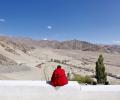
We should have anticipated it on August 5 last year, when we made the big changes in J&K. Amit Shah left nothing to chance when he told Parliament that 'we will bring back Aksai Chin even at the cost of our lives'. 'Then, there were the new maps, objections to the CPEC going through Indian territory, the weather reports.' A broad territorial status quo had existed in Ladakh-Aksai Chin since 1962. India made its intention to change this public, notes Shekhar Gupta.
 © 2026 Rediff.com - Investor Information - Advertise with us - Disclaimer - Privacy Policy - Sitemap - Feedback - About us - Terms of use - Grievances