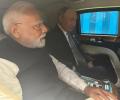
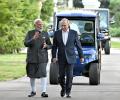
Prime Minister Narendra Modi was offered a lift by Russian President Vladimir Putin in his AURUS limousine to reach the venue of their bilateral talks on the sidelines of the Shanghai Cooperation Organisation (SCO) summit in Tianjin on Monday.

Modi was received at the venue by Chinese President Xi Jinping and First Lady Peng Liyuan. On arrival, the Prime Minister exchanged greetings with the Chinese President before joining other leaders for the customary family photo session.

With him is a letter he had brought for Melania Trump, thanking her for a letter she sent to Putin on Friday, raising the plight of Ukrainian children kidnapped by Russia.

Kremlin spokesman Dmitry Peskov said the two leaders had a tete-a-tete in the car for about an hour.
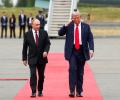
Supporting Trump's proposal for a trilateral meeting between Ukraine, the US, and Russia, Zelenskyy said, "Key issues can be discussed at the level of leaders, and a trilateral format is suitable for this."
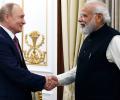
The US House Foreign Affairs Committee Democrats stated that imposing tariffs on India will not deter Russian President Vladimir Putin or address Russia's invasion of Ukraine.

Russian President Vladimir Putin expressed optimism about Russia-US relations, citing potential cooperation in the Arctic and Alaska. He acknowledged the current low level of relations but sees improvement with President Trump's administration. Putin also emphasized the importance of Russia's sovereignty and the role of its nuclear industry.
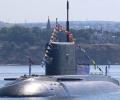
Russia has launched its latest nuclear submarine to be armed with a 'Poseidon' nuclear drone, also known as 'doomsday missile' capable of 'wiping out' coastal nations, according to media reports.
The White House has claimed that India has begun 'scaling back' its oil purchases from Russia at the 'request' of President Donald Trump.

The Congress party has criticized the government for not inviting Leader of the Opposition Mallikarjun Kharge and Rahul Gandhi to the banquet for Russian President Vladimir Putin, while also questioning Shashi Tharoor's decision to accept the invitation.
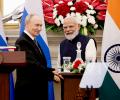
India and Russia have solidified a five-year plan to enhance their economic and trade partnership, while also addressing the ongoing conflict in Ukraine and the threat of terrorism.

The Russians have termed Putin's visit to India, his first to this country since the outbreak of the Russia-Ukraine war, as 'Druzhba Dosti', which means 'friendship' in Russian and Hindi respectively.

'Don't look at Russia only as a place to earn quickly and then leave.' 'Try to build experience in serious companies, skills and certifications that will serve you anywhere in the world.'
US lawmakers have expressed concerns that policies enacted by the Trump administration, such as the H1B visa fee and tariffs on India, are detrimental to American businesses and threaten the relationship between the United States and India.
Prime Minister Narendra Modi conveyed to Ukranian President Volodymyr Zelenskyy that India supports all efforts to end the conflict in Ukraine during a phone conversation.

Echoing United States President Donald Trump's stance on imposing economic sanctions against countries maintaining trade ties with Russia if Moscow doesn't put an end to the conflict in Ukraine, North Atlantic Treaty Organisaiton (NATO) Secretary General Mark Rutte on Tuesday (local time) urged India, China, and Brazil to reconsider their economic relations with Russia, warning of potential secondary sanctions, reported Reuters.

United States President Donald Trump on Wednesday said Prime Minister Narendra Modi had assured him that India would stop purchasing oil from Russia, describing it as "a big step" in efforts to increase global pressure on Moscow.
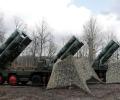
The defence ministry is likely to take up the proposal by the Indian Air Force for approval at a defence acquisition council meeting planned to be held on October 23, sources said.

Russian President Vladimir Putin has declared a three-day ceasefire in Ukraine starting from midnight of May 7-8 to mark the 80th anniversary of Nazi Germany's defeat in World War II. Putin urged the Kiev regime to follow suit, stating that the ceasefire will be in effect until midnight of May 10-11. Russia also reiterated its readiness for peace talks without preconditions and called for constructive interaction with international partners. The announcement comes as Russia prepares for its Victory Day celebrations on May 9, commemorating the defeat of Nazi Germany in World War II.

India and Russia are set to expand their defence cooperation, with India expressing interest in procuring additional S-400 missile systems. Discussions took place ahead of the India-Russia annual summit.

External Affairs Minister S Jaishankar discusses India's foreign policy challenges in a multipolar world, emphasizing the need for nimbleness and prioritizing national interests.
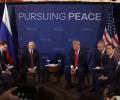
Trump's one-on-one meetings with Putin during his first term were clouded with mystery. With only a translator inside the room, it was often unclear what exactly was discussed. Aides had a difficult time ascertaining if the two reached any agreements. After one such meeting, in Germany, Trump asked his interpreter to discard his notes.
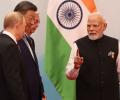
Russian Foreign Minister Sergei Lavrov on Thursday said the US threats of tariffs against India and China are failing and there is a growing understanding in Washington of the futility of talking in such language with two ancient civilisations.
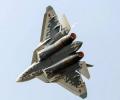
However, these are understood to be exploratory talks, with an agreement unlikely to be formalised during the current visit.

Israel and the United States had a plan. Iran punched back. And now the Gulf is reeling, the world is beginning to feel the pain and, as on date, no one in Washington or Tel Aviv appears willing to admit that the punch has landed, notes Prem Panicker, continuing his must-read blog on the war in the Middle East.

China on Friday said the Shanghai Cooperation Organisation (SCO) summit to be held in Tianjin later this month will be the largest in the bloc's history, with 20 world leaders, including Prime Minister Narendra Modi, attending it.

New Delhi 'will have to take a call which supply source suits us the best,' the finance minister said, pointing out that crude oil accounts for the bulk of India's foreign exchange spend.

India and Russia always stood "shoulder-to-shoulder" even in the most difficult situations, Prime Minister Narendra Modi told Russian President Vladimir Putin on Monday, against the backdrop of possibly the worst phase in New Delhi's ties with the US in over two decades.

Russian President Vladimir Putin, in a phone call this past week with United States President Donald Trump, demanded that Kyiv surrender full control of Donetsk, a strategically vital region in eastern Ukraine, as a condition for ending the war, said two senior officials familiar with the conversation, the Washington Post reported.
Putin further described the Ukraine conflict as a mere "pretext" by Western powers to take these broader punitive measures against countries maintaining strong economic ties with Russia.
Two days after Russian President Vladimir Putin concluded his visit to India, during which he assured that Moscow would remain a reliable energy supplier, the Kremlin on Monday said that India, as a sovereign nation, is free to buy oil from sources it deems beneficial. It expressed confidence that New Delhi will continue to prioritise its economic interests.
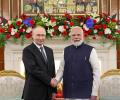
Luckily for us, a Russia that is desperate to stay relevant in an emerging multipolar world finds in India a reliable geostrategic partner. The Russian proximity to India also keeps China from exploiting its economic dominance vis a vis Russia, points out Colonel Anil A Athale (retd).
Speaking shortly after, Trump stated he had yet to speak with Ukrainian President Volodymyr Zelenskyy but would do so imminently, along with other European leaders. He suggested a formal deal was not yet in place.
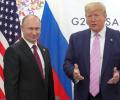
Taking to social media platform X, Dmitriev said, "Russia confirms Putin-Trump summit may happen next week and summit preparations are ongoing. This can be a historic meeting. Dialogue will prevail."
The summit, scheduled for Friday, marks the first in-person meeting between the leaders of the US and Russia in over four years.
Russia, being bogged down by the Ukraine war and prioritising the requirements of its own armed forces, along with India's consistent diversification policy, will remain a major challenge to the bilateral partnership, note Harsh V Pant and Aleksei Zakharov.
Russian Foreign Minister Sergey Lavrov has confirmed that President Vladimir Putin has accepted an invitation from Prime Minister Narendra Modi to visit India. The visit is currently being prepared, though the dates have not yet been revealed. This visit follows Prime Minister Modi's trip to Russia in July 2024, his first since 2019. The two leaders have maintained regular contact and have emphasized the strength of the Russian-Indian strategic partnership.
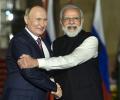
Russian President Vladimir Putin will travel to India in December, Kremlin foreign policy aide Yuri Ushakov said. Putin will meet Prime Minister Narendra Modi on the sidelines of the Shanghai Cooperation Organisation (SCO) Summit in China's Tianjin city to discuss the preparations for his visit to India.

Congress leader Rahul Gandhi alleges the government discourages foreign dignitaries from meeting the Leader of the Opposition due to insecurity, breaking established traditions.

The enduring relationship between the two countries have survived the disintegration of the erstwhile USSR in 1991, the end of the Cold War and the regime change in both countries, points out Rup Narayan Das.
