
The Centre has spent 28 per cent of its FY27 capital expenditure budget of Rs 12.21 trillion in the first three months against around 24.5 per cent during the corresponding period a year ago.

The Central Board of Indirect Taxes and Customs (CBIC) is set to significantly increase its use of artificial intelligence (AI), machine learning (ML), and real-time analytics in Customs processes, aiming for a near-touchless, near-digital clearance experience, according to Chairman Vivek Chaturvedi.

Union Finance Minister Nirmala Sitharaman called upon 'Gen Z' and 'Gen Alpha' to assume leadership, prioritise the nation, and contribute to its growth, rather than questioning what the country has done for them.

Moody's Ratings has sharply increased India's GDP growth forecast for fiscal 2026-27 to 7 per cent, making it the fastest among G20 economies, driven by economic resilience despite the Middle East conflict. However, the agency flagged significant inflation risks stemming from elevated oil prices and potential El Nino disruptions.

The Union Cabinet headed by Prime Minister Narendra Modi on Sunday approved the Union Budget 2026-27.

New Delhi was told it had given something up; in reality it had stopped talking about it, notes Dr Abhishek Puri.

Infographics break down the key numbers and decisions, making it quick and easy to understand what the Budget means for the economy.

rediffGURUS Mihir Tanna, Vipul Bhavsar, T S Khurana, Vivek Lala and Anil Rego will answer your tax queries related to the Union Budget 2026-2o27.

'Wages have not risen. Rural wages have stagnated. The growth was 0.7 per cent last year. For casual and irregular labour, the wage growth is negative.'


Union Minister Bandi Sanjay Kumar announced India's ambitious plan to rank among the top 10 sporting nations by 2036 and top five by 2047. He highlighted the central government's commitment to sports development through initiatives like Khelo India, increased budget allocation, and a special fund for sports equipment and technology, emphasising sports as a tool for nation-building and youth empowerment.
Union Minister Bandi Sanjay Kumar announced India's ambitious plan to rank among the top 10 sporting nations by 2036 and top five by 2047. He highlighted the central government's commitment to sports development through initiatives like Khelo India, increased budget allocation, and a special fund for sports equipment and technology, emphasising sports as a tool for nation-building and youth empowerment.

The Union Budget allocates Rs 1,492 crore for the functioning of both Houses of Parliament, with specific provisions for Lok Sabha, Rajya Sabha, and related secretariats.

The Indian government has approved the introduction of one billion polymer banknotes in Rs 10 and Rs 20 denominations for field trials, aiming to enhance durability. This move comes as the Finance Minister also addressed Parliament on declining retail inflation, GST reforms, and other fiscal measures taken to support the economy and household consumption.

'It is not because of the war in West Asia, which began on February 28.' 'Petroleum product prices are already going through the roof. They are bound to have a serious inflationary impact.' 'A country's leadership is tested in trying times. It is here that the current leadership is failing.'

The government introduced the SHANTI Act, 2025, to support the mission and open the sector to private participation.
Budget 2026 sticks to fiscal discipline, shuns populist measures despite five key state elections coming up, but ends up rattling stock markets with a higher transaction tax on derivatives trading.

A PL Capital report projects India's LPG subsidy bill to exceed Rs 1 lakh crore in FY27, creating a significant Rs 70,000 crore gap over the Union Budget's Rs 30,000 crore allocation, driven by the government and OMCs absorbing higher fuel and LPG price increases.

Chief Economic Adviser V Anantha Nageswaran has urged the industry to invest in skilling, capability development, and innovation to counter the challenges posed by artificial intelligence, particularly for Global Capability Centres (GCCs). He noted that while the government has supported GCCs through Budget measures like simplifying transfer pricing and promoting expansion into tier-II/III cities, industry must move beyond low-cost execution to thrive in an an AI-driven landscape. Nageswaran emphasised that AI displaces routine tasks, necessitating a focus on higher-value work and continuous skill enhancement to maintain India's competitive edge.

The Finance Ministry's expenditure department has approved a substantial Rs 1.25 lakh crore outlay for India Semiconductor Mission 2.0, significantly increasing the country's investment in global chip-making ambitions and aiming to establish India as a major semiconductor hub.
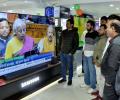
Finance Minister Nirmala Sitharaman announced a fiscal deficit target of 4.3% of GDP for FY27, continuing the path of fiscal consolidation. The government aims to reduce the debt-to-GDP ratio to 55.6% by BE 2026-27 and further to around 50% by March 2031.

The remarkable rise of smallcaps reflects the emergence of a broad set of specialised businesses operating in industries where the sectoral tailwinds remain considerably stronger than macroeconomic headwinds, points out Debashis Basu.
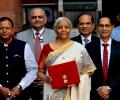
The Budget session of Parliament will be held from January 28 to April 2, featuring the President's address, the Economic Survey, and the presentation of the general Budget.

Both Houses of Parliament were adjourned sine die, concluding a Budget session marked by the passage of key legislations and the defeat of a Constitution amendment bill on women's reservation. The session saw frequent opposition protests and discussions on various issues, including the West Asia conflict.

The conflict may disrupt Budget 2026-2027 projections, squeezing revenues and raising subsidies, prompting fiscal adjustments and potential reforms, echoing lessons from the Covid-era shock, points out A K Bhattacharya.

India's fertiliser subsidy bill for the current financial year (FY27) is projected to increase by approximately 20% due to surging global prices, primarily driven by the West Asia crisis, a senior official confirmed. Despite this, retail prices for urea and di-ammonium phosphate (DAP) will remain unchanged, ensuring adequate supply for the kharif season.

'In all these years of rupee depreciation, of rising oil prices, of inflation caused by import dependence, not one leader had the courage to look the people in the eye and say: Please do this for your country.'
This is the second Budget of the BJP-led NDA government in its third term in office.
The Reserve Bank of India (RBI) has projected a 6.9 per cent GDP growth for the current financial year, citing concerns over commodity prices and supply chain disruptions stemming from the West Asia crisis.

A government mandate requiring central public sector enterprises to use the Trade Receivables Discounting System (TReDS) for settling small business invoices is expected to significantly increase volumes on these platforms.
Uncertainties stemming from the West Asia crisis and its potential impact on inflation and economic growth were key factors in the Reserve Bank of India's Monetary Policy Committee (MPC) decision to maintain the status quo on interest rates, according to the recently released MPC meeting minutes.

Finance Minister Nirmala Sitharaman on Tuesday participated in a traditional 'halwa' ceremony, marking the final stage for the preparation of the Union Budget 2026-27, to be unveiled on February 1 in the Lok Sabha.
The government has proposed to lower debt-to-GDP ratio to 55.6 per cent in FY27, from 56.1 per cent in the current fiscal year, Finance Minister Nirmala Sitharaman said on Sunday.
The government has proposed to lower debt-to-GDP ratio to 55.6 per cent in FY27, from 56.1 per cent in the current fiscal year, Finance Minister Nirmala Sitharaman said on Sunday.

Finance Minister Nirmala Sitharaman on Sunday proposed a six-month foreign asset disclosure scheme for small taxpayers like students, tech professionals and relocated NRIs as she presented the Union Budget 2026-27.

Gold and silver prices plunged up to 9 per cent in futures trade on Sunday, hitting their lower circuit levels ahead of the Union Budget for 2026-27, as investors extended profit booking after the recent record-breaking rally.

This year's Economic Survey and the Union Budget were more closely followed for more reasons than one.

The government also proposes to set up risk guarantee fund for infrastructure sector, she added.

Finance Minister Nirmala Sitharaman will present her 8th straight Budget and all eyes will be on the much-expected tax relief for the middle class. Sitharaman had in her first Budget in 2019 replaced the leather briefcase -- which had been in use for decades for carrying Budget documents -- with a traditional 'bahi-khata' wrapped in red cloth.

The Union Cabinet headed by Prime Minister Narendra Modi on Tuesday approved the full Budget for 2024-25, sources said.
