
The ultimate was surely Yudhishthira's immortal "Aswathama hatha...", followed by a whispered "iti narova kunjarova..."," says Sunanda K Datta-Ray.

Following his appeal, people from various walks of life including women and children had donated even their gold jewels and meagre savings to help the flood-affected people.

A pistol of 9 mm calibre, laptop, mobile phones, USD 2,000, 13,000 in Bangladeshi currency and Indian rupees were recovered from him.

Athiya Shetty springs a surprise in this otherwise tedious film, says Sukanya Verma.

The government is attempting everything it can to make sure that this does not happen, observes Aakar Patel.

A 16-year-old Singaporean boy, a Protestant Christian of Indian ethnicity, was detained last month under the Internal Security Act (ISA) after planning to use a machete to attack Muslims at two mosques in March, on the anniversary of New Zealand's Christchurch attacks.

'All threats related to the Rio 2016 Games are being meticulously investigated, particularly those related to terrorism.'
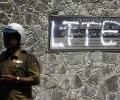
According to the book, 'Keenie Meenie: The British Mercenaries Who Got Away With War Crimes', authored by UK-based investigative journalist Phil Miller India's secret use of British mercenaries lasted for four months after the Indo-Lanka accord was signed between former Prime Minister Rajiv Gandhi and then Sri Lankan president Junius Jayewardene in 1987.

A jihadi Telegram -- an encrypted messaging service popular with militants -- praised the economic chaos that came in the wake of the EU Referendum and urged followers to strike at the heart of mainland Europe.

All India Anna Dravida Munnetra Kazhagam on Wednesday made a fresh round of attack on Union IT and Communication Minister A Raja for his alleged role in the 2G spectrum scam, saying the people should send telegrams demanding his immediate expulsion from the cabinet to the President.
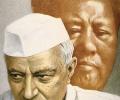
'Hindi-Chini Bhai Bhai? Don't you believe it. I don't trust the Chinese one bit,' Nehru told Gopalaswamy Parthasarathi before he traveled to China as India's ambassador. Asking GP to be ever vigilant, Nehru advised the diplomat to send telegrams on important matters only to him. Many such anecdotes from a long and eventful career as diplomat and bureaucrat crowd the pages of GP: 1912-1995, discovers Uttaran Das Gupta.

'Basuda hardly spoke, but he had a sense of humour and that showed in his films.'
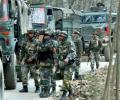
India handed over the dossier to the acting high commissioner of Pakistan in New Delhi on February 27 with specific details of Pakistan-based terror group Jaish-e-Mohammed's complicity in the Pulwama attack that killed 40 Central Reserve Police Force personnel on February 14 and the presence of JeM terror camps and its leadership in Pakistan.

The number is linked to social networking sites like WhatsApp, Facebook, Telegram or Twitter. The verification code generated by these networking sites is received on the smartphone and the user is ready.
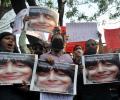
A Mumbai lawyer and a Beed engineer joined arrested climate activist Disha Ravi in creating a protest toolkit backing the farmers' agitation with the aim of 'tarnishing the image of India' and collaborated with pro-Khalistani elements, Delhi Police officials said on Monday.

20 inspiring quotes from Indian start-up journeys

'Cracking the exam is 99 per cent hard work and persistence and maybe 1 per cent luck.'
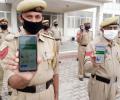
The exponential number of downloads can be attributed to a call by Prime Minister Narendra Modi, asking people to have the app on their mobiles, combined with the government's push for downloading of the app through other channels, reports Neha Alawadhi.

They were arrested by the National Invesitgation Agency in the Kanakamala IS terror plot case.

It said the petitioner could also approach Telecom Disputes Settlement and Appellate Tribunal with his plea.

The maestro begins an American tour with the Israel Philharmonic.

The maestro begins an American tour with the Israel Philharmonic.
Meanwhile, Yerawada Central Jail Superintendent Rajendra Dhamne said that some 53 accused have gone on indefinite hunger strike from Tuesday afternoon.
According to police, Ramnarain alias Lakhan Bhaiyya was a close aide of Rajan and was also close to his lieutenant D K Rao, who is currently lodged in prison.

The Egyptian Football Association denied reports that talismanic striker Mohamed Salah was on the verge of quitting international football
'When a person is capable of infecting 50 others, will you think about the privacy of the person or about protecting the lives of people?'

'Separating our civilian and military nuclear facilities is a near impossibility and will cause enormous problems,' says former Deputy NSA Satish Chandra.

Cartoonists from around the world reacted to the Charlie Hebdo attack with some powerful art work posted on Twitter.

'Suspect all, fix all.' 'It is this mindset that begins at the very top of an establishment and then trickles down and across,' notes Shekhar Gupta.

"We find that there has been undue and unexplained delay by both the state and Central government in processing the mercy petitions," the court said.

The two leaders said they would work to "bring them (bilateral ties) to the framework of constructive cooperation.
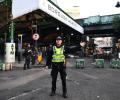
'The person who carried out the London attack... was a fighter from the Islamic State, and did so in response to calls to target citizens of coalition countries,' the ISIS statement read.

The five terrorists in the video, believed to be recorded sometime before the Gulshan attack, made statements to justify their stance, criticising the democratic system and political leaders.

The government is in no mood to buy the privacy and security argument pitched by WhatsApp, whereas the American firm says traceability will undermine end-to-end encryption and the private nature of the app, creating potential for serious abuse.

Since trading in virtual currencies is not illegal, they traded in cash or through barter in some instances.

Brazil arrested 10 people on Thursday suspected of belonging to a poorly organised group supporting Islamic State (IS) and discussing terrorist acts during the next month's Olympic Games in Rio de Janeiro.

Even if the extradition bill has been suspended, Beijing will eventually impose its system on Hong Kong, observes Nitin Pai.

World leaders are reacting with caution to Donald Trump's jaw-dropping victory in the US presidential election, with some of them reminding him of the democratic values and the global responsibility he carries.
