
A court in Sonipat on Tuesday remanded in judicial custody till May 27 Ali Khan Mahmudabad, the head of Ashoka University's political science department who was arrested for his social media posts related to Operation Sindoor, his lawyer said.

The Supreme Court of India has ruled that individuals affiliated with political parties are not barred from contesting elections for bar bodies. The court dismissed a PIL seeking directions to prevent such candidates, arguing that a diverse range of ideologies is essential in a democracy and that there is no law prohibiting politically active individuals from participating in bar body elections.

The Supreme Court of India has made public the asset details of its judges, including Chief Justice Sanjiv Khanna who has Rs 55.75 lakh in a fixed deposit, a three-bedroom DDA flat in south Delhi, and a four-bedroom apartment measuring 2,446 square feet in the Commonwealth Games Village. The court has also uploaded the complete process of appointments to the high courts and the Supreme Court on its website for public awareness.

The Supreme Court of India on Tuesday questioned the issue of using "spyware against terrorists" and stated that any report touching upon the country's "security and sovereignty" won't be made public. The court indicated it might address individual concerns regarding privacy breaches, but the report of the technical committee would not be a document for public discussion. The court will examine the extent to which the report can be shared publicly. The court's statement came during a hearing on a petition related to the alleged use of Pegasus spyware for surveillance. The court also emphasized that "having spyware is not wrong, against whom you are using is the question" and that the security of the nation cannot be compromised. The hearing has been adjourned to July 30.

The Supreme Court of India has dismissed a petition filed by an NGO challenging the construction of a renewable energy project at the Jayakwadi Dam in Maharashtra. The court criticized the NGO for opposing the project, stating that it would be detrimental to the country's progress if every project was resisted. The court also raised questions about the NGO's bona fides and funding, suggesting that it may have been influenced by a company that lost the tender for the project. The project, a floating solar power plant, was approved by the National Green Tribunal (NGT) and the Ministry of Environment, Forests and Climate Change. The NGT had previously dismissed the NGO's plea, stating that it could not find any law prohibiting such activities in the eco-sensitive zone. The Supreme Court upheld the NGT's decision, finding no grounds to interfere.
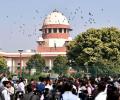
Justice Gavai's comment came while the apex court bench, also comprising Justice Augustine George Masih, was considering a fresh plea seeking an inquiry into the recent violence in West Bengal during anti-Waqf law protests.
The Supreme Court of India has announced its intention to establish an effective mechanism to address caste-based discrimination in educational institutions throughout the country. The court directed the University Grants Commission (UGC) to draft regulations to prevent such discrimination and to provide data on institutions that have implemented equal opportunity cells as mandated by the 2012 UGC equity regulations. The court's decision stems from a public interest litigation filed in 2019 highlighting the prevalence of caste-based discrimination in higher education institutions and its tragic consequences, including the suicides of students like Rohith Vemula and Payal Tadvi.
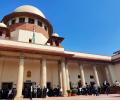
The observations came while upholding the constitutional validity of Section 6A of the Citizenship Act which grants Indian citizenship to immigrants from Bangladesh who entered Assam on or after January 1, 1966 but before March 25, 1971.

'...in the minds of the youth of Assam.' 'Now, no protests happen in Assam because of fear of police encounters.'
The Supreme Court of India expressed concerns about the long-term sustainability of providing free rations to migrant workers, emphasizing the need for job creation and capacity building instead. The court's remarks came during a hearing on the ongoing issue of providing relief to migrant workers, a matter that gained prominence during the COVID-19 pandemic. The court questioned the government's reliance on freebies and stressed the importance of creating opportunities for migrant workers to become self-sufficient. The debate highlighted the challenges of balancing immediate relief with long-term economic solutions for vulnerable populations.

Podcaster Allahbadia's remarks on parents and sex on comedian Samay Raina's YouTube show 'India's Got Latent' triggered a controversy and several FIRs have been lodged against him and others in various parts of the country.
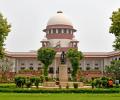
The Supreme Court will hear a plea seeking an independent selection process for the Comptroller and Auditor General of India (CAG) on March 17. The PIL, filed by the Centre for Public Interest Litigation, argues that the current system of appointment solely by the executive and the prime minister violates the Constitution and undermines the CAG's independence. The petition calls for a transparent process involving the prime minister, Leader of the Opposition, and Chief Justice of India. The PIL contends that the CAG's role as a watchdog over government finances requires a fair and non-arbitrary appointment procedure.
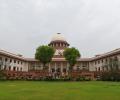
The Supreme Court of India has laid down guidelines for courts when ordering DNA tests to ascertain paternity. The court emphasized the need to balance the interests of all parties involved, including the child, parents, and other stakeholders. It also recognized the potential for infringement of privacy and the social stigma associated with illegitimate children. The court stressed that DNA tests should only be ordered when existing evidence is insufficient and when such tests are in the best interests of all parties involved.
The Supreme Court of India granted custody of a man suffering from cerebral palsy to his mother, a US national, after determining it was in his best interest due to his inability to make independent decisions. The court overruled a Madras High Court decision, finding the lower court's interaction with the son insufficient to assess his needs. The Supreme Court emphasized the son's limited cognitive capacity and the availability of specialized support in the US, where he had completed most of his schooling.
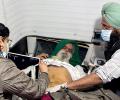
Farmer leader Jagjit Singh Dallewal, who was on an indefinite hunger strike in support of various demands, has broken his fast after the Punjab government intervened and dispersed protesting farmers at Khanauri and Shambhu borders. The Supreme Court lauded Dallewal's efforts and acknowledged the government's action, while also asking for a status report on the situation. Contempt proceedings against the Punjab chief secretary and Director General of Police for not complying with the court's order of providing medical aid to Dallewal were dropped.
The Supreme Court has sought the assistance of the solicitor general of India in a plea that seeks job security for members of internal complaint committees (ICC) for sexual harassment at workplaces. The court recognized the importance of the plea and expressed concern over the lack of response from the Central government, despite issuing notice. The petitioners, Janaki Chaudhry and Olga Tellis, argue that ICC members in the private sector face a serious conflict of interest as they can be terminated without reason if a decision goes against the senior management. The petition highlights the vulnerability of ICC members to retaliation and the lack of protection they have compared to their counterparts in the public sector.
The Supreme Court of India has assured the creation of a robust mechanism to address the alarming number of suicides occurring in Indian Institutes of Technology (IITs) and Indian Institutes of Management (IIMs). The court was informed that 18 suicides had taken place in these institutions over the past 14 months. The court has also directed the University Grants Commission (UGC) to finalize draft regulations aimed at combating caste-based discrimination in educational institutions.

The Supreme Court of India has refused to interfere with a Madras High Court order quashing notices issued by the Tamil Nadu Pollution Control Board (TNPCB) against Isha Foundation, founded by Jaggi Vasudev. The notices were issued for alleged violation of environmental norms in the construction of a yoga and meditation center in Coimbatore. The court, however, emphasized that its order should not be seen as a precedent for regularizing illegal constructions and that Isha Foundation must comply with all environmental norms. The foundation had argued that its facilities fall under the education category, which exempts them from needing environmental clearance.

The Chief Justice of India (CJI) Sanjiv Khanna has assured bar leaders that he will consider their demand for withdrawal of the collegium's recommendation to transfer Delhi High Court's Justice Yashwant Varma. The decision came after representatives of six bar associations of different high courts met with the CJI and other collegium members. The bar associations are protesting the proposed repatriation of Justice Varma to his parent high court, alleging that the evidence in a fire incident at his residence was tampered with. The bar associations have also raised concerns about the non-registration of an FIR in the incident.

The Supreme Court on Monday expressed its displeasure at the Delhi High Court Bar Association for questioning the representation of women judges in the top court while arguing for reservation for women lawyers in the high court bar. The court refused to hear further arguments from the bar body and set November 29 for final arguments on the issue of reservation. The court had previously directed the DHCBA to reserve the post of treasurer for a woman and consider reserving one more post for a woman in the five-member office-bearer body. It had also directed that at least three out of the 10 executive members be women, with at least one being a senior designated advocate.
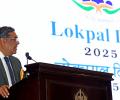
The Supreme Court of India will examine the jurisdiction of the Lokpal, India's anti-corruption ombudsman, in entertaining complaints against sitting high court judges. The court is considering a suo motu proceeding initiated over the Lokpal's January 27 order on the issue. The case involves two complaints filed against a sitting additional judge of a high court, alleging that he influenced a judge of the subordinate judiciary and a judge of the same high court set to deal with a suit filed against the complainant by a private company.
The Supreme Court of India has stayed a Lokpal order that allowed complaints to be filed against a sitting high court judge. The court termed the order "something very, very disturbing" and a concern for the independence of the judiciary. The bench issued notices to the Centre, the Lokpal registrar, and the complainant, directing them to keep the identity of the judge confidential. The court will hear the matter again on March 18.

The Supreme Court of India harshly criticized a man for abandoning his wife and minor daughters, calling his actions "cruel" and questioning his humanity. The court demanded the man provide financial support to his family, including his daughters, before it would consider any favorable orders in his case. The man had previously been convicted of domestic abuse and fraudulently removing his wife's uterus. The court's strong stance highlights the ongoing issue of domestic violence and the need for legal protection for women and children in India.
The Supreme Court of India has scheduled a hearing on February 19 for pleas challenging the appointment of the Chief Election Commissioner and Election Commissioners under the 2023 law. The court emphasized the potential consequences if any action is taken before the hearing. The pleas argue that the 2023 law, which excludes the Chief Justice of India from the selection panel, undermines the independence of the Election Commission and allows for undue influence from the executive branch. The court's earlier verdict in March 2023 called for an independent selection panel comprising the Prime Minister, Leader of the Opposition, and the Chief Justice of India to ensure the integrity of the Election Commission. The case highlights concerns about the independence of India's electoral process and the potential for political influence in the appointment of key election officials.
The Supreme Court will hear on February 19 pleas challenging the appointments of the Chief Election Commissioner and Election Commissioners under the 2023 law. The court will take up the matter on a priority basis, after some urgent listed matters. The government has appointed a new CEC and ECs under the new law, which excludes the Chief Justice of India from the selection panel, despite a 2023 Supreme Court verdict directing the inclusion of the CJI in the panel. The petitioners argue that the exclusion of the CJI undermines the independence of the election commission.

Congress leader Rahul Gandhi has criticized the government's decision to appoint Gyanesh Kumar as the new Chief Election Commissioner (CEC) in the middle of the night, arguing that it is "disrespectful" and "discourteous" given the ongoing Supreme Court challenge to the selection process. Gandhi presented a dissent note to the selection committee, stating that the process violates the Supreme Court order and undermines the integrity of the electoral process.
The opposition Congress in Assam has accused the BJP government of running a "police raj" after official data revealed that 72 people were killed and 220 injured in police actions since Himanta Biswa Sarma became the chief minister in May 2021. The Congress has demanded that the Supreme Court take suo motu cognisance of the data and investigate the alleged fake encounters in the state. The data shows that a total of 256 police actions have been taken between May 2021 and February 2024, resulting in the deaths of 38 people in police remand and 34 more while in custody but before remand. The Congress has alleged that the ruling party is using the police for political gains, while the government has defended its actions, stating that police cases have been registered in each incident and that the NHRC guidelines have been followed.
The Supreme Court has sought a report from the Uttar Pradesh Police regarding allegations that Ashish Mishra, son of Union Minister Ajay Mishra, influenced witnesses in the Lakhimpur Kheri violence case. The court directed the Lakhimpur Kheri superintendent of police to file the report after a complaint was made by advocate Prashant Bhushan, representing the complainants. Bhushan claimed to have an audio recording of an attempt to influence witnesses and alleged that Mishra attended a public meeting in violation of his bail conditions. Mishra, through his lawyer, denied the allegations and stated that he was being targeted unnecessarily. The court has also asked for the authenticity of the material presented to be verified.
The Supreme Court on Saturday gave the Punjab government time till December 31 to persuade farmer leader Jagjit Singh Dallewal, who has been fasting for over a month, to shift to hospital.
The Supreme Court of India has expressed concern over the protracted trials in heinous offences related to Maoist activities, stating that indefinite incarceration violates the right to liberty under Article 21 of the Constitution. Two separate benches of the court granted relief to two accused, citing the delayed trials. One bench expedited the trial of a man accused of transporting ammunition for a banned organization, while the other granted bail to a man accused of transporting materials for Naxal activities. The court emphasized the importance of speedy trials and suggested the establishment of special courts to handle Maoist-related cases, aiming to expedite proceedings. The court also criticized the practice of examining an excessive number of witnesses, which can lead to indefinite delays in the conclusion of trials.
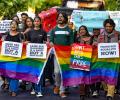
A five-judge bench of the Supreme Court will consider review pleas challenging the October 2023 verdict that declined legal sanction to same-sex marriage. The review pleas will be heard in chambers on January 9, with Justice P S Narasimha being the only member of the original bench that delivered the verdict.

The Supreme Court on Monday ordered an SIT investigation into the alleged torture of a woman in police custody following her arrest over protests against the rape and murder of a doctor at R G Kar Medical College and Hospital in Kolkata.
The Supreme Court on Thursday dismissed a batch of pleas seeking to review its October 2023 verdict declining legal sanction to same-sex marriage.

The Supreme Court of India expressed shock and disappointment at the Indian government's failure to implement the Dam Safety Act, enacted in 2021. The court highlighted the lack of progress in constituting a national committee for dam safety and formulating regulations despite the law's provisions. The case pertains to the safety of the Mullaperiyar Dam, a 130-year-old structure in Kerala, which is controlled by Tamil Nadu. The court has ordered the government to take immediate action and seek assistance from the Attorney General in this matter.
It will be court's opinion versus the legislative power to enact law, the Supreme Court on Wednesday said as it posted the pleas challenging the appointment of the chief election commissioner and election commissioners under the 2023 law on February 4.

The Supreme Court on Thursday upheld the constitutional validity of Section 6A of the Citizenship Act related to the grant of Indian citizenship to illegal immigrants in Assam by a majority verdict of 4:1.
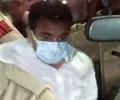
The Supreme Court on Monday gave bail to ex-Union minister Ajay Mishra's son Ashish Mishra in the case related to the 2021 Lakhimpur Kheri violence that claimed eight lives, and restricted his movement to Delhi or Lucknow.
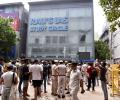
As per the cause list of October 21 uploaded on the apex court's website, a bench of Justices Surya Kant and Ujjal Bhuyan is slated to hear the matter.

Ahead of the Maharashtra assembly elections, veteran leader Sharad Pawar led faction moved the Supreme Court on Friday seeking that both factions of the Nationalist Congress Party (NCP) be given new poll symbols.

The Supreme Court of India questioned the Enforcement Directorate (ED) about the continued incarceration of former West Bengal minister Partha Chatterjee, who is accused in a cash-for-job scam. The court expressed concern about the length of his detention and questioned the message it sends to society regarding corruption. The court also considered whether releasing him would impact the investigation and what conditions could be imposed to ensure his compliance. The court reserved its order after hearing arguments from both sides.
 © 2026 Rediff.com - Investor Information - Advertise with us - Disclaimer - Privacy Policy - Sitemap - Feedback - About us - Terms of use - Grievances