
Despite the ongoing West Asia conflict causing global trade route disruptions, Mercedes-Benz India reports resilient customer demand, particularly for its new electric CLA sedan, though it faces challenges with component supply delays and escalating shipping costs.

Seven people, including two minors and an elderly person, were killed and 21 were injured in storm-related incidents in separate areas of Sultanpur, Uttar Pradesh. The storm also disrupted power supply, damaging transformers and electricity poles.

India is well-stocked with inventories of crude oil and key petroleum products, including petrol, diesel, and aviation turbine fuel (ATF), to deal with short-term disruptions as the war intensifies in West Asia, Union Minister of Petroleum and Natural Gas Hardeep Singh Puri said on Tuesday.

The government on Thursday restored liquefied petroleum gas (LPG) supplies to commercial consumers such as hotels, restaurants and other businesses to pre-crisis levels, and lifted sector-specific restrictions imposed during the recent West Asia conflict, in a sign that energy supply concerns are easing as global markets stabilise.

Escalating geopolitical tensions in West Asia are beginning to disrupt India's automotive supply chain, leading to rising commodity prices, logistics bottlenecks, material shortages, and pressure on consumer demand, with two-wheeler makers already raising prices.

Mahindra & Mahindra (M&M) is implementing a comprehensive, multi-layered strategy to fortify its supply chains against geopolitical volatility, logistical challenges, and regulatory risks, drawing lessons from recent global disruptions.
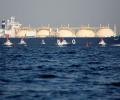
The government has withdrawn most provisions of the emergency natural gas supply regulation order imposed during the West Asia conflict after liquefied natural gas (LNG) shipments through the Strait of Hormuz resumed following a ceasefire.

India has no plans to ration fuel supplies despite ongoing disruptions in global energy markets, according to a top oil ministry official. The country has maintained adequate inventories of crude products and LPG while diversifying imports to manage supply risks.

The reopening of the Strait of Hormuz, following a ceasefire agreement between the US and Iran, is expected to significantly ease India's crude oil supply risks, lower freight costs, and reduce inflationary pressures, as global oil prices have already dropped.

'Rather than deploying all their money at once, investors should invest gradually.' 'A staggered approach is the better strategy because volatility is likely to persist.'
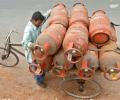
Argentina has significantly increased its LPG exports to India to help mitigate shortages caused by the ongoing conflict in West Asia. This partnership is becoming increasingly important for India's energy security.

'Energy prices would shoot up with the closure of Hormuz again.'
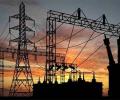
A technical fault at a BEST receiving station in Dadar caused a power outage in parts of central Mumbai, adding to the discomfort of residents during hot and humid weather. Another power supply disruption was reported in south Mumbai due to a fire in a transformer.

Qatar has halted liquefied natural gas (LNG) production after its facilities came under attack amid the ongoing West Asia conflict, disrupting supplies to India and squeezing feedstock availability for key domestic sectors.

Security forces used tear gas to disperse protestors blocking National Highway 202 in Manipur's Ukhrul district. The protest was triggered by allegations that Naga groups were holding 14 community members hostage. The disruption affected the movement of essential supplies and security forces.

Indian benchmark indices Sensex and Nifty rallied in early trade, driven by a significant decline in Brent crude oil prices, which fell below the USD 73 per barrel level, and positive trends observed across most Asian equities.

The government will lift restrictions on the sale of petrol and diesel to commercial and industrial consumers from July 1, easing emergency measures imposed to manage fuel supplies.

India's finance ministry anticipates inflation will remain relatively contained in the coming months, supported by a correction in crude oil prices and softening input costs following the cessation of the West Asia conflict, despite earlier spikes in wholesale and retail inflation.

The government has mandated that cooking gas LPG supply to households will be discontinued if consumers fail to switch to piped natural gas where such connectivity is available, under a new order aimed at accelerating gas network expansion and reducing reliance on a single fuel.

US President Donald Trump and Russian President Vladimir Putin discussed the Iran conflict and its impact on global energy supplies during a phone call.

Indian benchmark indices Sensex and Nifty traded lower amid volatile trends, influenced by escalating geopolitical uncertainties in West Asia and fresh outflows from Foreign Institutional Investors (FIIs).

Indian benchmark indices Sensex and Nifty closed largely flat on Monday, recovering from early losses, as escalating tensions in West Asia and a sharp rally in crude oil prices weighed on investor sentiment, despite resilience in IT and consumer durables stocks.

Global oil prices fell on Thursday to their lowest levels since before the outbreak of the Iran conflict, offering a significant economic tailwind for India, the world's third-largest crude importer, by easing inflation risks, reducing the import bill and improving the government's fiscal position.

The government is identifying households with both liquefied petroleum gas (LPG) and piped natural gas (PNG) connections to enforce a ban on dual ownership, aiming to curb misuse and better target subsidies amid global energy supply disruptions.

Indian refiners are recalibrating their crude sourcing strategy due to supply disruptions in West Asia, leading to Venezuela and Brazil emerging as top five suppliers in April, replacing traditional sources like Iraq and the United States.

'Historically, India has depended on the Middle Eastern Gulf for nearly 90 per cent of its LPG imports. Shifting to alternative suppliers is not something that can happen quickly.'

The southwest monsoon has advanced across northern Indian states, leading to widespread rainfall, waterlogging, road blockages, and rain-related deaths, particularly in Himachal Pradesh and Rajasthan. The Centre is monitoring the situation, especially concerning potential drought conditions in some areas due to the El Nino effect.

Reserve Bank of India (RBI) Governor Sanjay Malhotra stated that preventing second-round effects of supply shocks, where inflation expectations rise due to prolonged disruptions, is the primary role of monetary policy. He also defended the RBI's foreign exchange market interventions, asserting it did not commit to an 'indefensible peg'.

Indian benchmark indices Sensex and Nifty surged in early trade, driven by a rally in IT stocks and tempered expectations of US Federal Reserve monetary tightening following softer-than-expected US jobs data. Track Sensex, Nifty on July 3.

The Reserve Bank of India (RBI) has kept its key lending rate, the repo rate, unchanged at 5.25 per cent for the second consecutive time, citing concerns over rising energy prices, supply disruptions from the West Asia crisis, and potential inflationary pressures.

S&P Global Ratings warns that a sustained rise in crude oil prices to $130 per barrel could significantly slow India's economic growth, weaken fiscal metrics, and strain corporate and banking sector performance, potentially reducing growth by up to 80 basis points.

Heavy rains and thunder returned to Mumbai, causing significant delays in local and long-distance train services, particularly affecting routes towards Gujarat and Pune. Two key reservoirs, Tulsi and Vihar lakes, have begun overflowing, though the city's overall water stock remains at 41.43 per cent.

Nayara Energy, India's largest private fuel retailer, has reduced petrol prices by Rs 5 per litre and diesel by Rs 3 per litre nationwide, marking the first such cut in over two years. This reduction follows easing tensions in West Asia and stabilised international crude oil prices, though public sector retailers have not yet followed suit.
Crude oil prices surged over 3% in futures trade after US President Donald Trump expressed doubts about the Iran ceasefire, reigniting fears of supply disruptions from West Asia and pushing Brent crude above USD 107 per barrel.

Indian realty developers are contemplating price increases for ongoing and upcoming projects to offset margin pressures caused by rising input costs and supply chain disruptions, exacerbated by the West Asia conflict. Input and labour costs have surged by 5-12%, directly impacting developer margins, especially for under-construction projects.

Mumbai police are investigating the theft of 27 LPG cylinders from a delivery vehicle in Kandivali, amid concerns about potential supply disruptions.

The Indian government has issued a stern warning to industrial users who are reportedly procuring cheaper retail fuel instead of industrial-grade fuel, leading to significant losses for state-run oil marketing companies (OMCs) and potential local shortages. This diversion, driven by a substantial price difference between retail and bulk diesel, is adversely impacting OMCs, which are absorbing daily losses of approximately 550 crore to keep retail prices stable.

State-run Oil and Natural Gas Corporation (ONGC) has approved the development of a 1.75 million tonnes (mt) strategic petroleum reserve (SPR) in Mangaluru, a project deemed of national importance, with plans for broad commercial utilisation.

Indian benchmark indices Sensex and Nifty experienced a significant slump in early trade, driven by a sharp surge in crude oil prices above USD 120 per barrel, weak global market trends, and continued foreign fund outflows.
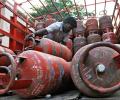
Delhi Police have dismantled an illegal LPG cylinder hoarding and black marketing operation in Bawana, arresting one individual and seizing 75 cylinders.
