The Mathura Shahi Masjid Eidgah Committee has approached the Supreme Court, requesting the court to prevent the central government from filing a response to a petition challenging the Places of Worship Act's constitutional validity. The committee accuses the BJP-led government of intentionally delaying its response. The court had previously issued a notice to the government in March 2021, but the government has yet to submit its reply despite numerous opportunities. The committee argues that the government's delay is intended to obstruct those opposing the challenge to the Places of Worship Act from filing their own responses. The petition also states that the pleas challenging the law's validity are scheduled for hearing on February 17, and closing the government's right to respond would serve justice. The Supreme Court previously issued a ruling in December 2022 that stopped courts from entertaining new lawsuits or issuing interim or final orders regarding the reclaiming of religious places, particularly mosques and dargahs. The ruling halted proceedings in 18 lawsuits filed by Hindu groups seeking surveys to confirm the original religious character of 10 mosques, including the Gyanvapi Masjid in Varanasi, the Shahi Idgah Masjid in Mathura, and the Shahi Jama Masjid in Sambhal. This decision was made in response to six petitions, including one filed by lawyer Ashwini Upadhyay, challenging various provisions of the Places of Worship Act. The 1991 law prohibits the conversion of places of worship and guarantees the preservation of their existing religious character as it stood on August 15, 1947. Notably, the dispute regarding the Ram Janmabhoomi-Babri Masjid in Ayodhya was excluded from this law. There are also several cross-petitions advocating for a strict enforcement of the 1991 law to uphold communal harmony and maintain the current status of mosques that Hindu groups seek to reclaim, claiming they were temples before being destroyed by invaders.

The Supreme Court of India has extended its stay on a court-monitored survey of the Shahi Idgah Mosque complex in Mathura, which is located adjacent to the Krishna Janmabhoomi temple. The court deferred the hearing on a plea against the survey to April 1, while the interim order staying the survey will continue to operate. The Hindu side claims that the mosque complex holds signs of a temple that once existed at the site, while the Muslim side contends that the lawsuits filed by the Hindu litigants violate the Places of Worship (Special Provisions) Act of 1991.
The Supreme Court of India will hear a plea from the mosque management committee challenging an order rejecting its petition in the Krishna Janmabhoomi-Shahi Idgah dispute in Mathura, Uttar Pradesh on January 15. The Allahabad High Court had rejected the mosque committee's plea, stating that the religious character of the Shahi Idgah mosque needed to be determined. The case involves claims that the mosque was built after the demolition of a temple, a claim disputed by the mosque committee. The Supreme Court will now decide on the maintainability of the mosque committee's plea.

'It was a disaster on his part to give an oral remark which allowed ascertainment of the religious character of places of worship.' 'This disrupted the social harmony of the country.'

The apex court rejected an appeal challenging a July 10 decision of the Allahabad high court which had also dismissed the plea finding no error or illegality in the order of a Mathura civil judge who had decided to first hear the issue of maintainability of the suit as raised by management committee of the mosque.
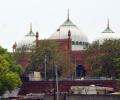
The objections against the suit were raised by the management committee of the mosque and the Uttar Pradesh Sunni Central Waqf Board.
The Hindu litigants claim the mosque holds signs suggesting that it was a temple once.
The petitioner submitted an application in the court of the Civil Judge on Monday seeking permission for 'purification' of the sanctum sanctorum of the Keshav Dev temple, which he claimed was inside the mosque, his counsel said.
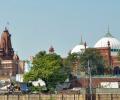
The "compromise" between Sri Krishna Janmasthan Seva Sansthan and Shahi Masjid Idgah made in 1968 was also challenged in the suit, according to lawyers.

The Supreme Court on Friday refused to stay the proceedings before the Allahabad high court on suits related to the Sri Krishna Janambhoomi-Shahi Idgah dispute, saying it will not be fair to interfere with the high court order without hearing both the sides.
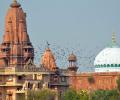
The Supreme Court refused to stay Allahabad high court's December 14 order which allowed the primary survey of the Shahi Idgah complex adjacent to the Shri Krishna Janmabhoomi Temple in Uttar Pradesh's Mathura by a court-monitored three-member team of advocate commissioners.
During the hearing on Tuesday, the bench said it has not received the information from the high court yet.
The Akhil Bharat Hindu Mahasabha's had given a call for reciting Hanuman Chalisa inside the Shahi Masjid Idgah to mark the anniversary of the Babri Mosque demolition.
"Interim orders wherever granted shall continue. Re-list in first half of April, 2024," the bench said in its order and directed the parties to complete the pleadings by then.
The fast-track court of the civil judge (senior division) has posted the matter to April 17 for further hearing.

A bench of Justices Sanjiv Khanna and Dipankar Datta stayed the implementation of the December 14, 2023, order by which it had agreed to the appointment of a court commissioner to oversee the survey of the mosque premises which, the Hindu side claims, hold signs suggesting that it was a temple once. However, the apex court made it clear that proceedings before the high court in the dispute including the maintainability of the suit under Order 7 Rule 11 of the Civil Procedure Code (CPC) will continue.

'The courts should not dishearten the people that might end the hope of last justice'

Four people have been booked for making objectionable and inflammatory posts on social media sites, officials said on Friday.
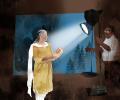
Last pictures have that power to transcend time. And last pictures can, sometimes, capture a lifetime, explains Veenu Sandhu.

Underlining the Bharatiya Janata Party's commitment to cultural development of the country, party president J P Nadda on Monday said that contentious religious matters would be decided by "courts and the Constitution" and the party would implement the decisions in letter and spirit.

The holy month of Ramzan will commence from Friday.
The Akhil Bharatiya Tirath Purohit Mahasabha and the Mathur Chaturved Parishad pleaded to be made respondents in the case. They said the suit for the removal of the mosque should not be allowed as it is detrimental to communal harmony in the country, according to their counsels.
The clergy wants the writer in-exile deported from the country in a week

According to the local Brass Handicrafts Manufacturers Association (BHMA), some 800,000 people are directly employed in Moradabad's massive brass handicrafts and utensils manufacturing industry, which has some 30,000 small and micro-scale units and a total annual turnover of Rs 10,000 crore. The manufacturers are heavily dependent on export markets such as the US, Canada, Australia and the European Union. And exports account for nearly 70 per cent of their revenues. According to industry insiders, since this year's lockdowns, manufacturing has been at 65 per cent of normal levels.

The Supreme Court has directed a series of actions to clean the Taj, including bringing in compressed natural gas (CNG) to replace dirty coal.
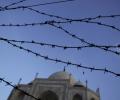
Everyone wants a piece of the Taj Mahal, but do they care about the deteriorating condition of India's best-loved monument
 © 2026 Rediff.com - Investor Information - Advertise with us - Disclaimer - Privacy Policy - Sitemap - Feedback - About us - Terms of use - Grievances