
Over 93,000 individuals in Delhi have participated in the self-enumeration exercise for Census 2027, with North East, South West, and North West Delhi districts leading in registrations. The initiative, part of a broader census effort, allows residents to submit household details online, contributing to the overall data collection process.

Authorities in Delhi have implemented a QR code-based verification system for census enumerators and supervisors to combat rising cyber fraud cases involving impersonation and fake government officials during the Census 2027.

This will be India's 16th Census and the eighth since Independence. For the first time, citizens will also have the option of self-enumeration.

A special dedicated web portal will be launched for self-enumeration during the upcoming Census, which will be available for both phases of the national enumeration exercise, officials said Monday.

Rajasthan Police have issued an advisory warning citizens about potential cyber fraud attempts disguised as part of the ongoing digital census. Scammers may use various methods, including fake calls, messages, and in-person visits, to steal personal and financial information.
Chief Secretary Atal Dulloo announced that the Census 2027 will be a fully digital and paperless exercise, utilising mobile technology, AI, and cloud computing for accuracy and efficiency, marking a shift towards data-driven governance.
India has launched digital tools for its upcoming fully digital Census 2027, including mobile apps and a self-enumeration portal, aiming for efficient and accurate data collection.

The Registrar General and Census Commissioner of India, Mritunjay Kumar Narayan, has reassured the public that individual data collected during the upcoming census will remain confidential and cannot be used for any purpose other than statistical aggregation.

'Once the numbers come out, they fear that the OBCs would start to demand, and articulate what they are lacking, why they are lacking and what should be done to go forward.'

The 16th Census of India in 2026 will treat stable live-in relationships as marriages, according to the self-enumeration portal's FAQ section. The portal provides guidance on various housing and household-related questions for self-enumeration.
Population Foundation of India welcomes the digitisation of the Census but emphasises the need for inclusivity, data security, and addressing the under-reporting of women's contributions.

The Indian government has released the list of questions to be asked during the first phase of the Census 2027, focusing on houselisting and housing enumeration. The survey will cover various aspects of housing conditions, household characteristics, and access to basic amenities.

Odisha and Uttar Pradesh are among the first to roll out the digital exercise.

Nagaland Governor Ajay Kumar Bhalla announced the state government's plans to form an interim council for the Frontier Nagaland Territorial Authority (FNTA) and highlighted key achievements and future priorities across various sectors during the Budget Session.

The Census 2027 will be conducted in two phases, the first between April and September 2026 and the second in February 2027, the Lok Sabha was informed on Tuesday.
According to the earlier schedule, the census would have its reference date as March 1, 2021 and in Jammu and Kashmir, Himachal Pradesh and Uttarakhand, it would have been October 1, 2020.

The Union Cabinet on Friday approved Rs 11,718 crore for conducting the Census of India, 2027, which would include the caste enumeration for the first time.
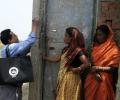
India's decadal census is likely to be further delayed after the budget allocated only Rs 574.80 crore for the exercise, a significant reduction from previous years. The census, originally scheduled for 2021, has been postponed due to the COVID-19 pandemic, and the government has not yet announced a new schedule. The budget allocation suggests that the exercise may not be carried out even after the delay. The upcoming census will be the first digital census, allowing citizens to self-enumerate using a dedicated portal. The exercise will be made compulsory for citizens who wish to self-enumerate, and Aadhaar or mobile numbers will be required. The census will include questions on household demographics, amenities, and economic status.

The census will be carried out with a reference date of October 1, 2026 in snow-bound areas like Ladakh and March 1, 2027 in the rest of the country, the notification said.

The entire census and NPR exercise is likely to cost the government over Rs 12,000 crore, the officials said.

Census exercise with caste enumeration will be carried out with the reference date of October 1, 2026, in snow-bound areas like Ladakh and of March 1, 2027, in the rest of the country, the Home Ministry announced on Wednesday.

The interim budget 2024-24 on Thursday allocated Rs 1,277.80 crore for census, a significant reduction from 2021-22 when Rs 3,768 crore was allocated and an indication that the exercise may not be carried out even after three years of delay.

Inaugurating the 'Janganana Bhawan', the office of the Registrar General and Census Commissioner of India, Shah said census is a process that may form the basis of development agenda.
