In terms of stock selection, India continues to benefit from two phenomena - the big getting bigger and availability of quality stocks in relative abundance compared with its Asian peers.

The S&P BSE Sensex has dipped five per cent, thus far, in CY15.
If the rupee falls further, it would negatively impact the dollar-based returns of foreign investors, and could influence foreign flows into India.

The government said in a court filing it was seeking civil money penalties from S&P and McGraw Hill.
India was already in the midst of a protracted economic slowdown before the virus hit due to a festering crisis among shadow lenders and declining consumer demand and private investment. Service sector activity in India is still effectively on hold.

SBI, Tata Motors, Bharti Airtel, ICICI Bank and Reliance Industries among top gainers.

Global rating agency Standard & Poor's said the government's decision to increase domestic gas prices is likely to benefit two major gas producers Oil and Natural Gas Corp (ONGC) and Reliance Industries Ltd (RIL).

Global ratings agency Standard & Poor's on Thursday pegged India's FY'14 GDP growth at 6.4 per cent, one of the most optimistic estimates among analysts, and said it may upwardly revise outlook on the sovereign rating if the government continues to focus on policy initiatives.

India's macro finances are getting into good shape.

With the Sensex again nearing 28,000 points, investors can make good returns with a one-two year horizon.
Though analysts suggest that there are downside risks to economy, by announcing/advancing general elections, markets would be able to look beyond uncertainty.
The Bombay Stock Exchange's 30-share Sensex closed at 18,401 up 405 points. The National Stock Exchange's 50-share S&P CNX Nifty closed at 5,409 up 124 points.
There is a general meeting of minds among observers on the difficulty of positive factors breaking through.

Skittish investors snapped up gold and other safe-haven assets amid fears of a global economic slowdown

UBS, Credit Suisse see emerging markets doing well next year, but expect India to underperform, given its rich valuations.
The US treasury bond has been perhaps the most resilient feature of the American economy.
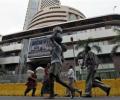
The Bombay Stocks Exchange S&P BSE Sensex plunged by over 750 points, or 4%, its biggest fall in four years, to end at 18,598 on fear that the roll-back of US stimulus could spark selling pressure by the overseas investors in the equity space.
BHEL, YES Bank, RCom, Titan Ind, JP Associates, BF Utilities, Ruchi Soya and Punj Lloyd have tanked more than 10% each on BSE.
While retaining India's sovereign rating at 'BBB-' with a negative outlook, S&P said there is at least a one-in-three likelihood of a downgrade within the next 12 months.
Besides Budget, markets will be driven by global events and the outcome of assembly elections.

India's macroeconomic situation is improving fast and the country's GDP growth will turn positive in the third and fourth quarters of the current financial year, eminent economist Ashima Goyal said on Sunday. Goyal in an interview to PTI said the management of the COVID-19 pandemic and gradual unlocks announced by the government have helped in avoiding multiple COVID-19 peaks. The growth estimates by different agencies are being continuously revised, she said.

The Nifty Options would add to SGX's suite of Asian equity derivatives, which include SGX S&P CNX Nifty futures, the dominant Indian product for international participants.
The country's first Islamic index was launched in 2010, also by the BSE, tracking the 50 largest and most liquid stocks.
The benchmark S&P BSE Sensex fell for the third day and closed 56.57 points lower at 19,748.19, dragged down by metal, realty and bank stocks ahead of the RBI's policy review next week.
Markets ended lower on Thursday following the expiry of July derivative contracts weighed down by profit taking in FMCG shares after recent gains.
Investors might soon get to bet on various versions of the Bombay Stock Exchange's (BSE) benchmark index, the Sensex, and its other key gauges soon.

NSE targeting hundreds of Japanese investors who poured money into India through yen-carry trades.

The record contraction in the growth rate of eight core sectors will have its impact on IIP.

Professional CEOs in the sector draw a much higher remuneration than promoter CEOs, points out report by IiAS.
Sebi will soon put in place new norms for changes in constituents of the key stock market indices.

Do a proper asset allocation and invest through systematic investment plans where one can benefit.
Be careful while investing at the current levels and stay away from stocks of leveraged companies.

The FATF continuing Pakistan in the 'Grey' list means its downgrading by IMF, World Bank, ADB, EU and also a reduction in risk rating by Moody's, S&P and Fitch.

Omkeshwar Singh, head, Rank MF, a mutual fund investment platform, answers your queries.
The outlook cut is based on a weak premise since the economy is expected to rebound this fiscal but a wake-up call was needed.

10 stocks which are most popular with brokerages right now and are expected to deliver maximum upside over the next 12 months.

Hedge funds are famous for their price tag - known as "two and 20" - a fee of two per cent of the assets they manage each year and 20 per cent of all gains

Lack of fuel security is a major constraint to the growth of the generation capacity, and the slow pace of tariff reforms is hindering infrastructure investment at the state-level.

Any market correction, analysts say, would be an attractive entry point for risky assets, which should do well over the medium-to-long term.
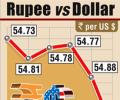
Forex dealers said weakness in local equities and a firm dollar overseas against other currencies also weighed on the rupee.
