
'For 40 years, India valued only technical skills. IITs, coding -- that became everything.' 'Soft skills were sidelined. But those are the skills that will keep you employable now, not technical skills.'
Launching a fresh attack on HDFC Bank MD and CEO Sashidhar Jagdishan, Lilavati Kirtilal Mehta Medical Trust (LKMM Trust) on Monday said the trust or its permanent trustee Prashant Kishor Mehta has no outstanding dues to the private bank. It has never borrowed a single rupee from the bank nor they are connected to the borrowing company (Splendour Gems Ltd) in question whatsoever, LKMM said in a statement.

Congress MLA Nana Patole was suspended from the Maharashtra assembly for a day on Tuesday after he climbed the speaker's podium, demanding action against Bharatiya Janata Party MLA Babanrao Lonikar and Agriculture Minister Manikrao Kokate for allegedly 'insulting' farmers.

Maharashtra Chief Minister Devendra Fadnavis on Wednesday said the incident of Shiv Sena MLA Sanjay Gaikwad slapping an employee of a canteen at the MLAs' hostel in Mumbai sends out a wrong message about all legislators that they indulge in misuse of power.

'The players can criticise my cricket ball. Can I criticise them for the bad shot or the bad ball? Long hop. You know what I mean? You've got to be sensible.'
Former Delhi deputy chief minister Manish Sisodia was on Friday questioned for over three hours by the Anti-Corruption Branch (ACB) in an alleged graft case related to the construction of classrooms in government schools here, officials said.

Valuations at current levels have historically corresponded single-digit returns.
The commerce ministry on Friday held consultations with key stakeholders, including shipping lines, exporters, container firms, and other departments, to assess the impact of the Iran-Israel conflict on India's overseas trade, an official said. The meeting was chaired by Commerce Secretary Sunil Barthwal.
The Pakistan Cricket Board (PCB) has claimed to have earned three billion rupees by hosting the ICC Champions Trophy, exceeding its target of two billion rupees.

It further said that the owners, master and crew of the vessel handled the ship in a negligent manner despite being aware of the dangerous cargo it was carrying.

'Illegal gambling operators are systematically exploiting India's advertising and payment infrastructure, siphoning off crores of rupees from outside the country.'
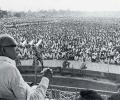
In a little-known episode from the Emergency era, former prime minister Indira Gandhi quietly donated a significant sum of Rs 90,000 for treatment of her fiercest critic, Jayaprakash Narayan, the leader of the nationwide anti-Emergency movement.

So, the next time someone tempts you with a slightly higher FD rate from a lesser-known bank, point them to hybrid funds that can deliver extra returns without the administrative and emotional rollercoaster.

The Pakistan Super League (PSL) next year is set to clash with the high-profile Indian Super League as the Pakistan Cricket Board (PCB) is mulling to hold the event in the same window as the IPL.

rediffGURU Jinal Mehta answers readers' financial planning and health insurance queries

Ask rediffGURU and PF and MF expert Janak Patel your mutual fund and personal finance-related questions.

Kunal Varma, CEO, Freo, explains what Hospicash and Day Care Insurance covers are and how they help manage financial and mental stress.

Pakistan on Tuesday increased its defence budget by 20 per cent, allocating PRs. 2,550 billion ($9 billion) for the fiscal year 2025-26, amid tensions with India.
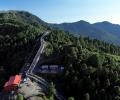
Nestled among 108 scenic hillocks, the 500 metre Mini Great Wall in Shailung, Nepal offers breathtaking views and a peaceful escape at 3,200 metres above sea level.
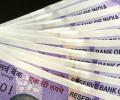
Here are 7 countries where Indian Rupee has a higher value, making them best destinations for Indian travelers looking for a budget-friendly trip

Those who consider the rupee as a proxy for virility have started thumping their chests and dreaming of dethroning the dollar from its coveted position, observes Tamal Bandyopadhyay.

The Reserve Bank of India (RBI) abstained from selling any US dollars throughout February, for the first time in nine months. The decision comes amid increasing pressure on the rupee, as expectations of rate cuts by the US Federal Reserve keep pushing back. The last time the RBI did not sell dollar over a month was in May 2023.

Lacking basic safeguards and regulations, India is fast emerging as a hub for illegal online betting and gambling market, with the top 15 such unauthorised platforms logging an alarming over 5.4 billion visits in FY25, according to a report by public policy think-tank on consumer sovereignty.
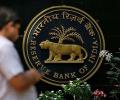
The Reserve Bank of India's (RBI's) $10 billion US dollar-rupee buy-sell swap auction for three years received bids worth $16.23 billion on Friday, reflecting robust demand amid persistent liquidity deficit in the banking system. This was the second swap auction by the central bank after it infused $5 billion via six month-swap on January 31.

'If you don't fulfil whatever they ask, you are in trouble.'

India's bid to host the 2036 Olympics is not merely an attempt to make a statement internationally but also a well thought out plan to create world-class infrastructure, said Minister of State for Sports Raksha Khadse.

Breaking his silence after nine years, Vijay Mallya said he may return to India if assured a fair trial.
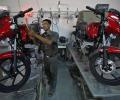
Bajaj Auto - the country's most valuable two-wheeler (2W) company by market capitalisation - met Street expectations in the January-March quarter (Q4) of 2024-25 (FY25) but still ended Friday as the worst performer on the Nifty 50, slipping 3.1 per cent.

In the sharpest jump in over two years, the country's foreign exchange reserves increased by $15.27 billion to $653.97 billion during the week ended March 7, the RBI has said. The overall reserves had dropped by $1.78 billion to $638.7 billion in the previous week.

Foreign investors continue to show confidence in the country's equity market, infusing Rs 14,167 crore so far this month, largely driven by favourable global cues and robust domestic fundamentals. Notably, this inflow has come despite the ongoing military tensions between India and Pakistan.

Nepal takes game to new heights with T20 league

Global fund managers witnessed one of their largest-ever declines in assets under custody (AUC) during the ongoing correction in the Indian markets, as stocks came under pressure from foreign outflows and the weakening rupee.

In Mike Hesson's first assignment as Pakistan's new white-ball head coach, Hasan Ali grabbed a 5-30 and led a new-look Pakistan T20 cricket team to a thumping 37-run win over Bangladesh in the opening game of their three-match series.

After an extremely stable 2023, the Indian rupee started 2024 on a promising note and has turned out to be the best-performing Asian currency so far in January, appreciating 0.1 per cent despite 2 per cent rise in the dollar index. All other Asian currencies depreciated by around 1.4-4 per cent during the month. The local currency regained its ground against the greenback on the back of foreign portfolio inflows, said market participants.

India's forex reserves jumped $10.87 billion to $676.27 billion during the week ended April 4, the Reserve Bank of India (RBI) said on Friday. The overall kitty had jumped $6.6 billion to $665.4 billion in the previous reporting week.

The Enforcement Directorate (ED) on Wednesday searched locations in Karnataka, including educational institutions linked to state Home Minister G Parameshwara, as part of a probe into alleged gold smuggling-linked money laundering case against Kannada actor Ranya Rao and others. The ED sources said an educational trust is suspected to have "diverted" funds and made a payment of Rs 40 lakh towards the credit card bill of Rao, allegedly on the instructions of an influential individual. The sources claimed the trust is linked to Parameshwara and the "influential" individual is a politically exposed person. The searches found there were no supporting vouchers or documentation to "substantiate" this payment (for credit card bill payment), they said.

If you redeem your investments when prices have fallen sharply, you will be selling at low prices and may make a permanent loss. On the other hand, if you remain patient and remain invested, you give your investment the time to recover, says Dwaipayan Bose
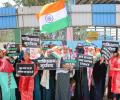
The Indian government has blocked 16 Pakistani YouTube channels for allegedly disseminating provocative and communally sensitive content as well as false and misleading narratives against India, its Army and security agencies. The decision was taken following recommendations from the Ministry of Home Affairs in the wake of the April 22 terror attack at Jammu and Kashmir's Pahalgam in which 26 people, mostly tourists, were killed.

'Expect FPIs to continue selling for several months until the rupee stabilises.'
The recent depreciation of the rupee along with sharp fall in the country's foreign exchange (FX) reserves has sparked a debate whether stability of the exchange rate is necessary and desirable. The rupee was one of the least volatile currencies among peers for almost two years before the current downward pressure started in September after the US Federal Reserve lowered interest rate.
 © 2026 Rediff.com - Advertise with us - Disclaimer - Privacy Policy - Sitemap - Feedback - About us - Terms of use - Grievances