
Since the Pahalgam terrorist attack, China, Pakistan's "ironclad ally", while condemning it, has called for restraint, besides a fair and swift investigation into the attack.

Gearing up for Trump 2.0 era, Chinese President Xi Jinping on Tuesday cautioned there will be no winner in a tariff or tech wars between China and the United States and vowed that Beijing would firmly safeguard its interests.
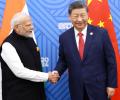
Chinese President Xi Jinping on Wednesday pledged to strengthen the strategic relationships with neighbouring countries by 'appropriately' managing differences and enhancing supply chain ties as China's tariff war with the United States escalated.
India on Wednesday outright rejected China's attempts to rename some places in Arunachal Pradesh, saying such 'preposterous' attempts will not alter the 'undeniable' reality that the state 'was, is, and will' always remain an integral part of India.
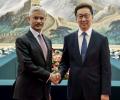
India and China should build on 'good progress' in normalising the bilateral ties to address border-related issues including de-escalation, and it is essential to avoid 'restrictive trade measures and roadblocks', External Affairs Minister S Jaishankar said on Monday during talks with his Chinese counterpart Wang Yi.

Victory Day marks the end of World War II when the Soviet Army defeated Nazi Germany and captured Berlin.
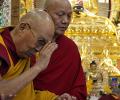
His successor issue is also expected to flare up fresh tensions between Beijing and Washington as China's policy comes in conflict with the US Tibetan Policy and Support Act of 2020, which reaffirmed America's steadfast support for the Dalai Lama and Tibetan Buddhism.
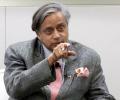
"China is an absolutely impossible factor to ignore in what has been our confrontation with Pakistan," Tharoor said.
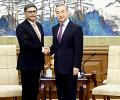
Chinese Foreign Minister Wang Yi said on Friday that India-China relations have made positive strides and achieved a series of encouraging outcomes at all levels after last year's breakthrough ending the over four-year-long military standoff in eastern Ladakh. Wang's remarks came during his annual press conference as he replied to a question on how Beijing views the course of bilateral ties after the two countries ended the prolonged stalemate in the ties.
The Chinese Defence Ministry has stated that the Indian and Chinese militaries are implementing the resolutions to end the standoff in eastern Ladakh in a "compressive and effective manner." This follows the disengagement process completed late last year after a pact for troop withdrawal from Depsang and Demchok, the last two friction points in eastern Ladakh. The disengagement has paved the way for the resumption of various dialogue mechanisms between the two countries, with the aim of normalizing bilateral relations.
United States President-elect Donald Trump has invited Chinese President Xi Jinping to attend his January 20 inauguration, CBS News reported citing sources.

Chinese Ambassador to Pakistan Jiang Zaidong urged that the government should launch a crackdown against all anti-China terrorist groups after two deadly attacks took place in Pakistan within only six months, The Express Tribune reported.

China on Wednesday hit back at United States President Donald Trump's tariffs on Chinese exports with 84 per cent levies on its imports from America, intensifying the trade war between the top two economies of the world.

China has honored an army regiment commander who was injured in the Galwan Valley border clash with Indian soldiers in 2020 as an outstanding member of the national advisory body - Chinese People's Political Consultative Conference (CPPCC). Qi Fabao, who was made the torchbearer for the Winter Olympics in 2022, was among the 33 individuals honored with the 2024 Outstanding Performance Award for CPPCC Members. The incident, which resulted in the deaths of 20 Indian soldiers, led to a freeze in relations between the two countries for over four years. Ties were restored after a meeting between Prime Minister Narendra Modi and President Xi Jinping in October 2023.
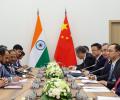
According to informed sources, Doval will arrive in Beijing on Tuesday to attend the crucial talks, which were expected to provide a way forward for the two countries to normalise the relations.

On July 10, 2024, Bangladesh Prime Minister Sheikh Hasina met Chinese President Xi Jinping and her Chinese counterpart Li Qiang in Beijing.

On July 2 or July 6, the Dalai Lama will reveal his mind on his successor. This makes Beijing extremely nervous as the Communist regime fully realises the importance of controlling the next Dalai Lama, points out Claude Arpi.
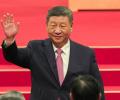
President Xi Jinping has said that no one can ever stop Taiwan's reunification with China as he signed off 2024 amid growing anxieties in the country over the continued slowdown of the economy and the return of Donald Trump, who has threatened to impose punitive tariffs and trade measures against Beijing in his second term.
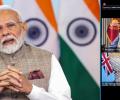
There is a "high possibility" of a meeting between Bangladesh Chief Adviser Muhammad Yunus and Prime Minister Narendra Modi on the sidelines of the BIMSTEC Summit in Bangkok, a senior official said. The meeting comes amid strained ties between the two countries, marked by India's concerns over violence against Hindus and a rise of hardline Islamist forces in Bangladesh. Yunus's recent comments about India's northeastern states being landlocked and Bangladesh being the "only guardian of the ocean" in the region have drawn sharp reactions from Indian politicians. However, a Bangladesh official insists that Yunus's statement was misinterpreted.

China appears determined to upgrade Pakistan's military capabilities, sufficient to ensure local parity with India, alerts former foreign secretary Ambassador Shyam Saran.
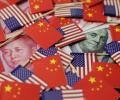
China on Friday said it is assessing whether to start trade talks with the US on tariff reductions following recent approaches by Washington, a move that would possibly ease the tit-for-tit tariff war between the world's two largest economies. "China is making assessments as the United States has recently reached out to convey messages to China through relevant parties many times, expressing hope to engage in talks with Beijing over tariff issues," the Chinese Commerce Ministry said in a statement in Beijing.
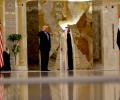
'In the Indian government there are no illusions about the United States reliability or the possibility of having any kind of preferential treatment from Washington when it comes to trade.'

India is preparing to resume the Kailash Mansarovar Yatra, a pilgrimage to Mount Kailash in Tibet, after a three-year hiatus. The decision comes as part of efforts to improve relations between India and China, which have been strained since a military standoff in 2020. The two countries have also agreed in principle to resume flight services between them.

The Ministry of External Affairs (MEA) has announced that India and China have reached an understanding to resume the Kailash Mansarovar Yatra in 2025. While an understanding has been reached, the modalities of the pilgrimage are yet to be firmed up. The Yatra has been suspended since 2020 due to the COVID-19 outbreak and non-renewal of Yatra arrangements by the Chinese side.

China's military has said it is willing to work with India to find a solution to the border issue, while also pushing for sound and stable defence ties. The statement comes after recent meetings between officials from both countries to normalize relations following a prolonged period of tension.

Lee Jae-myung's decisive victory in South Korea's snap presidential election marks a major political shift driven by public backlash against authoritarian, with significant implications for domestic reform and the future of the US-South Korea alliance, observes Dr Rajaram Panda.

'What signal would we be sending -- that we don't stand by our friends?'
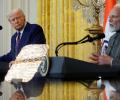
'It showed me that this man had courage. He makes his own decisions, but he also trusted me enough in that moment to walk with me into the crowd,' Modi tells Lex Fridman on his podcast.
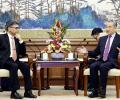
India and China have agreed to rebuild ties and resume people-to-people exchanges, including resuming direct flights and the Kailash Manasarovar Yatra this year. The two countries also discussed the resumption of dialogue mechanisms to address each other's concerns and move relations to a more stable path. The meeting comes after a period of strained relations following the Galwan Valley clashes in 2020.
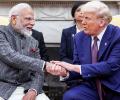
India has firmly rejected any involvement of a third party in its border dispute with China, declining an offer of mediation from US President Donald Trump. Foreign Secretary Vikram Misri emphasized India's commitment to resolving bilateral issues through direct dialogue, stating that New Delhi has always maintained a bilateral approach in dealing with such matters. This stance underscores India's position that the border dispute with China should be addressed through direct negotiations between the two countries.
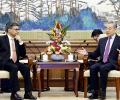
India and China held diplomatic talks in Beijing, focusing on effective border management and the resumption of cross-border cooperation and exchanges, including on trans-border rivers and the Kailash-Mansarovar Yatra. The meeting explored measures and proposals to implement decisions made during the Special Representatives (SR) dialogue in December. Both sides agreed to work together for the next SR meeting in India later this year.

In his meeting with Prime Minister Narendra Modi on the sidelines of the 16th BRICS Summit in the Russian city of Kazan, Xi said that China-India relations are essentially a question of how the two large developing countries and neighbours, each with a 1.4-billion-strong population, treat each other, it added.

"The Modi government's approach to the entire crisis could be described as DDLJ: Deny, Distract, Lie and Justify," Ramesh said.

Prime Minister Narendra Modi and Chinese President Xi Jinping will hold bilateral talks on Wednesday on the margins of the Brazil, Russia, India, China, South Africa (BRICS) summit in Russia, in their first structured meeting since the eastern Ladakh border row erupted in May 2020.
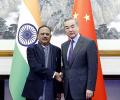
He said that in recent times, based on the important consensus reached by the leaders of the two countries, China and India have maintained close communication on the border situation through diplomatic and military channels and achieved great progress.
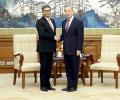
Foreign Secretary Vikram Misri on Monday called on Chinese Foreign Minister Wang Yi and discussed issues of bilateral interest.

Asked about the recent meeting between Modi and Xi, and if Russia had any role in it, Alipov said, "We have not played any role in it, but we are happy that it took place in Kazan... We wholeheartedly welcome the meeting."
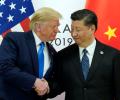
Trump spoke approvingly of his recent telephone conversation with Xi Jinping. This could indicate the possibility of America and China reaching some level of tactical accommodation, which would not be good news for India, points out Ambassador Shyam Saran, a former foreign secretary.
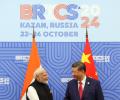
'Don't play the American game... India is too big for a US game.'
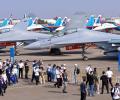
China has announced a 7.2 percent increase in its national defence budget, bringing the total to USD 249 billion for the year. This rise comes amidst China's ongoing efforts to modernize its armed forces, including the development of new warships and fighter jets. The budget increase, exceeding last year's 7.2 percent rise, reflects China's commitment to bolstering its military capabilities. Chinese Premier Li Qiang emphasized the importance of the Communist Party's leadership in guiding the military, with President Xi Jinping at the helm of the Central Military Commission. China's defence spending is now three times that of India's and is viewed by critics as a sign of the country's growing military ambitions.
 © 2026 Rediff.com - Advertise with us - Disclaimer - Privacy Policy - Sitemap - Feedback - About us - Terms of use - Grievances