
'For any government in India the core ideological issue as far as governance is concerned is very straightforward; which is how do you produce growth of 9 to 10 percent and then use the proceeds of that growth to create a more inclusive society. Unfortunately, for the UPA government there are too many internal ideological divisions for them to be able to tell this large story very clearly,' says Pratap Bhanu Mehta, president, Centre for Policy Research.
Who else will take on the might of Microsoft, Google, and Amazon if not the Adanis, Ambanis, Birlas, or Tatas?, asks R Jagannathan.

'It is the first time since Independence that there is a leader who claims to be completely self-made.... Although he is in the BJP, frankly, it is now Modi who is defining the BJP's persona than the BJP defining him as it were.' Pratap Bhanu Mehta, arguably India's finest political thinker, speaks to Rediff.com's Sheela Bhatt in an eloquent interview.

The signatories to a letter sent to NCERT Director Dinesh Saklani include Kanti Prasad Bajpai, a former Jawaharlal Nehru University professor who currently serves as the vice dean at the National University, Singapore, Pratap Bhanu Mehta, a former vice-chancellor of the Ashoka University, Rajeev Bhargava, a former director of CSDS, Niraja Gopal Jayal, a former JNU professor, Nivedita Menon, a JNU professor, Vipul Mudgal, the head of civil society watchdog Common Cause, K C Suri, a former professor at the University of Hyderabad who is now associated with the Gitam University, and Peter Ronald deSouza, a former director of the Indian Institute of Advanced Studies.
'The purposes of our document are three-fold: To lay out the opportunities that India enjoys in the international sphere; to identify the challenges it is likely to confront; and to define the broad approach that India should adopt as it works to enhance its strategic autonomy in global circumstances that are likely to remain volatile and uncertain for some time to come.'
One of the chapters in the document titled 'Asian Theatre' has quite elaborate comments on China, and opines that India's China strategy has to strike a careful balance between cooperation and competition, economic and political interests, bilateral and regional contexts. Rediff.com publishes verbatim a part of the chapter 'Asian Theatre'.
'In the early 2000s, mid-2000s, one of the big changes in India was the sense that India was finally going to make it. With all its flaws and faults, the relatively high growth rate gave you an opportunity to do other things and so forth. Right now, there is nervousness about whether India can actually make it.' The second part of political thinker Pratap Bhanu Mehta's eloquent interview to Rediff.com's Sheela Bhatt.
The global crisis has presented India with a historic opportunity to grow faster, but according to Pratap Bhanu Mehta, head of a leading independent think tank, the country is unable to capitalise on it owing to political and macro-economic mismanagement. In an interview with Santosh Tiwari, Mehta strongly criticises the Congress for ineptitude. Edited excerpts:
In a rare initiative, the Centre for Policy Research will launch an event -- NonAlignment 2.0: A Foreign and Strategic Policy for India in the Twenty First Century on February 28 in New Delhi, which will focus on India's strategic affairs.
'It is very, very mystifying that somebody who is a potential prime minister of this country and someone who is such a prominent leader in such a big political party lacks clear public engagement on the big issues of the day,' says Dr Pratap Bhanu Mehta, president, Centre for Policy Research.
Asked about the reason behind the appointments, Sinha said they will help meet the goal to develop NMML into a centre of research as envisioned by the present government.
Two days after political commentator Pratap Bhanu Mehta resigned as a professor from the Ashoka University, his colleague, economist Arvind Subramanian, put in his papers on Thursday and faculty members wrote to the vice chancellor expressing their deep anguish.
In a strong counter to the narrative building around reasons for the exit of Professor Pratap Bhanu Mehta, Ashoka University Chancellor Rudrangshu Mukherjee has said the institution remains committed to academic freedom and intellectual independence while its Board of Trustee Chairman Ashish Dhawan promised an open line of communication.
The university in Haryana's Sonipat became the centre of a controversy earlier this week, when Mehta, who had resigned as its vice chancellor two years back, chose to step down as professor, saying that the founders made it "abundantly clear" that his association with the institution was a "political liability".
The faculty members have noted that Mehta's resignation is a "matter of great anguish".
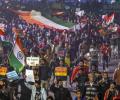
The statement comes in the midst of countrywide protests against the new citizenship law.

The Gujarati's intolerance for diversity can be seen in India's hard nationalism which is showing itself in Kashmir and the North East, observes Aakar Patel.

Free speech is the soul of a great university. By compromising on it, the founders have bartered away its soul, said Rajan.

New body to replace Plan panel might retain 40% of existing staff

The party is studying the governance of different countries to present an alternative model of development for India ahead of the 2014 general election, says Akshat Kaushal

A wise politician would disarm his critics, try to take them along, co-opt them, or, at least, take the criticism in his stride. Developing a thick skin ought to be an essential part of any politician's toolkit, notes Virendra Kapoor.

Scholars and students have cautioned that the proposed divisive and discriminatory changes would harm the country.

There is a need to have a 'CEO for Mumbai' in order to realise the ambition of making it a global financial centre.

The danger to India's democracy is coming from recourse to mobocracy encouraged by the anti-Modi gang, argues Vivek Gumaste.
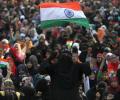
'At a time when the economy is depressed, a pandemic is raging, and the Chinese are making noises on the border, the NRC could be resuscitated.'

'All the benefits of democracy will flow to Kashmir now. This has not happened in the last 70 years.'

The 'bumbling liberal' and the 'neo-fascist' are two sides of the same coin. Neither has place in a moderate India, says Nikhil Inamdar
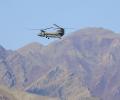
'Our strategy should be to 'hold the line' in the north on the Sino-Indian land frontier, but maintain and, if possible, enlarge India's current edge in the maritime south.'
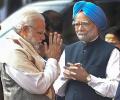
'A false narrative is being created, that Modi is a habitual offender when it comes to lowering the political discourse in the country.' 'Nothing can be farther from the truth,' argues Sudhir Bisht.
These chat show performers contribute to the noise, not clarity, says Mahesh Vijapurkar.
Modi has the ideas for a new, hopeful India, and an idiom in which to sell optimism to voters. But he doesn't yet have the team for it, and soon enough, questions will begin to be asked by an impatient, non-ideological, I-don't-owe-anybody-anything generation of Indian voters, says Shekar Gupta.
'The speeches of Modi in Assam, Bengal, Kerala, Baghpat and the border areas of Bihar, overplaying the themes of terrorism, izzat of mothers and sisters, are to be read carefully to understand that he is trying to keep the fear of Muslims alive in the Hindu masses,' says Apoorvanand.

'Growing up in Karnataka, in middle-class and forward-caste background, Ambedkar did not enter our consciousness at all, I realised.' 'The 'exclusion' of sections of our society was not only physical; it was comprehensive in the sense that all aspects of their lives including the life of an exceptional intellectual and stalwart had been under-understood by people of my class, I thought,' says B S Prakash.

'The Kashmiri wants freedom, the dignity that comes from it and the intellectual versatility that flows from the combination of the two,' says political historian Siddiq Wahid.

'When he first came to office, my belief is that the PM's reading of the landscape was that, with a vanquished Congress and fragmented Opposition, he was looking at least at two terms in office. This reading perhaps allows for a more cautious, gradual approach.' 'It was only a matter of time before the government was forced to come face-to-face with a serious corruption scandal. This is not a commentary on the BJP, but a statement about India's political economy.' 'There is growing concern about the government's commitment to freedom of expression, religious tolerance, and an independent civil society. Thus far, the positive movement on strategic and economic matters has crowded out these concerns, but they are lingering beneath the surface.'
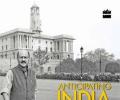
Shekhar Gupta's anthology is a valuable addition to our understanding of the seeming muddle that is India... The experience of reading his columns is more like a chat with a friend in the afterglow of an enjoyable drink, but never frivolous, says Shreekant Sambrani.
 © 2026 Rediff.com - Investor Information - Advertise with us - Disclaimer - Privacy Policy - Sitemap - Feedback - About us - Terms of use - Grievances