
Modi will arrive in France on Thursday evening and straightaway head for talks with Macron, who will also host a working dinner for the visiting leader.

'The lessons learnt from the triple disaster have put Japan's energy future On the right path,' notes Dr Rajaram Panda.

TotalEnergies will acquire 25 per cent shareholding in Adani New Industries Ltd -- the firm that houses Adani Group's new energy business -- for an undisclosed amount, the two firms said in separate statements. "TotalEnergies has entered into an agreement with (Adani Group's flagship) Adani Enterprises Limited (AEL) to acquire a 25 per cent interest in ANIL," the French energy giant said.
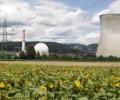
On the eve of his visit to Tokyo, Prime Minister Manmohan Singh has said that he hopes to strengthen strategic and global partnership with Japan and reach an early agreement with regard to civil nuclear energy cooperation.

During the talks with Prime Minister Narendra Modi, French President Francois Hollande reassured reliable, uninterrupted and continued access to nuclear fuel supply throughout the entire lifetime of the plants while acknowledging India's need for the same.

The deal would allow Japan to export nuclear technology to India.

There was no question of India accepting outdated technology under the proposed Indo-US nuclear energy cooperation agreement, Atomic Energy Commission Chairman Anil Kakodkar on Wednesday said.
Ivanov also referred to Russian aid and cooperation in two nuclear plants at Kudankulam in Tamil Nadu.

Singh urged the private sector for more investment in science and technology.

Trying to contain the unjustified, yet growing sudden spurt of apprehensions against nuclear energy production in India, experts from radiation safety, nuclear technology and nuclear medicine explained in Mumbai at a seminar how the nuclear power technology in India and the world is 'mature and safe'.
Describing Indo-Russian ties as "deep-rooted and exemplary", India's top diplomat in Moscow has said the bilateral cooperation in fields of civilian nuclear energy and defence is the key pillar of the strategic partnership between the two countries.
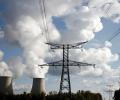
The nation will have nine nuclear reactors by 2024 and a new nuclear project, the first in northern India, will come up 150 kms away from Delhi in Gorakhpur of Haryana, the government informed the Rajya Sabha.

After his wide-ranging talks with Modi on the second and final day of his India visit, Johnson said the new defence and security partnership will enable India to strengthen its domestic defence industry as well as help the two countries protect vital shared interests in the Indo-Pacific.
Experts tell the PM that India's nuclear power plants are designed differently from the ones in Japan, so a similar crisis is unlikely to happen here. Also it seems certain that events in Japan are unlikely to dampen India's nuclear energy plans. Sheela Bhatt reports.
Prime Minister Manmohan Singh arrived in Tokyo on the first leg of his three-nation visit, during which he would hold talks with his Japanese counterpart Naoto Kan on a range of issues, including civil nuclear energy cooperation.

There is enough scope for India and China to cooperate on nuclear energy issues despite the lingering issues which not only includes the Sino-Pakistan nexus, but also the Sino-India border dispute over the LAC, says Debalina Ghoshal.
"In our dialogue with the Pakistani government, we have clearly said we will work with them on civil nuclear energy," Clinton told a group of Pakistani journalists in Islamabad on July 19, according to the transcripts made available by the State Department.

However, a prolonged and intense second wave that curtails oxygen supply to industries for a longer-than-expected period will exacerbate downside risk in affected sectors
China has supported its 'all-weather' ally Pakistan's right to use nuclear energy for "peaceful purposes" to overcome its crippling power shortage, a spokesman of President Asif Ali Zardari said today.

The deal would allow Japan to export nuclear technology to India, making it the first non-NPT signatory to have such a deal with Tokyo. It would also cement the bilateral economic and security ties as the two countries warm up to counter an assertive China.
India will commission its first 500-Mw fast breeder reactor (FBR) for generating commercial nuclear energy by the end of next year. The reactor, when commissioned, will mark the country's entry into the second phase of its three-stage nuclear energy programme.

A playlist of 10 'so bad it's good' songs, our hostile neighbours will regret the day they decided to take panga.

If international crude oil prices zoom past the current level of about $90 per barrel and move towards $100 and beyond, middle-class consumers are not going to keep quiet about their discomfort, points out Arun Balakrishnan, former chairman and managing director, Hindustan Petroleum.

After witnessing cloudy skies this year, the country's renewable energy sector is expected to boom with a likely investment of over $15 billion in 2022 as the government focuses on electric vehicles, green hydrogen, manufacturing of solar equipment as well as achieving the ambitious 175 GW renewable capacity target. India, which has an installed renewable energy generation capacity of a little over 150 GW, aims to reach 175 GW in 2022. Out of the total mix, 100 GW would be from solar, 60 GW from wind, 10 GW from bio-power and 5 GW from small hydro power projects.
With the government emerging victorious in the confidence motion, the country would be signing the civilian nuclear deal with the US which has the potential to significantly boost India's nuclear energy production, says a report by Moody's economy.com.
US Ambassador to Pakistan Anne W Patterson has said it was not possible for the United States to extend any cooperation to the latter in nuclear energy sector as the issue involved a lot of legislation.

Modi said dithering to take action against terrorists and their supporters will be like encouraging terrorism.

In an apparent dissatisfaction over Pakistan's opposition to India becoming a member of the Nuclear Suppliers Group, the United States has said it is not about an arms race, but about civilian use of nuclear energy.

During their talks, the two prime ministers agreed on expanding bilateral cooperation in civilian uses of nuclear energy, an issue which has figured during high-level exchanges between the two Asian giants.
Indian companies led by Anil Ambani's Reliance Power (RPower), Nuclear Power Corporation of India (NPCIL) and Bharat Heavy Electricals (BHEL) plan to invest over Rs 100,000 crore in the next five years to expand their presence in the nuclear energy sector after the country signs the nuclear agreement with the US, paving the way for import of fuel and transfer of technology.
Earlier, China had stated that the N-deal 'smacked of double standards'.
Amid increasing uncertainty over the India-United States civilian nuclear agreement, a senior International Atomic Energy Agency official has said that nuclear energy is the way forward for the booming economies of India and China. The growth of nuclear power in China and India over the next two decades will outpace other countries, said Yury Sokolov, deputy director general and head of the Department of Nuclear Energy, IAEA.
Some Chinese scholars wondered why India is not taking any initiative to join NPT and which will open up more options for the nation on the nuclear front.

Putin's visit comes at a time when Russia's economy is stalling as oil prices tumble
The agreements included a declaration on nuclear energy and a pact on defence cooperation.
On the Indo-Pak peace process, Chatterjee said, "It is driven by the people's urge for peace and normalcy. I am confident that it will succeed."
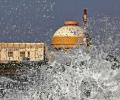
This would make India the world's second-biggest nuclear energy market after China
 © 2026 Rediff.com - Investor Information - Advertise with us - Disclaimer - Privacy Policy - Sitemap - Feedback - About us - Terms of use - Grievances