
Sheikh Hasina, Bangladesh's deposed prime minister, has accused the interim government led by Muhammad Yunus of committing atrocities against non-Muslims and interfering with religious freedom.

The Supreme Court has announced it will begin final hearings on May 5 regarding the constitutional validity of the Citizenship (Amendment) Act, 2019 (CAA), with over 200 petitions challenging the law.

BJP and Congress workers clashed in Pune following controversial remarks equating Chhatrapati Shivaji Maharaj with Tipu Sultan, leading to injuries and police intervention.

A new study alleges that Muslim voters are disproportionately represented in Logical Discrepancy (LD) lists during Kolkata's voter roll revision, raising concerns about potential bias in the electoral process.
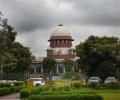
The Supreme Court denied bail to activists Umar Khalid and Sharjeel Imam in the 2020 Delhi riots conspiracy case, citing prosecution material suggesting their involvement in planning and strategic direction. The court granted bail to other activists but emphasized the seriousness of the allegations against Khalid and Imam.

The real surprise in these results came from Asaduddin Owaisi's AIMIM. Of the 29 Muslim candidates who got elected to the 227-strong BMC, the Congress and the AIMIM between them bagged 22.

According to the proceedings of the case, the complainant has alleged that the "Indian Railways serves only halal-processed meat in non-vegetarian meals, which creates unfair discrimination and causes human-rights violations".
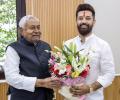
'The possibility of Nitish Babu continuing at least for some time is very much there, but don't rule out the artistic possibility of a leadership change executed very elegantly.'

'Only because of the absence of a dedication record in writing, how can such properties be treated as located on misappropriated government land?'

The mass of voters chose Kejriwal and Mamdani for the simple reason that they were sick and tired of the stale promises and repetitive speeches belted out for long by mainstream political personalities, notes M R Narayan Swamy.

The Supreme Court has put on hold several key provisions of the Waqf (Amendment) Act, 2025, including the clause that only those practicing Islam for the last five years can dedicate a property as Waqf. The court also addressed the powers of collectors and non-Muslim participation in Waqf Boards.

'We are not all Abduls, you know. Our community has any number of retired civil and defence officers, doctors, engineers, lawyers.'

It provides for a broad-based composition of the Central Waqf Council and the State Waqf Boards and ensures the representation of Muslim women and non-Muslims in such bodies.

Two Union Ministers visited the family of a 23-year-old woman in Kothamangalam who allegedly took her own life due to harassment by her lover. The family is demanding an NIA probe into the incident, alleging forced religious conversion.

The book, to be introduced in schools from the 2025-2026 academic year, marks a shift in tone in its portrayal of the Mughal emperors, offering detailed accounts of conquest, religious decisions, cultural contributions, and brutality.

The Supreme Court expressed its disapproval of an analogy used by the Centre in support of the inclusion of non-Muslims in Waqf boards, stating that such logic would disqualify a bench of Hindu judges from hearing matters related to Waqf. The CJI questioned the Centre's stance on the provisions of the Waqf (Amendment) Act, 2025, which allows non-Muslim members in the Central Waqf Council and state waqf boards. The Solicitor General defended the provisions, emphasizing that the non-Muslim inclusion is limited and does not impact the Muslim composition of these bodies. However, the CJI asserted that judges shed their religious affiliations while serving on the bench and maintained their secularity in their judicial capacity.
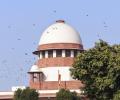
The Indian government defended the Waqf (Amendment) Act, 2025 in the Supreme Court, arguing that waqf, while an Islamic concept, is not an essential part of Islam. Solicitor General Tushar Mehta stated that waqf is essentially charity, which is recognized across religions, and cannot be considered a fundamental tenet of any faith. He also argued that the amended law addresses secular aspects of waqf and activities unrelated to Islam, and that "waqf by user" does not grant ownership of public land. Mehta highlighted the extensive consultations involved in the bill's creation, including feedback from various stakeholders. The hearing will continue on Thursday.

Underscoring the 'presumption of constitutionality in favour of law', the Supreme Court on Tuesday said petitioners challenging the waqf law needed a 'strong and glaring' case for interim relief.

The Supreme Court of India began hearing a batch of petitions challenging the constitutional validity of the Waqf (Amendment) Act, 2025. The bench, led by Chief Justice Sanjiv Khanna, asked both sides to address whether the court should entertain the petitions or relegate them to the high court. The hearing is underway with senior advocate Kapil Sibal arguing for the petitioners. The act, which was passed by Parliament following heated debates, has been challenged by various parties including AIMIM leader Asaduddin Owaisi, All India Muslim Personal Law Board (AIMPLB), and Jamiat Ulama-i-Hind.

Prominent Muslim organisation Jamiat Ulema-e-Hind on Tuesday backed the Andhra Pradesh waqf board's stance describing the Ahmaddiya community as non-Muslims, claiming that this is the "unanimous position" of all Muslims.
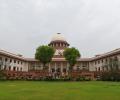
The Indian government has defended the Waqf (Amendment) Act, 2025 in the Supreme Court, arguing that there cannot be a blanket stay on the law as there is a presumption of its constitutionality. The Centre countered the pleas challenging the law's validity, asserting that the amendments were undertaken after a comprehensive study by a parliamentary panel. The government also highlighted the "reported misuse" of earlier provisions and the increase in waqf land, claiming that over 20 lakh hectares were added after 2013.

Puzzled about the Waqf Bill? Syed Firdaus Ashraf explains how the amended Waqf law will plug loopholes in the existing legislation.

The Supreme Court of India has reserved its interim orders on three key issues related to the Waqf (Amendment) Act, 2025, including the power to denotify waqf properties, the composition of waqf boards, and the provision regarding government land. The court heard arguments from both the petitioners, who challenged the validity of the amended law, and the Centre, which defended the Act as a secular concept. The petitioners sought interim orders to prevent the implementation of certain provisions while the court considers the legal challenges.
The Supreme Court of India has sought responses from the Centre and others on a petition challenging the constitutional validity of certain provisions of the Waqf Act, 1995. The petition argues that the Act gives undue favor to waqf properties and deprives non-Muslims of their property rights. The court has tagged the petition with pending petitions that raise similar issues.
The matter would be heard by Chief Justice B R Gavai and Justice Augustine George Masih.

The bill aims to include all the Muslims sects in the Waqf board, Rijiju said.
The Centre on Thursday assured the Supreme Court that it will neither denotify Waqf properties, including "Waqf by user", nor make any appointments to the central Waqf council and boards till May 5.
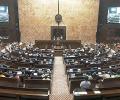
The Waqf (Amendment) Bill, 2025 was passed in the Lok Sabha early Thursday, with 288 members supporting it and 232 against it.
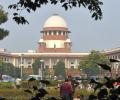
The Supreme Court on Monday said the pleas challenging the Waqf (Amendment) Act's constitutional validity will now be taken up by a bench headed by Chief Justice of India-designate Justice B R Gavai on May 15 as the incumbent CJI will be demitting office on May 13.

As soon as one of the pleas came up for hearing on Friday, Solicitor General Tushar Mehta, appearing for the Centre, objected and said there can't be an "endless" filing of pleas challenging the Act.
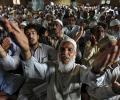
The All India Muslim Personal Law Board (AIMPLB) has announced its intention to challenge the Waqf (Amendment) Bill in court, labeling it a "black law" that threatens the community's rights. The AIMPLB, a major organization representing Muslims in India, asserts that the Bill, if passed, would lead to the seizure of Muslim properties and undermine the autonomy of Waqf Boards. The organization plans to launch nationwide protests against the Bill, echoing the farmers' agitation, and has urged all citizens to resist the legislation. The Bill has been met with criticism from various quarters, including opposition parties, who claim that the Centre is rushing it through Parliament without adequately addressing concerns raised by the Joint Parliamentary Committee (JPC).

'Please don't politicise the incident or play with our emotions. We were there. We know what the terrorists said. We have already shared their statements during the attack'

'The terrorists included underage boys around 15 years old. There were at least four of them. They were taking selfies during the attack and had cameras mounted on their heads'

Congress leader Sonia Gandhi's son-in-law Robert Vadra has triggered a row with his comments suggesting that non-Muslims were attacked in Pahalgam because terrorists feel Muslims are being "mistreated" in the country. The BJP has accused him of using the language of terrorists and demanded an apology. Vadra condemned the Pahalgam terrorist attack but suggested that communal issues and a feeling of vulnerability among minorities are contributing to the violence. He said it is time to separate politics and religion and called for introspection by political parties. Vadra's remarks have been met with strong condemnation from the BJP, which accused him of playing politics on the issue and demanded a clarification from the Congress party. The BJP has also criticized Vadra for justifying the actions of terrorists.

The Pahalgam massacre highlights the evolution of terrorism into a multi-domain challenge. India's response must similarly evolve -- from tactical retaliation to comprehensive strategic deterrence. To establish a credible and sustained deterrent, India must also carry out continuous kinetic operations, both overt and covert, suggest Sakshit Raina and Rahul Mishra. To establish a credible and sustained deterrent, India must also carry out continuous kinetic operations, both overt and covert, suggest Sakshit Raina & Rahul Mishra.
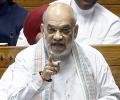
The Lok Sabha passed the Waqf (Amendment) Bill, 2025, with the ruling NDA defending it as beneficial for minorities while the opposition called it "anti-Muslim". All amendments moved by the opposition were rejected and the bill was passed with 288 votes in favor and 232 against. Union Minorities Affairs Minister Kiren Rijiju asserted that India is the safest place in the world for minorities, refuting claims of their insecurity.

AIMIM chief Asaduddin Owaisi slammed Pakistani politician Bilawal Bhutto-Zardari for his "blood would flow in rivers" remark and called former cricketer Shahid Afridi a "joker" for his comment on the Pahalgam terror attack. Owaisi also supported India's decision to suspend the Indus Waters Treaty and called for Pakistan to be placed on the FATF grey list. He also advocated for cyber attacks against Pakistan.
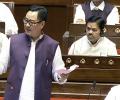
'It is not as if Hindus are not being touched at all, and only Muslims are.'
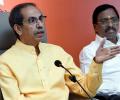
Shiv Sena-UBT chief Uddhav Thackeray has vowed to oppose the Maharashtra government's decision to make Hindi a mandatory third language for students of Classes 1 to 5, stating that his party will not allow it. Thackeray, addressing an event of the Bharatiya Kamgar Sena, the workers' wing of the Shiv Sena (UBT), said his party has no aversion to the Hindi language but questioned the need to force it upon students. He also criticized the ruling BJP's approach, alleging their aim is to keep people under pressure and prevent unity. He accused the current government of working against the interests of Marathi and Maharashtra, and slammed Deputy Chief Minister Eknath Shinde for his alleged subservience to those he believes are harming the state's interests. Thackeray further criticized the Waqf Amendment Act 2025, arguing against the appointment of non-Muslims on the Waqf Board and questioning the government's intentions in appointing non-Hindus to Hindu religious organizations. He also claimed that his government was overthrown because he had stalled the implementation of labor codes in the state. Thackeray concluded his speech by urging party members to prioritize the hiring of Bharatiya Kamgar Sena union members in workplaces where the union has a presence.

India is at war with terrorists and will bring justice to victims of the Pahalgam attack by holding the perpetrators accountable, Indian Ambassador to the US Vinay Kwatra has said. He underscored that India launched 'Operation Sindoor' on May 7, striking terror factories at nine locations in Pakistan and Pakistan-occupied Kashmir in retaliation for the Pahalgam terror attack that killed 26 civilians. Kwatra also criticized Pakistan for its continued support of terrorism and said that the world should be concerned about this.
 © 2026 Rediff.com - Investor Information - Advertise with us - Disclaimer - Privacy Policy - Sitemap - Feedback - About us - Terms of use - Grievances