
Former Union Law Minister Ashwani Kumar has argued for replacing the existing collegium system for judicial appointments, asserting that public sentiment leans toward an alternative mechanism, potentially resembling the National Judicial Appointments Commission (NJAC). He believes that the government has the authority to propose a revised constitutional amendment for judicial appointments that would withstand judicial scrutiny. Kumar also urged the Supreme Court to establish a robust internal process to address concerns within the judiciary, including allegations against judges.
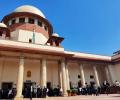
The NJAC Act, which sought to overturn the collegium system of appointing Supreme Court and high court judges, was struck down by the top court in 2015.

'Presumption of innocence must guide all formal actions, but transparency must not be mistaken for pre-judgment.' 'The cruel irony, however, is that Justice Varma is a fine judge who enjoys a reputation for writing well-reasoned judgments.'

Rajya Sabha chairperson Jagdeep Dhankhar in his maiden speech in the House on Wednesday criticised the judiciary for scrapping the NJAC bill, terming it as an instance of "severe compromise of parliamentary sovereignty", and said the government's three organs should respect the "Lakshman Rekha".
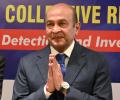
The Supreme Court collegium has confirmed the transfer of Delhi High Court Justice Yashwant Varma to his parent Allahabad High Court. This decision comes after an inquiry was initiated against Justice Varma regarding the alleged discovery of a large amount of cash at his official residence. The transfer recommendation was made public in a resolution uploaded on the Supreme Court's website. The alleged cash discovery occurred following a fire at Varma's residence in Delhi on March 14, 2025. The apex court collegium, headed by Chief Justice Sanjiv Khanna, has also constituted a three-member inquiry committee to further investigate the matter.

The Supreme Court will on Monday resume hearing arguments on the constitutional validity of the National Judicial Appointment Commission Act, notwithstanding the ongoing summer vacation.
Following objection from petitioners who claimed conflict of interest.

In a new twist, Chief Justice of India H L Dattu has refused to participate in a three-member panel for selecting two eminent persons in the six-member National Judicial Appointments Commission on whose validity a constitution bench began hearings on Monday.

The Supreme Court said on Monday it will have to constitute a bench to hear a plea against the collegium system of appointment of judges to the apex court and high courts.
The Supreme Court on Tuesday refused to accept Centre's preliminary plea that petitions challenging the new law on appointment of judges in higher judiciary.
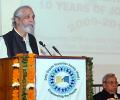
'I have repeatedly been saying that the collegium system is the best available method of appointment of judges, but it needs some changes. This needs discussion. One important change is that the opacity of the government has to go. The government is more opaque than the collegium'

Expressing "surprise" over the Supreme Court verdict striking down the National Judicial Appointments Commission Act, Union Law Minister D V Sadananda Gowda said.
The SC on Wednesday restrained all high courts from entertaining any petition challenging validity of NJAC act meant to replace the two-decade-old collegium system.

"When the matter reaches the SC collegium, there is a fully perfect situation, whether the name be accepted or not to be accepted. It's not as if it is a whimsical exercise taken by someone. It's a fool proof arrangement," he said.

The finance minister said he said, "The judgement has upheld the primacy of one basic structure -- independence of judiciary -- but diminished five other basic structures of the Constitution, namely, Parliamentary democracy, an elected government, the Council of Ministers, an elected prime minister and the elected leader of the opposition."

Justice Chandrachud also dealt with questions about criticism by eminent lawyers on the allocation of cases to particular judges and 'bench hunting', and said the allocation of cases is not "lawyer-driven" and vowed to maintain the credibility of the institution of the Supreme Court.

Parliamentary sovereignty cannot be permitted to be diluted or compromised by the executive or the judiciary, he said in his strongest remarks yet against alleged judicial interference in the working of Parliament.
Govt returns 20 names to SC collegium to reconsider
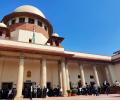
With the appointment of the five judges, the total number of judges in the apex court has risen to 32, two short of the full strength.

'When two organs of our Constitution, which are supposed to be the strongest pillars of Indian democracy, start mistrusting each other, then what is left of the country? What is left of democracy?'

'He was the best court craftsman that I have ever seen who could modulate his arguments in accordance with the judge and the mood.'
Away from the courtroom and legal circles, Nariman was a familiar figure for residents of Hauz Khas who would see him walk regularly, even in the cold winter months of December and January.

The appointments to the Supreme Court and the high courts cannot be speeded up unless both the Judiciary and the Executive agree to a new mechanism which affords both near-parity in decision-making, argues Virendra Kapoor.
I would say, unhappiness of the Government of the fact that NJAC does not pass the muster, Justice Kaul observed.

The most important lesson is that you have to build your political proposition, and sell it yourself. You can't leave it to the courts, media, NGOs and civil society and expect them to play the role of the Opposition. That's precisely what Mr Modi's challengers have been doing and we know the results, notes Shekhar Gupta.

'Is the idea of a committed judiciary once again being floated, though surreptitiously, unlike in the past when it was direct?'

'The (Collegium system of appointing judges) is absolutely whimsical.'
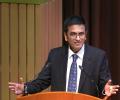
Chief Justice of India DY Chandrachud on Tuesday remarked that once judges demit office whatever they say is just opinion and is not binding, after former CJI Ranjan Gogoi's comments that the basic structure doctrine was debatable was flagged in the Supreme Court.
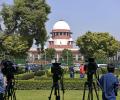
The apex court observed that any law declared by it is "binding" on all stakeholders and the collegium system must be followed.

Justice Sodhi said the right to frame laws lies with Parliament.
The National Judicial Commission Bill, 2022, was introduced after the majority of voice votes were in its favour.

In a recent report, the Department-related Standing Committee on Law and Justice and Personnel said it expects the government and the judiciary to finalise the revised MoP, 'which is more efficient and transparent', in terms of a Supreme Court observation.
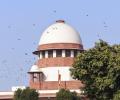
Law Minister Kiren Rijiju tweeted to announce the appointment of Justice Pankaj Mithal, Chief Justice, Rajasthan High Court; Justice Sanjay Karol, Chief Justice, Patna High Court; Justice P V Sanjay Kumar, Chief Justice, Manipur High Court; Justice Ahsanuddin Amanullah of Patna High Court; and Justice Manoj Misra of Allahabad High Court as apex court judges.
The Congress' attack comes after Law Minister Rijiju wrote to Chief Justice of India D Y Chandrachud suggesting the inclusion of representatives from the Union and state governments in the Supreme Court and high court collegiums.

Sodhi told the news channel that Parliament makes the law and the courts have the power of judicial review over it and added it was not right to make his opinion "political".

What is the independence of the judiciary if independent and fearless judges are not being appointed, SC judge Rohinton Fali Nariman said.
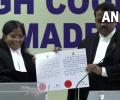
a special bench comprising Justices Sanjiv Khanna and B R Gavai said they were 'not entertaining the writ petition' that sought to restrain Gowri from taking oath 'in view of the grave threat to the independence of the judiciary'.

The remarks by the CJI came against the backdrop of the recent remarks by Vice President Jagdeep Dhankhar who questioned the landmark 1973 Kesavananda Bharati case verdict that gave the basic structure doctrine.
The apex court, which quashed the NJAC Act in an unanimous verdict, also declared as unconstitutional the 99th amendment to the Constitution to bring in the Act to replace the collegium system.

The Supreme Court on Friday issued a show cause notice to advocate M L Sharma for making "irresponsible" and "scandalous" allegations in his PIL challenging the new law on appointment of judges for higher judiciary, saying "this is not a political platform".
 © 2026 Rediff.com - Investor Information - Advertise with us - Disclaimer - Privacy Policy - Sitemap - Feedback - About us - Terms of use - Grievances