
Hailing the achievement of Indian Space Research Organisation scientists, Kalam told media-persons in Chandigarh that "they (ISRO scientists) have two major characteristics that is excellence in technology and creative leadership."
"The launch of Chandrayaan 2 will be in 2014. We are working towards it. It would be on a GSLV, after we launch two GSLVs within an interval of six months," ISRO chief K Radhakrishnan told reporters here soon after the launch of RISAT-1.
The payloads to be carried by India's second unmanned moon mission Chandrayaan-2 targeted for launch in 2013 were announced on Monday and there will be seven onboard instruments for a range of lunar experiments.
The National Aeronautics and Space Agency on Thursday revealed that India's maiden lunar mission Chandrayaan-I spacecraft had traced water molecules on the lunar surface of the moon.

China is all set to send on Thursday the first three crew members to its under-construction space station which is expected to be Beijing's eye in the sky and will rival the ageing International Space Station (ISS).
K Radhakrishnan, chairman of the Indian Space Research Organisation, has said that India is preparing to launch its second moon mission Chandrayaan-II by 2013. "The Chandrayaan-II we are planning to have in the year 2013. By that time, we should have our GSLV (Geosynchronous Satellite Launch Vehicle) flying with the Indigenous Cryogenic Engine Stage. That is the target with which we are working," said Radhakrishnan.
The arrest of Stewart David Nozette, a senior NASA scientist who played a key role in India's Chandrayaan-1, has shocked space scientists in both India and the United States.Nozette, who played a key role in Chandrayaan finding evidence of water on the moon, was arrested by the FBI on charges of spying for Israel. No important information regarding India's space research could have been leaked by Nozette, since he didn't have access to such data, said ISRO officials.
The Indian Space Research Organisation is trying to track down Chandrayaan-1 with which it lost radio links on Saturday.
The Indian Space Research Organisation has declared that Chandrayaan-1, India's first moon mission is over.
In an impressive ceremony at the White House, commemorating the 40 years of the Moon mission, Obama honoured Apollo 11 Mission Commander Neil Armstrong, Command Module Pilot Michael Collins and Lunar Module Pilot Edwin 'Buzz' Aldrin and hailed them as 'three iconic figures'.
India's first unmanned spacecraft Chandrayaan-1 entered the lunar orbit on Saturday after Indian Space Research Organisation scientists successfully carried out a highly complex and tricky manoeuvre crossing another historic milestone in the country's space programme.
The American agency said the data from the two instruments Mineralogy Mapper and Miniature Synthetic Aperture Radar (Mini-SAR) will contribute to its understanding of the lunar environment and are part of its implementation of its space exploration policy which calls for robotic and human missions to the moon.
India is set to launch in a month its powerful rocket with a homemade cryogenic engine to propel a satellite into a geosynchronous orbit and become only the sixth nation to develop this complex engine.The much awaited launch has been billed as a landmark event for the country's space programme after its maiden unmanned moon mission Chandrayaan-I in 2008.India had been using Russia-made cryogenic engines so far for satellite launchings.
The decision to provide Z grade security was taken by the Karnataka government following specific threats to ISRO scientists by the Lashkar-e-Tayiba and Dawaood Ibrahim.

The successful launch of seven satellites on Wednesday has placed India among the best in the field of space research. And, behind the success story of the launch is a team that has been silently working for five long years.

The Moon Mineralogy Mapper or M3 has confirmed existence of water on moon by analysing the data collected from Chandrayaan-I.
India's maiden moon mission Chandrayaan-1 has captured a halo around the site where US spacecraft Apollo-15 had landed on the lunar surface nearly four decades ago.
Moon Mineralogy Mapper (M3) instrument of National Aeronautics and Space Administration (NASA) has beamed back images of the Orientale Basin on the western limb of the moon. An analysis of the images indicates abundance of iron-bearing minerals such as pyroxene, said Carle Pieters, a senior scientist of US-based Brown University and principal investigator for the M3 experiment.
The Bharatiya Janaat Party's 'lotus' bloomed for the first time in south India in 2008 but the saffron party had little time to celebrate as Karnataka was rocked by serial bomb blasts in capital Bangalore and attacks on churches that drew flak in the country and abroad.
Stanishev's engagements this week include a visit to the campus of Infosys Technologies Limited.

The polar satellite launch vehicle-C42 launch vehicle carrying the two satellites blasted off from the first launchpad at the Satish Dhawan Space Centre at 10.08 pm.

He said the ISRO scientists have a very strong spirit of working and will not rest till the objective is met.
With India's maiden Moon Mission making a path-breaking discovery on water presence on the lunar surface, the objectives of Chandrayaan-II will be modified for further probes in that aspect, ISRO chairman Dr G Madhavan Nair has said
In a landmark discovery, India's maiden moon mission Chandrayaan-I has found evidence of water on the lunar surface, a finding that could trigger a serious hunt for life in outer space.

This sadly is expected to be the future of sex!

A lunar orbiter has spied spacecraft and astronaut tracks on the Moon left behind almost 40 years ago.
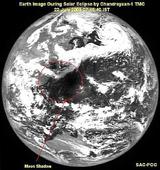
The images were captured by the Terrain-Mapping Camera (TMC) on board the 514-kg spacecraft, which is orbiting at 200 km above the lunar surface.
The Indian Space Research Organisation is gearing up to turn on several probes, a day after the box carrying the Moon Impact Probe, armed with the tricolour, crash-landed on the lunar surface to mark India's presence on the moon.Scientists at ISRO told rediff.com that the groundwork to detach eight other payloads from Chandrayaan-1, in order to conduct further studies on the moon, was underway.
During this manoeuvre, Chandrayaan-1 entered a much higher elliptical orbit around the Earth. The apogee (farthest point to Earth) of this orbit lies at 1,64,600 km while the perigee (nearest point to Earth) is at 348 km. In this orbit, Chandrayaan-1 takes about 73 hours to go round the Earth once.
Click here to watch the live broadcast of the historic launch!
The spacecraft structure for the mission has arrived at the ISRO satellite centre from Hindustan Aeronauticals Limited and integration work has begun, S Krishnamurthy, director, Publications and Public Relations, told PTI from Bangalore.
Former President A P J Abdul Kalam lauded ISRO scientists for successfully launching the PSLV-C9 to put 10 satellites in orbit. "Though I have envisioned India to become a superpower by 2020, the attitude and the confidence of the youth, to conquer everything in the right spirit, would make the country a global leader and superpower within five years," Kalam said.

Scientists also expressed the hope that any technical problem will be sorted out by ISRO, and the mission will be launched successfully.
"In situ chemical analysis and resource exploration is the main objective of Chandrayaan-II," said Mylaswamy Annadurai, Project Director of Chandrayaan-I. Annadurai visited Russia late last month to hold initial technical discussions on Chandrayaan-II, which is expected to be a much shorter mission than Chandrayaan-I, scheduled for launch on April 9, 2008.
Even as the rain kept the country on tenterhooks with regard to the launch of the Chandrayaan, good news has come from the Met department which says that the weather may not play spoilsport after all.
The nine-second de-orbiting or retro-orbiting manoeuvre was executed at 3.42 am using the onboard propulsion system.
In the year gone by, Indian Space Research Organisation achieved self-reliance in launch vehicle technology with the successful ground testing of the Cryogenic Upper Stage, a key component in putting heavier payloads in orbit.
ISRO chairman G Madhavan Nair said Chandrayaan-2, to be undertaken by 2010, will have a proper lander, which would land on the lunar surface and try to explore the surface in far more detail.
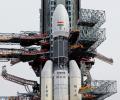
'It is time we Indians learnt to believe in ourselves, and stopped questioning our own capabilities every time a space launch is not a glorious success,' says M D Riti.

The PM asserted that 'we know how to take challenges head-on'.
 © 2026 Rediff.com - Advertise with us - Disclaimer - Privacy Policy - Sitemap - Feedback - About us - Terms of use - Grievances