
Pradyumna Nadakaduty didn't even know he was getting into social impact work when he applied for a job at Acumen Fund. Then something wonderful happened.

The Kashmir-based PDP's linkage with the BJP could even be a turning point, provided it is safeguarded against real possibility of miscarriage. So-called fringe elements on either side, more so in the Saffron parivar, can easily upset Modi-Mufti applecart. They have only to drag contentious issues into limelight to do that, says Mohammad Sayeed Malik.

'When you start delving deeper into these disappearances, you have to face the question: Was it a policy at the State level?' 'It surely couldn't have been random officers acting on their own.' 'Was it planned? What does it mean if the State allows its police to become lawless and act with impunity?' 'Perhaps the NHRC, for the 21 years that it has been seized of the matter, avoided these questions.'

The FIR against the former Delhi Law Minister was registered at the Dwarka North police station following a complaint by his wife Dipika Mitra.

Patrick French, who profiled Nupur and Rajesh Talwar and the case against them in his book India, A Portrait, speaks to Rediff.com about their acquittal.

Memon, 53, was found guilty of conspiracy in 2007 for the serial blasts that killed over 250 people.
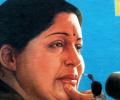
The clue to the what lies ahead for Tamil Nadu Chief Minister J Jayalalithaa, following the Karnataka government appealing in the Supreme Court her acquittal in a disproportionate assets case, may lie in a 2001 court case, writes R Ramasubramanian.

The Union Health Ministry, which has drawn new guidelines for treating rape victims, has asked all hospitals to set up a designated room for forensic and medical examination of victims besides outlawing the two-finger test performed on them, dubbing it as unscientific.

'Can we forgive the pathologist who wrongly labelled a healthy person as a diabetic patient for receiving the favour of the referring physician and possibly for a few thousand rupees?' 'The delinquent homeopath who caused a cataract in a child by giving terribly wrong drug must go to jail.' 'How can we permit a gynaecologist to practice her/his specialty if s/he tinkers with the faith of the patient in an abhorrent way?' 'Paying money does not guarantee good healthcare. The private healthcare system largely treats patients as revenue generators,' crusading doctor Dr Arun Gadre tells Dr K S Parthasarathy.

Congress leaders led by Sonia Gandhi marched from the Congress headquarter in New Delhi to the residence of Manmohan Singh to express solidarity with the former prime minister, who has been summoned as accused by a court in a coal scam case.
Majlis-e-Ittehadul Muslimeen, a strong political stakeholder in Hyderabad, has expressed apprehensions that the central government was contemplating giving the city the status of an Union Territory while creating Telangana state and warned that the party will fight tooth and nail against any such move.
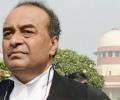
'Serving as the AG is one way of giving back to society or to the profession from which you have earned your name, fame, money and reputation. A lawyer practises for only about 50 years. I have already put in 35 years. If I put in 40 or 50 years, out of which if I take five or 10 years to give back to the profession, it's not a big deal.'
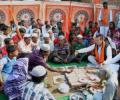
The million dollar question that begs for an answer is: Why is it that an amateurish attempt to convert a handful of Muslims by fringe Hindu elements garners so much attention while large scale systematic attempts to subvert Hinduism go unnoticed or are deliberately overlooked? If this is not double standards then what is, asks Vivek Gumaste.

The Supreme Court delivered a landmark judgment regarding leaders with a criminal background and said that they stand to be disqualified on date of conviction. The number of members of Parliament with a criminal background is 162, which means 30 per cent of those who govern the nation in the Lok Sabha have pending criminal cases.

'Shakti Samanta was a very honest man. I have done four films with him. He was very sick before he died; nobody was allowed to see him in the hospital. I went but I could not bear to see him like that. Iftekar and I would go to see Ashok Kumar often. He would ask me to bring some kheema, as he loved my wife's preparation. I would have attended kavi sammelans with Jan Nisar Akhtar (Javed Akhtar's father), Sahir Ludhianvi and Harivansh Rai Bachchan. Amitabh Bachchan was a child then, and would often accompany his father.' Veteran actor Chandrashekhar Vaidya goes back in time.

The curative petition and other legal remedies still available to Yakub Memon are part of his rights as a prisoner condemned to death. Does the Maharashtra government want to deprive him of these rights, asks Jyoti Punwani.

'If the State does want to come after you, in India, it can do pretty much anything. And often it isn't as though the orders are coming from the President or prime minister, no, the systems have been built in a way -- or we have allowed them to be built in a way -- that almost encourages crushing of liberties.'

West Bengal is poised to become the rape capital of India, but its chief minister refuses to face reality, says Debosmita Sarkar.
Right from the beginning, the State abdicated its responsibility in fixing the blame for the Hashimpura massacres or getting justice for the victims.
