
The Piramal group and Zurich Insurance have decided to jointly bid for Reliance General Insurance, a subsidiary of Reliance Capital. The groups had earlier submitted separate bids for the general insurance business of bankrupt Reliance Capital. Both Piramal and Zurich will hold 50 per cent each in the proposed special purpose vehicle (SPV).

Kavitha attacked the BJP government at the Centre, alleging it of using the investigation agencies to target political parties and leaders who do not subscribe to its ideology.

The Congress released a booklet 'Nau saal, Nau sawaal', asking nine questions from Modi. The BJP rejected the Congress' criticism as a 'bundle of lies and mountain of deception' and said the questions are born out of 'pathological hatred' of the PM.

Former education minister of West Bengal Partha Chatterjee and his aide Arpita Mukherjee were sent to 14 days in judicial custody by a special court in Kolkata on Friday in the SSC scam case.

Initial share sales are set to dazzle the Dalal Street in 2022 too as companies are expected to garner up to Rs 1.5 lakh crore in the New Year, continuing with the bullish momentum after 2021 turned out to be the best IPO year in two decades for the Indian market. Excessive liquidity and increased retail investor participation ensured a persistent euphoria in the Initial Public Offer (IPO) space wherein companies mopped up more than Rs 1.2 lakh crore this year even as pandemic gloom shadowed the broader economy. In 2022, the higher amount of funds through the primary market will be largely driven by the mega IPO of state-owned Life Insurance Corp (LIC).

After the government sought Parliament's nod for a second batch of supplementary demand for grants that will cause a hit of Rs 2.99 trillion to the exchequer, doubts suddenly arose about the government's ability to meet the Budget projections of reining in its fiscal deficit at 6.8 per cent of gross domestic product (GDP), or Rs 15.06 trillion, for the current financial year. Till now, many were of the opinion that the government would succeed in checking the deficit at a much lower figure than what was given in the Budget Estimates (BE). The government had sought Parliament's approval to spend Rs 3.74 trillion extra, but Rs 74,517.01 crore will be matched by equal savings on other heads.

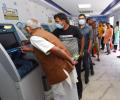
Lakhs of employees of public sector banks continued their strike on the second day on Friday as well to protest against proposed privatisation of banks by the government impacting normal operation across the country. Shutters of branches across many parts of the country on Friday were down following the strike call given by the United Forum of Bank Union (UFBU), an umbrella body of nine bank unions including All India Bank Officers' Confederation (AIBOC), All India Bank Employees Association (AIBEA) and National Organisation of Bank Workers (NOBW). As a result, services such as deposits and withdrawal at branches, cheque clearance and loan approvals remains paralaysed due to the two-day strike ending later in the day.

The TMC also announced it would hold talks with other regional parties in their bid to take on the BJP in the crucial 2024 elections but at the same time denied that it was planning a third front, separate from the Congress-led front.

Global trends, WPI inflation data for April and the ongoing quarterly earnings of corporates would be the major driving factors for the stock markets, analysts said. Investors would also keep a tab on the movement of foreign institutional investors who are on a selling spree in the domestic equity market for the past many days. "Inflation concern and monetary tightening across the globe are key concerns for the equity markets. "Equity markets are under the strong grip of bears however they look extremely oversold and due for a pullback rally.

Congress general secretary (communications) Jairam Ramesh said they will pose three questions a day to Prime Minister Narendra Modi over the issue.

Changing tracks helps. But, not taking the beaten path isn't always helpful. This is the story of two of India's biggest privatisations - Air India and Bharat Petroleum (BPCL). Nearly two decades after the last privatisation, a landmark divestment concluded this year when the loss-making national carrier Air India was sold to the Tatas.

The IPO is an offer for sale of 38 million shares by SBI, BOB, LIC, PNB and T Rowe Price. Barring T Rowe and PNB, the others are selling stake to comply with Sebi norms.

The United Forum of Bank Unions (UFBU), an umbrella body of nine unions, has given a call for a two-day strike from December 16 to protest against the proposed privatisation of two state-owned lenders. In the Union Budget presented in February, Finance Minister Nirmala Sitharaman had announced the privatisation of two public sector banks (PSBs) as part of its disinvestment plan. The government has already privatised IDBI Bank by selling its majority stake in the lender to LIC in 2019 and merged 14 public sector banks in the past four years.

The Prime Minister's Citizen Assistance and Relief in Emergency Situations Fund was established in March last year with the primary objective to deal with any kind of emergency situation like the one currently posed by the COVID-19 outbreak and provide relief to those affected.

Benchmark equity indices Sensex and Nifty on Tuesday spurted by over 2.5 per cent to log their best single-day gains in three months, propelled by heavy buying in metal, energy and banking stocks amid a global rally in stocks. The 30-share BSE benchmark zoomed 1,344.63 points or 2.54 per cent to settle at 54,318.47 points with all of its constituents closing with gains. During the day, it jumped 1,425.58 points or 2.69 per cent to 54,399.42. The broader NSE Nifty rallied 417 points or 2.63 per cent to finish at 16,259.30 points.
Merely bringing down the government stake below 51% may not find any taker for the PSBs. The government must bring down its holding to at least 26%, recommends Tamal Bandyopadhyay.

The Centre has increased the premium rates for its flagship insurance schemes, Pradhan Mantri Jeevan Jyoti Bima Yojana (PMJJBY) and Pradhan Mantri Suraksha Bima Yojana (PMSBY), for the first time in seven years due to "long-standing adverse claims experience", and to make them economically viable. The premium for PMJJBY would increase from Rs 330 to Rs 436 a year effective June 1, and the PMSBY premium would rise from Rs 12 to Rs 20, the Ministry of Finance said in a statement. PMJJBY provides life insurance cover worth Rs 2 lakh to all account holders aged 18-50 years.

This number is predicted to increase to 13.5-17.4 million people living with Type 1 diabetes by 2040, the researchers said.

The country's largest insurer had been keen to run a bank for a long time to manage the large premium collection and claim settlement work.
Unlike any other national asset, which is typically sold to the highest bidder, the profile of the bidder is the most important criterion for a licence to bank, and even for acquiring more than 5 per cent stake, explains Tamal Bandyopadhyay.

Anil Rego, CEO, Right Horizons, answers your personal income tax queries.

India's economic image is not affected due to Adani Group's recent decision to pull out Rs 20,000 crore FPO (follow-on public offers) amid allegations of financial wrongdoings, Finance Minister Nirmala Sitharaman said on Saturday.


Rising for the fourth straight day, benchmark indices Sensex and Nifty settled marginally higher after a choppy session on Friday, tracking mixed global trends amid uncertainties on the geopolitical front. The BSE Sensex opened weak and declined 414.44 points to 55,049.95 in opening deals. But within minutes, it pared all its losses and jumped 369.56 points to 55,833.95. Facing volatility, the index finally settled at 55,550.30, higher by 85.91 points or 0.15 per cent.

Only NIIF has stayed the course as a viable infrastructure financing institution.
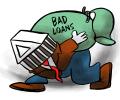
Public sector banks have lost nearly Rs 2.85 lakh crore on account of loan dues of 13 corporates even as the banks are used to bail out ailing financial institutions such as Yes Bank and IL&FS, United Forum of Bank Unions alleged on Monday. In a press release, UFBU's convener B Rambabu said the organisation calls for a two-day all India bank strike on December 16 and 17 protesting against Banking Laws (Amendment) Bill 2021 and opposing the Centre's alleged move to privatise PSBs. According to the statistics given by the UFBU, the 13 corporates' outstanding dues were at Rs 486,800 crore and it was resolved at Rs 161,820 crore resulting in a loss of Rs 284,980 crore.

Ulhas Joshi, Head -- Sales, Rank MF, a mutual fund investment platform, answers your queries.

'The business continuity clause will mean the Tatas will have to keep running the airline for three years, and cannot exit the flying business.'

Much of the tardy reaction to competition is the result of LIC's legacy.
Under the new IRDA regime, LIC has launched two new non-linked plans Bima Account I and Bima Account II. The plans guarantee minimum returns, transparent charges and provide risk cover.
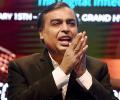
Reliance Industries Ltd, the country's largest company by revenues, profits and market value, has topped Indian corporate in the World's Best Employers rankings 2021 published by Forbes. Reliance was placed at 52 in the overall ranking of 750 global corporates likes Phillips, Sanofi, Pfizer and Intel. Other Indian names in the top 100 rankings were ICICI Bank at 65, HDFC Bank at 77 and HCL Technologies at 90, according to the Forbes ranking.

Nikunj Saraf, Vice President Choice Wealth, answers your queries.

LIC contested the insurance claim. Consumer activist Jehangir B Gai tells you how this claim was won.

Employees of public sector banks (PSBs) on Thursday went on two-day strike against the move to privatise public sector banks impacting normal banking operation across the country. Many branches across different parts of the country were shut as the United Forum of Bank Union (UFBU), an umbrella body of nine bank unions including All India Bank Officers' Confederation (AIBOC), All India Bank Employees Association (AIBEA) and National Organisation of Bank Workers (NOBW) had given two day strike call. As a result, services such as deposits and withdrawal at branches, cheque clearance and loan approvals might be affected due to the strike. But ATMs are expected to function as usual.

LIC, EPFO and PSBs are likely to be asked to subscribe to bonds.

'We expect the bull run to continue until economic growth continues.'

Omkeshwar Singh, head, Rank MF, a mutual fund investment platform, answers your queries.
India's largest insurer Life Insurance Corporation of India on Monday announced its intention to foray into health insurance sector jointly with another company, which could be a PSU general insurer.
Omkeshwar Singh, Head, Rank MF, a mutual fund investment platform, answers your mutual fund queries.

On the capital raising, where there are reports of the bank needing at least Rs 20,000 crore to spring back to normalcy, Yes Bank administrator Prashant Kumar declined to give an estimate of the requirement but said it would like for most of the fund raising to happen in the first round itself.
