
Shifting the focus to its next space odyssey after successfully placing a lander on the moon's uncharted South Pole region, the Indian Space Research Organisation (ISRO) chief S Somanath on Saturday said that the country's maiden solar mission Aditya-L1 is ready and will be launched in the first week of September.
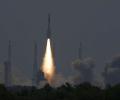
The Indian Space Research Organisation (ISRO) on Monday successfully launched a second generation navigation satellite, using a GSLV rocket with a cryogenic upper stage to do the job.

The ISRO on Sunday scripted yet another history after its LVM3 rocket successfully placed 36 satellites of United Kingdom-based OneWeb group company into intended orbits.

Prime Minister Narendra Modi criticized the RJD's past education policies in Bihar, attributing migration to the state's poor education system under their rule. He praised the current NDA government's efforts to improve education and development, launching several initiatives focused on youth skilling and education in the state.

AzaadiSAT had around 75 small payloads developed by schoolgirls of 75 rural schools.
The Indian Space Research Organisation (ISRO) has received approval for the Chandrayaan-5 mission, which aims to study the Moon's surface using a 250kg rover. The mission will be conducted in collaboration with Japan. This follows the success of the Chandrayaan-3 mission, which achieved a soft landing on the Moon's South Pole in August 2023. ISRO is also planning to establish a space station, Bharatiya Space Station, in the near future.

The US Air Force on Wednesday handed over NISAR, an earth observation satellite jointly developed by NASA and ISRO, to the Indian space agency.
The space agency has redefined the mission in such a way that it will achieve success in the very first attempt.

Modi welcomed Shukla, who was wearing an ISRO astronaut's jacket, with a warm hug and walked with him with his arm on the astronaut's shoulder.

The Human-rated LVM3 vehicle, the Crew Escape System and the Crew Module and Service Module are all in final stages of testing and integration.

Glimpses from India and around the world that will make you smile and cry.

ISRO's maiden solar mission, Aditya L1, has captured its first high energy X-ray glimpse of solar flares. During its first observation period from approximately October 29, the High Energy L1 Orbiting X-ray Spectrometer (HEL1OS) on board Aditya-L1 spacecraft has recorded the impulsive phase of solar flares, the space agency said in a statement on Tuesday.

ISRO's Thiruvananthapuram-based Vikram Sarabhai Space Centre successfully conducted a series of drogue parachute deployment tests at the rail track rocket sled facility of the Terminal Ballistics Research Laboratory in Chandigarh during August 8-10.

'Techfest', an annual science and technology event organised by the Indian Institute of Technology Bombay in Mumbai.
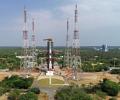
The Aditya-L1 mission carries seven scientific payloads to carry out the study.

The statements on Joshimath are creating confusion not only among affected residents but also among citizens of the country.
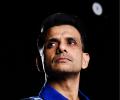
Indian astronaut Shubhanshu Shukla will enjoy a range of Indian dishes, including rice varieties, moong dal halwa, and mango nectar, during his 14-day mission aboard the International Space Station (ISS). He will also have the option to choose from international cuisine, as approved by NASA. ISRO and DRDO have developed the Indian food options for astronauts of the Gaganyaan mission and Shukla will be able to savor them with NASA's approval.
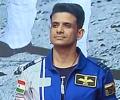
Shukla will be the second Indian to travel to space four decades after Rakesh Sharma's iconic spaceflight onboard Russia's Soyuz spacecraft in 1984.
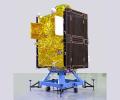
The need for NavIC was cemented after India was denied access to crucial navigation data from global providers during the 1999 Kargil War.
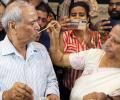
Group Captain Shubhanshu Shukla, the Indian astronaut who along with three others returned recently from a successful space mission, is in Houston in the United States, as he readjusts to life on Earth, his father said on Thursday.

Kamna Shukla, wife of astronaut Shubhanshu Shukla, shares plans for his homecoming after his 18-day mission on the International Space Station, emphasizing family time and simple pleasures.

'The launch of Axiom 04 slated for 11th June 2025 for sending first Indian Gaganyatri to ISS is postponed.'

According to ISRO officials, the spacecraft will be placed in a halo orbit around Lagrange point 1 (L1) of the Sun-Earth system, about 1.5 million km from the Earth. The L1 point is about one per cent of the total distance between the Earth and the Sun.

India scripted history as the ambitious third Moon mission of the Indian Space Research Organisation (ISRO) touched down on the Moon's south pole, propelling the country to an exclusive club of four and making it the first nation to land on the uncharted surface.

Scientists are working on conducting various tests for the ambitious Gaganyaan mission and the agency is coordinating with the Navy and others in this connection, he said.
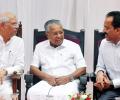
Kerala has become the first state in India to achieve complete digital literacy, according to Chief Minister Pinarayi Vijayan. Over 2.5 lakh volunteers contributed to this milestone, which included people of all age groups. The state plans to launch the second phase of the project soon, making all personal documents available in DigiLockers.

Amid a row over irregularities in competitive exams National Eligibility cum Entrance Test (NEET) and National Eligibility Test (NET), the education ministry on Saturday notified a seven-member panel headed by former Indian Space Research Organisation (ISRO) chief K Radhakrishnan to ensure transparent, smooth and fair conduct of examinations through the National Testing Agency (NTA).
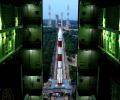
Aditya-L1 is a fully indigenous effort with the participation of national institutions., an ISRO official said.
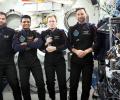
After 18 days of experiments, Shubhanshu Shukla and the Axiom-4 crew are set to return to Earth, marking the end of their mission at the International Space Station.

While the mission is a follow-up to the PSLV-C55 TeLEOS-2 mission launched in April this year, scientists in Sunday's mission will place the fourth stage of the PSLV rocket in a lower orbit.

Friday's mission is the fourth operational flight of LVM3 which aims to launch the Chandrayaan-3 spacecraft into a Geo Transfer Orbit.
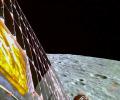
Chandrayaan-1, India's first mission to the Moon, was launched on October 22, 2008 from Sriharikota spaceport in Andhra Pradesh.

The Indian Space Research Organisation (ISRO) will perform the final manoeuvre on Saturday to inject Aditya-L1 spacecraft -- the first space-based Indian observatory to study the Sun -- into its final destination orbit, some 1.5 million kilometres from the Earth.
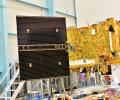
Aditya-L1 spacecraft is designed for providing remote observations of the solar corona and in situ observations of the solar wind at L1 (Sun-Earth Lagrangian point), which is about 1.5 million kilometres from the earth.
The Indian Space Research Organisation (ISRO) on Sunday said the two satellites launched to perform space docking experiments were brought within three metres and then moved safely back in a trial attempt.
Days after landing on the Moon, India will aim for the Sun on Saturday with its maiden solar expedition, as ISRO's trusted PSLV will carry the Aditya L1 mission on a 125-day voyage to the Sun.

Once Aditya L1 reaches its destination, it will help measure various events happening on the Sun for the next five years.

Lucknow celebrated the successful return of astronaut Group Captain Shubhanshu Shukla from the International Space Station (ISS). Family, friends, and the community rejoiced as Shukla, the first Indian astronaut to visit the ISS, made a successful splashdown in the Pacific Ocean.

In terms of success rate, the PSLV rocket has an enviable record of 57 successful missions out of 58 commercial ones.

The engine is earmarked for the LVM3-M3 mission identified for launching the next 36 OneWeb India-1 satellites, the Indian Space Research Organisation said.
