
"In 1948, Indian armed forces were in a decisive position to take back Pakistan-occupied Kashmir but then PM Jawaharlal Nehru declared unilateral ceasefire," Amit Shah said. In 1971, Shah said, 93,000 Pakistani soldiers surrendered and India had 15,000 sq km Pakistan territory under control, but still PoK was not taken back. During the 1962 war with China, then PM Nehru bade goodbye to Assam in a speech on Akashvani, he said.

The highlight of Tuesday's debate on Operation Sindoor was the speech by Prime Minister Narendra Modi, with the rebuttal by Congress's Wayanad MP Priyanka Gandhi coming a close second.

Rediff.com's Vicky Nanjappa travels to Bhatkal on Karnataka's west coast to investigate how a quaint town turned into a hotspot. There he meets the parents of Riyaz and Iqbal Bhatkal who, security agencies say, are behind a spate of terrorist attacks in the country.

After every terror attack in the last three years, names of the usual suspects crop up -- Riyaz Bhatkal, Iqbal Bhatkal, Abdus Subhan alias Tauqeer. This is followed by the information that these men are hiding in a Gulf nation or in Pakistan, and extraditing them to India will not be possible.Riyaz Bhatkal started off as a common thief but is considered a dangerous terrorist today. Ironically, he doesn't feature in the CBI's list of most wanted terrorists.
A team of the Bengaluru police left for Pune on Monday evening to collect leads regarding the investigation in the German Bakery blast case. The Bengaluru police will share the information they have about terror outfit Indian Mujahideen's operative Riyaz and his brother Iqbal Bhatkal, who have emerged as the prime suspects in the Pune blast case.Meanwhile, a team of the Mumbai Anti-Terrorism Squad is likely to visit Delhi to interrogate IM operative Shahzad.
Indian Mujahideen leaders Abdul Subhan, Riyaz Bhatkal, Iqbal Bhatkal, Qayamuddin and Shadab Malik are still out there, likely planning their next attack.

Judge Vyas observed that it was for the first time that a dozen persons were being convicted for conspiring in a terror attack before they could do any damage.

The National Investigation Agency on Wednesday filed its charge sheet in a Delhi court against five suspected operatives of terror outfit Indian Mujahideen for their alleged involvement in hatching a conspiracy to carry out terror strikes in the country.
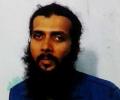
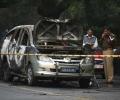
Indian Mujahideen co-founder Yasin Bhatkal and his aide Asadullah Akhtar were chargesheeted by the Delhi police in a court on Thursday in connection with the September 2010 Jama Masjid terror attack case where a bomb fitted in a car had exploded.
Given the nature of his job, a terrorist heading an underground organisation usually grooms a successor who is prepared to take over in case of his boss's arrest or demise.

The hijackers of an Indian Airlines plane in 1999 -- Abdul Rauf Asghar, Ibrahim Athar and Yusuf Azhar -- have also been named in the list, prepared under provisions of the amended Unlawful Activities (Prevention) Act.

One of the key questions that the Intelligence Bureau officials asked Yasin Bhatkal was about the whereabouts of his neighbours and friends -- Riyaz and Iqbal Bhatkal -- the founders of the Indian Mujahideen.

Indian Mujahideen co-founder Riyaz Bhatkal not only used to send funds for terror acts across the country but also regularly provided money to families of the jailed and absconding operatives of the banned outfit, the NIA has told a special court in New Delhi.

The Indian Mujahideen's module in Azamgarh, Uttar Pradesh, comprises the most motivated and best-trained operatives of the terror group, says Vicky Nanjappa

Yasin Bhatkal, the chief of terror outfit Indian Mujahideen who was recently arrested by Indian security agencies, came across as extremely bitter and disillusioned about his mentor -- the Inter Services Intelligence -- during his interrogation.

How did Mansoor Peerbhoy, an academically bright, suave and soft-spoken young man, who never exhibited any jihadist tendencies, go on to head the Indian Mujahideen's media cell?

Yasin Bhatkal, one of India's most dreaded terrorists, has been detained at the Indo-Nepal border.

Indian Mujahideen was planning to send letters "soaked with poison" to their targets to kill them, the Delhi Police has told a court here in its charge sheet filed against six suspected men of the terror outfit in a case of allegedly setting up an illegal arms factory in New Delhi.

Wednesday's arrest of four terror suspects including that of SIMI mastermind Haider Ali signals the end of the road for organised terror modules in India, claims the Intelligence Bureau. But what's worrying is thatthe Al Qaeda and Taliban are taking keen interest in the terror operations in India. Vicky Nanjappa reports
The terror group, which suffered a major blow after the arrest of its founder Yasin Bhatkal, is all set to make a comeback with a 'sticky' bomb usually used to target government officials. Vicky Nanjappa reports

Qureshi, 46, had been on the run since 20 blasts ripped through Gujarat's main city Ahmedabad on July 26, 2008, killing more than 50 people

He was arrested after a 'brief exchange of fire'.

It took six years, but the co-founder of the Indian Mujahideen was finally trapped after he made a rare mistake.

Indian Mujahideen co-founder Yasin Bhatkal and his close associate Asadullah Akhtar were on Friday remanded to 12-day police custody by a Delhi court after the National Investigation Agency said their custodial interrogation was required to unearth larger conspiracy of terror attacks.

A Delhi court on Tuesday extended till September 17 the National Investigation Agency custody of Indian Mujahideen co-founder Yasin Bhatkal and his close associate Asadullah Akhtar after the agency claimed they were involved in a deep rooted conspiracy and had executed various blasts in India.
