
Of the 59 IPOs for which the data is available, 36 IPOs received mega responses of more than 10x (of which, six IPOs more than 100x), while eight IPOs were oversubscribed more than 3x.

FSN E-Commerce Ventures, which runs online marketplace for beauty and wellness products Nykaa, has filed preliminary papers with markets regulator Sebi to raise Rs 3,500-4,000 crore through an initial share-sale.

Steel Ministry is unwilling to sell shares at lower than the present book value of Rs 22.50 a share. Merchant bankers UBS Securities and Deutsche Equities (India) have proposed Rs 15-17 as the price band.

The primary issue market has hit an all-time high with 63 corporates raising Rs 1,18,704 crore through main-board initial public offerings (IPOs) so far in 2021, which is nearly 4.5 times more than the Rs 26,613 crore raised through 15 issues in 2020 and almost double of the previous best of Rs 68,827 crore in 2017, according to a report. Pranav Haldea, managing director of Prime Database Group, said the IPO frenzy was driven by new-age loss-making technology start-ups along with strong retail participation, and the resultant massive listing gains were the key highlights of the year. Another highlight was only 51 per cent or Rs 103,621 crore of the total Rs 202,009 crore was fresh capital raising and the remaining Rs 98,388 crore were offers for sale.

A deal, where a founder has brought back stake from early investors before an initial public offering, is unheard of in India or pretty much anywhere else, analysts pointed out.

Loans for Indian airlines have dried up as banks have become cautious to lend to the sector.

According to industry insiders, India has 400 million smartphones and is the world's fastest-growing app market. So the addition or deletion of apps impacts the global valuations of these platforms. "Based on calls given by various local organisations to delete Chinese Apps, there will be an impact," said Blaise Fernandes, director at foreign policy think tank Gateway House. "All of them eventually will go the IPO (initial public offering) route so there would be economic impact also."

'Sebi has to make sure that investor interests are protected and at the same time, there isn't over-regulation so that companies don't get discouraged to list here.'
'Had there been no war, maybe, we would come out with a 7.5 per cent stake sale.' 'At this point in time, a 3.5 per cent stake sale looked good.'

'The company's transition from an individuals-driven private firm to a board-driven listed public one will be carried out in a well-thought-through and well-executed manner.'
The deluge of offerings in the primary market, a muted results season and increasing talks of a Fed taper may quicken the pace of overseas investors selling Indian equities in the near term. The next few weeks may see a dozen companies tap the market for initial public offerings and raise about Rs 30,000 crore. These include the likes of Zomato, Glenmark Life Sciences, Utkarsh Small Finance Bank and Seven Islands Shipping.

There are overvaluation and excesses in many pockets of the market. This is most obvious in the IPO market, where loss-making companies have inflicted large losses on investors, observes Debashis Basu.

Facebook, which has about 800 million users worldwide, is currently in 'internal discussions' with US regulator Securities and Exchange Commission regarding the timing of its initial public offering, the Wall Street Journal quoted people familiar with the matter as saying.

The company has set a price band of Rs 210 to Rs 240 per share
HNI investors need an optimal mix of oversubscription and listing-day gain to make money on leveraged bets, notes Sanjay Kumar Singh.

"The penalty has been imposed in exercise of powers vested in RBI under the provisions of section 47 A (1) (c) read with section 46 (4) (i) of the Banking Regulation Act 1949, taking into account the failure of the bank to adhere to the aforesaid direction issued by RBI," said the central bank in a statement. This action is based on the deficiencies in regulatory compliance and is not intended to pronounce upon the validity of any transaction or agreement entered into by the bank with its customers, the RBI added.

At least five companies looking to raise a cumulative Rs 6,595 crore could launch their initial public offerings (IPOs) next month after a busy August that saw eight IPOs. On Thursday, south-based diagnostic chain Vijaya Diagnostics announced its plans for a Rs 1,895-crore IPO. Ami Organics will announce its plans for a Rs 600-crore issue on Friday.

The company, backed by China's Ant Group, is planning to issue fresh shares worth Rs 7,500 crore in the IPO. This will make this India's third-largest offering after Reliance Power and DLF.

In a first step towards succession plan, Chennai-based fast-moving consumer goods (FMCG) major CavinKare on Monday announced the restructuring of its businesses and also roped in the generation next giving charges of separate business verticals. Announcing the restructuring on Monday, CK Ranganathan, chairman and managing director of CavinKare indicated that the business will be split into mainly four different streams - FMCG, ecommerce, retail and research and development.
Driven by a historic IPO boom that saw 63 issuers, led by new-age tech companies, garnering a whopping Rs 1.2 lakh crore ($16.6 billion) from the primary market, investment bankers laughed their way to the bank collecting $1.1 billion in fees in the year just gone by, making it the highest-ever advisory fees collected, says an industry report. At $16.6 billion, the initial public offers (IPO) set a lifetime record in 2021, bettering the previous record of $10.8 billion in 2017 by a wider margin. While the number of IPOs more than doubled from a year ago to 63, the proceeds were more than four-times the amount raised from the same period previous year and the momentum is likely to continue as more IPOs are anticipated next year, with mother of all issues, LIC issue, expected to boost proceeds next year much higher, it said.

Digital payments provider Paytm is all set to make its market debut as early as this year, with an aim to raise $3 billion (around Rs 22,000 crore). If successful, this could be the biggest initial public offering (IPO) by an Indian company, breaking Coal India's 2010 record of Rs 15,475 crore. According to media reports, the board of One97, parent company of Paytm, is all set to meet this Friday to formally approve the IPO plan.

Sebi also plans to examine if any comments made by company officials or the bankers could have misled investors.

The $8.5 billion TVS Group received final approval for a family resettlement on February 4 from the National Company Law Tribunal (NCLT). It is an arrangement that is noteworthy because unlike many other corporate settlements this one was sorted out amicably and without any open conflicts.

Gland Pharma, promoted by China's Fosun, has extended its gains, is up 40 per cent since its listing.

Markets regulator Sebi has kept in abeyance the processing of Go Airlines' draft papers for an initial public offer worth Rs 3,600 crore. Go Airlines (India) Ltd, which has announced rebranding itself as 'Go First', filed preliminary papers for an initial share sale worth Rs 3,600 crore in May. The proceeds will be mainly used to repay dues. The "issuance of observations (has been) kept in abeyance", according to Sebi's latest update on processing status of Go Airlines' draft offer documents. The information was updated on June 25. In Sebi parlance, issuance of observations implies its go-ahead for the IPO.

Ola founder and chief executive officer (CEO) Bhavish Aggarwal will step back from day-to-day operations to focus more on engineering functions, team building, and products, apart from focusing on long-term strategic projects, such as two-wheelers, cars, and innovations in quick commerce and international expansion. "I'll be spending more time with all engineering functions, team building, and on products," said Aggarwal in an internal note, adding, "I'll also be increasing my focus on our longer-term strategic projects, including new two-wheeler products, our car project, innovations in quick commerce, electrifying ride-hailing, our cell research and development (R&D), international expansion, building our Pune technology (tech) centre, and Futurefoundry UK." To drive scale, speed, and quality, Aggarwal said he is expanding Ola Group's chief financial officer (CFO) G R Arun Kumar's role to help him steer 'day-to-day operations' across the group.

Easier dilution norms for mega initial public offerings (IPOs) have come into effect. Companies with post-listing market capitalisation (m-cap) of more than Rs 1 trillion will not be required to dilute a minimum of 10 per cent. The move to relax dilution norms is seen as a precursor to Life Insurance Corporation's IPO. The central government has said companies with an m-cap exceeding Rs 1 trillion will have to dilute Rs 5,000 crore and at least 5 per cent of their m-cap. Experts said the earlier framework discouraged large companies from listing since they were forced to offload a large volume of shares during the time of their IPO.
It's raining IPOs, with eight issues hitting the market in a span of six days. However, the pace of new filings points to a deluge during the latter part of the year. So far this year, 58 companies have filed their draft red herring prospectus (DRHP) with the market regulator for initial public offerings (IPOs), exceeding the combined tally of 50 in the last two years. Industry participants said the filing count could cross 100 this year, setting a new benchmark in terms of amount mobilised in a calendar year.

The offering comprises secondary sale of 13.68 million shares, constituting 27.3 per cent stake.

India's stock exchanges have decided to jointly introduce the T+1 settlement cycle in phases from February 25, beginning with the bottom 100 stocks by market capitalisation. From March 2022, on the last Friday (or the immediate next trading day) of every month, the next 500 stocks from the bottom will be subject to T+1 settlement. The phase-wise implementation is expected to give all market participants, including foreign portfolio investors (FPIs), ample time to shift to the shorter cycle. The settlement cycle represents the time period within which the stock exchanges have to settle security transactions.
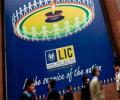
LIC owns 3.69 per cent of the total listed universe based on available disclosures, the lowest since at least June 2009.

Mostly from the real estate and power sectors, these 25 IPOs were together estimated to raise about Rs 31,000 crore.
Hectic fundraising through IPOs will continue next week, with three firms -- One97 Communications, owner of Paytm; Sapphire Foods India, which operates KFC and Pizza Hut outlets; and Latent View Analytics -- are set to launch their initial share-sales to collectively mop up about Rs 21,000 crore. This comes after five companies successfully concluded their public offerings (IPOs) this week. Those five firms are - FSN E-Commerce Ventures, which runs online marketplace for beauty and wellness products Nykaa; Fino Payments Bank; Policybazaar parent entity PB Fintech; decorative aesthetics supplier SJS Enterprises; and microcrystalline cellulose maker Sigachi Industries.

Stocks mutual funds had invested in had risen almost to pre-pandemic levels in March.

Rakesh Jhunjhunwala on Friday picked up 1.05 per cent stake in Jet Airways for Rs 50.5 crore.

On the Sensex chart, IndusInd Bank was the top gainer, rallying over 11 per cent, followed by ICICI Bank, SBI, HDFC, M&M and Axis Bank. On the other hand, Dr Reddy's, Tech Mahindra and TCS were among the laggards.

The SME segment has been grappling with lack of liquidity and lacklustre institutional participation.

While the recent volatility in the secondary markets is a concern, experts believe the sentiment towards IPOs is still buoyant.
Since the beginning of 2020, i-bankers have collected nearly Rs 1,800 crore by way of IPO fees. Interestingly, the India fees this year form just 1 per cent of the global fee pool of $13.7 billion from IPOs.

'I can tell shareholders we're going to be very responsible with our capital, we're going to be absolutely execution focused.'
 © 2026 Rediff.com - Investor Information - Advertise with us - Disclaimer - Privacy Policy - Sitemap - Feedback - About us - Terms of use - Grievances