
JM Financial, Axis Bank, and Bank of America have been roped in as the bankers to run the mandate, say sources.
Start-ups don't care that mad-money funding comes to a hard stop after an IPO, observes Debashis Basu. As a listed entity, corporate actions have to take the interests of all shareholders, especially minority shareholders, into account. So far, we are not seeing any sign of it, observes Debashis Basu.
Taking a cue from Zomato's stellar initial public offering (IPO), through which it garnered a valuation of Rs 1 trillion, the government has asked its advisors and valuers to ascertain if the Life Insurance Corporation of India (LIC) should be valued at Rs 10 trillion or more. The government is looking to offload about 10 per cent stake in LIC through the IPO. At that valuation, the government stands to net at least Rs 1 trillion from LIC's proposed IPO, which will boost the Centre's efforts to meet its disinvestment target of Rs 1.75 trillion for the current financial year.
Flipkart has promoted several of its leaders into newer roles at a time when the Walmart-owned e-commerce giant has internally raised its IPO (initial public offering) valuation target to about $60 billion and aims for a US listing in 2023, according to the sources. "I am delighted to announce the promotion of some of our exemplary leaders," said Kalyan Krishnamurthy, chief executive officer, Flipkart Group, in an internal note, and which has been reviewed by Business Standard. "Each of them has been instrumental in delivering impact and creating long-term value for Flipkart.

Under the new model, the surplus distribution in the participating policyholders' fund has been modified to 90:10 in a phased manner, wherein 90 per cent will go to policyholders and 10 per cent to shareholders. Further, 100 per cent of the surplus generated out of the non-participating business will be available for distribution to all shareholders.

After a stellar run in 2021 that saw the S&P BSE Sensex and the Nifty50 clock gains of 20 per cent and 22 per cent respectively, global equity markets, including India, are gearing up to welcome 2022 on a cautious note. For one, new variants of the Covid -19 infection that make current vaccines less effective is one of the key risks worth flagging, analysts said. Inflation was also a risk for this asset class in 2021, although most market participants expect that the current elevated inflation levels will be transitory.

The government is expected to defer the mega initial public offering (IPO) of LIC to the next financial year as the ongoing Russia-Ukraine war has dampened fund managers' interest in the public issue, market experts said on Sunday. The government was looking to sell 5 per cent stake in Life Insurance Corporation (LIC) this month, which could have fetched over Rs 60,000 crore to the exchequer. The IPO would have helped meet the curtailed divestment target of Rs 78,000 crore this fiscal.
Shares of all the 14 companies are currently trading above their issue price.

More than 60 small and medium enterprises (SMEs) are expected to tap the market in one year to raise equity funds for supporting their business requirements, a BSE top official said on Wednesday. These companies will get listed on the exchange's SME platform, Ajay Thakur, head of BSE SME and Startup told PTI. Last year, only 16 SMEs had tapped the initial public offering (IPO) route and raised Rs 100 crore.
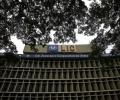
The government has reached out to investors to apprise them about Life Insurance Corporation of India's (LIC's) growth and prospects as it prepares for the country's largest initial public offering (IPO). Preliminary presentations have been made to inform investors on how the organisation is being restructured ahead of the IPO, along with its financials, so that the IPO process can be hastened once its embedded value is derived. "A detailed presentation has been made to investors, giving them details on how LIC is positioned beyond what is known. "This includes how LIC is being restructured ahead of the IPO, and investors are keen to know that," said an official. In the Finance Bill, 2021, the government had proposed a slew of changes to the LIC Act, 1956.

Star Health and Allied Insurance's Rs 7,250-crore initial public offering (IPO), the third largest this year and eighth largest ever, just about managed to make it despite a poor response from investors, garnering just 79 per cent subscription, forcing the investment bankers to prune offer for sale (OFS) component. This is the second large offering after digital payments major Paytm this year to receive a lukewarm response from investors, a sign that despite the IPO frenzy investors are discerning when it comes to pricing. As Star Health didn't meet the profitability criteria, its IPO required a mandatory 75 per cent subscription from qualified institutional buyers (QIB).

'Whenever markets rally, the IPO pricing gets aligned to the prevailing market conditions.'

Bolstered by bullish investor sentiments, India witnessed companies mopping up a whopping $9.7 billion through initial share sales in the first nine months of 2021, the highest amount for the nine-month period in two decades, says a report. As many as 72 initial public offerings (IPOs) hit the stock market during the January-September period this year in India and strong sentiments were visible in the global markets as well, according to leading consultancy EY. EY, in its latest report, said the global IPO market continued to boom through Q3 2021 resulting in the most active third quarter by deal numbers and proceeds in the last 20 years.

Foreign portfolio investors (FPIs) and mutual funds (MFs) have put in more money as anchor investors in initial public offerings (IPOs) in 2021 than any other year. FPIs' share of investments for the year stood at Rs 24,477 crore, nearly six times that put in last year and more than nine times the amount invested in 2019, the data from Prime Database showed. MFs have invested Rs 12,264 crore, four times than that invested last year and more than 10 times the investment in 2019. The total investment by FPIs and MFs put together this year is five times the amount invested last year. The amount contributed by MFs, however, is nearly half of that invested by FPIs.

Stocks offering attractive dividends contain downside better when the markets correct, advises Sarbajeet K Sen.
Once stability returns to the secondary market, companies that have obtained approval from Sebi will start tapping the market.

Year 2021 was another great year for fund-raising through equities. A total of Rs 1.8 trillion was raised through initial public offerings (IPOs), qualified institutional placements (QIPs), and rights issues, against the Rs 1.7 trillion raised in the previous year. Funds raised through IPOs quadrupled, while those from rights issues and QIPs reduced.

"Disclosure norms for insurance coming out with initial public offer will come out next week," Insurance Regulatory and Development Authority chairman J Harinarayan told PTI.

With 16 start-ups gaining unicorn status in 2021, India's tally has touched the 50 mark. The newest entrant to this list include Pune-based MindTickle, which is close to finalising a $100-million funding round from Softbank's Vision Fund 2, taking the company's valuation to $1.1 billion.

US retail giant Walmart has said it is "open to an IPO" for its Indian e-commerce arm Flipkart but there is "no specific timeline" for the share sale. Both Flipkart and payment app PhonePe continue to do well, Walmart International president and CEO Judith McKenna said while speaking at the DB Access Global Consumer Conference on June 7. "We always made it clear from the day we made the acquisition or the investment, that we would be open to an IPO," said McKenna. However, she noted that there is no specific timeline for the IPO.

A lot of gains have been driven by foreign portfolio investors. Lower interest rates globally have forced foreign investors to seek avenues for growth. They have been net buyers to the tune of Rs 2.5 trillion over the trailing 12 months, including May, reports Sachin P Mampatta.

Zomato's mega initial public offering (IPO) ended with a bumper 38 times oversubscription on Friday as institutional investors poured money to get a pie of the hottest online food delivery platform. Zomato got bids for 2,751.25 crore shares against 71.92 crore shares on offer, stock exchange data showed. The IPO is India's biggest since March 2020. Institutional investors, who shied away in the first two days of the IPO, bid several times over the number of shares reserved for them.
Digital payments and financial services firm Paytm is likely to allocate shares at the upper price band of Rs 2,150 apiece on November 16 after market regulator SEBI's approval which is expected to come on Monday, sources aware of the development said. Earlier the allocation was expected to take place on Monday and the Paytm Money app also displayed the same.

Markets watchdog Sebi on Tuesday decided to tighten norms for utilisation of IPO proceeds by companies, introduce special situation funds to invest only in stressed assets and amend various regulations, including those on mutual funds and settlement proceedings. The board of Sebi, which met on Tuesday, also gave its nod for amending Foreign Portfolio Investor (FPI) regulations and introducing a provision for appointment or re-appointment of any person, including as a managing director or a whole time director or a manager, who was earlier rejected by the shareholders at a general meeting. Once the amended norms are in place, such appointments or re-appointments can only be done with the prior approval of the shareholders.
The year 2021 could turn out to be India's year of IPO with the domestic unicorns through their public issues setting "domestic stock markets on fire and global investors in a frenzy", an RBI article said on Tuesday. The successful Initial Public Offerings (IPOs) by new age companies in the recent months are a reflection of bullishness about Indian technology, it said. "...growth impulse is igniting financial markets. 2021 could well turn out to be India's year of the IPO.

2022 is shaping up as the year brimming with job opportunities for people who possess relevant skillsets. Therefore, it is crucial for fresh graduates and young professionals to enroll in relevant certification courses to add more feathers to their introductory portfolio

'Investors should keep them on their radar and invest over a longer time frame, and expect some of these companies to bite the dust.'

Nasper-backed fintech firm PayU has started talks to acquire domestic payment gateway major BillDesk, and the deal size could be in the range of $3-4 billion, sources in the know said. "BillDesk has been open to being acquired for some time now, but in the past the valuations that the company was seeking proved to be a hurdle," said a source. "Three years ago too, PayU had approached BillDesk for an acquisition, but things didn't go ahead due to high valuations. "BillDesk had asked for $2-billion value then," said the source.

'Largely, new demat accounts are now being opened by the younger crowd, particularly GenZ.' 'This is great news since younger investors start their journey with very little capital, so they are risking less.'
Technology start-ups that got listed in the last few quarters reported a hit to their December-quarter (Q3FY22) profitability due to higher marketing and employee costs. While fintech firms Paytm and PB Fintech saw their losses widen by 45 per cent year-on-year (YoY) to Rs 778 crore and 55 per cent to Rs 295 crore, respectively, food delivery company Zomato remained in the red despite narrowing its net loss by 81 per cent to Rs 66 crore. Meanwhile, online fashion and beauty products seller Nykaa saw its net profit drop 59 per cent to Rs 28 crore in Q3FY22.
The IPO rush will continue in September with two more companies Vijaya Diagnostic Centre and Ami Organics launching their initial share-sales on Wednesday to raise a total of Rs 2,465 crore. This comes after eight companies including Devyani International, Nuvoco Vistas Corporation and CarTrade Tech floated their initial share-sales last month to mobilise Rs 18,243 crore. So far in the current fiscal, a total of 20 companies have mopped up more than Rs 45,000 crore through IPOs. This is much higher than Rs 31,277 crore raised by 30 firms in the entire 2020-21.
DLF Ltd on Friday said it was reviewing an order from the country's market regulator that fined the company and its top management $8.4 million.

The funding marks the first investment in the Indian food delivery category by SoftBank Vision Fund 2, with participation from the company's long-term investor, Prosus, and other existing investors Accel Partners and Wellington Management, Swiggy said in a statement. In addition, new investors Qatar Investment Authority, Falcon Edge Capital, Amansa Capital, Goldman Sachs, Think Investments and Carmignac participated in the round, it stated. This latest fundraise was heavily oversubscribed following strong interest from investors, and comes on the back of Swiggy's rapid recovery from the impacts of COVID-19 and subsequent growth in 2020-21, Swiggy said.

Retail investors have gained significant heft in the past year amid a sustained uptick in Indian equities. The share of retail investors in companies listed on the NSE reached an all-time high of 7.32 per cent in the quarter ended December 31, 2021, up from 7.13 per cent in the previous quarter and 6.9 per cent a year ago, the data from PRIME Infobase shows. This was despite the Nifty's 1.5 per cent decline during the quarter.

The Centre's push to sell Air India on priority has led to delays in other strategic divestment proposals, such as privatising United India Insurance, as well as ongoing transactions, such as Shipping Corporation of India (SCI) and Bharat Petroleum Corporation (BPCL), revealed multiple officials involved in the process. The Department of Investment and Public Asset Management (DIPAM) is yet to take new privatisation recommendations of the NITI Aayog to the core group of secretaries on disinvestment (CGD) headed by the Cabinet secretary, said one of the officials. The priority now is to ensure all approvals for Air India are in place since the government intends to hand over the national carrier as early as this month.
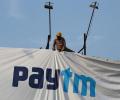
Digital payments and financial services firm Paytm has filed a draft red herring prospectus for its proposed Rs 16,600-crore initial public offering (IPO) with the Securities and Exchange Board of India.

Private lender Tamilnad Mercantile Bank's (TMB) is planning an Initial Public Offering ( IPO) of about Rs 1,000 crore by November-December 2021. The IPO will involve combination of fresh capital plus sale of existing shares. The shareholders of the unlisted South-based private bank have already given nod for IPO.

The retail frenzy over initial public offers (IPOs) seen over the past few months is not without reason. Over the past two years, 61 companies have tapped the primary market and raised funds via IPOs. Of these, 24 companies (nearly 39 per cent companies) have more than doubled at the bourses with Happiest Minds, IndiaMart Intermesh, Indian Railway Catering and Tourism Corporation (IRCTC), Affle India and Route Mobile surging 468 per cent to 722 per cent since their listing date till now. Retail participation in the equity market, according to analysts, has just reached an inflection point due to the low interest rate regime amid lack of investment-worthy avenues that can generate a good return for investors.

Facebook Inc's initial public offering will vastly increase the wealth of its 27-year-old co-founder Mark Zuckerberg, leaving him with over $ 1 billion in cash and stocks worth $17.6 billion.
While presenting her 2021-22 Union Budget, Finance Minister Nirmala Sitharaman had set a fiscal deficit target of 6.8 per cent of nominal gross domestic product (GDP) against the 2020-21 Revised Estimate of 9.5 per cent. The fiscal correction in the upcoming 2022-23 Union Budget is unlikely to be that steep. Even as discussions among top Budget-makers are ongoing, the fiscal deficit target for 2022-23 may likely be in the range of 6.5-6.8 per cent.
 © 2026 Rediff.com - Investor Information - Advertise with us - Disclaimer - Privacy Policy - Sitemap - Feedback - About us - Terms of use - Grievances